Follow Us on Google
Insists on equity, justice, fairness, demands Africa’s representation in key decision-making bodies
______________________________________________________________________
Nigeria will support a candidate for the position of United Nations Secretary-General who is committed to advancing Africa’s aspirations in global affairs, particularly securing representation in key decision-making bodies and promoting multilateralism, Vice-President Kashim Shettima has said.
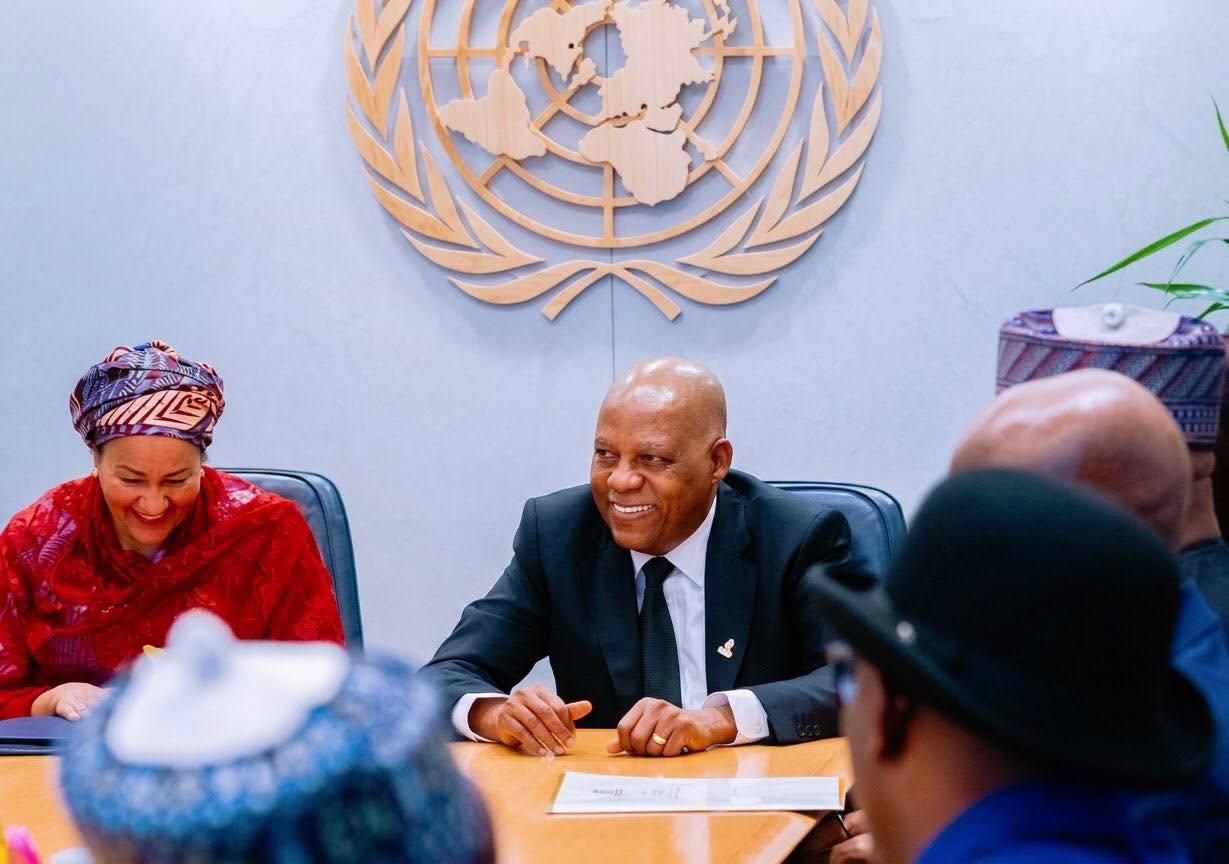
Shettima stated this during a meeting with Costa Rica’s candidate for the UN Secretary-General position, Rebeca Grynspan, who sought Nigeria’s support for her candidature ahead of the election.
The Vice-President said Nigeria’s position would be guided by the principles of equity, justice and fairness, as well as the candidate’s commitment to addressing Africa’s concerns in the international system, according to a statement issued by his media aide, Stanley Nkwocha.
He stressed that Nigeria would support a candidate who recognises the continent’s right to a greater role in global governance, particularly in the reform of the United Nations and the expansion of Africa’s representation in key decision-making institutions.
Shettima, who met Grynspan shortly before returning to Nigeria, said the country’s decision would also take into consideration its longstanding relations with Latin America, conflict prevention, multilateralism and gender inclusion.
“Thank you for seeking Nigeria’s perspective for your candidature of the United Nations Secretary-General. Nigeria and Costa Rica share a common historical background connecting both countries and their regions. We also have a cordial relationship with Latin America, and we do not wish to jeopardise it. Beyond our historical ties and relations rest our interest in conflict prevention, multilateralism, and the peace of our nations,” he said.
The Vice-President argued that the existing global governance architecture, established in 1945, had failed to reflect the demographic and political realities of the contemporary world, particularly Africa’s growing population and its increasing importance in international affairs.
He noted that Africa, with a population of more than 1.3 billion people, deserved a more prominent place in global decision-making, especially at a time when countries were increasingly advocating reforms to make multilateral institutions more representative.
Shettima’s position comes amid growing calls by African countries for reforms of the United Nations Security Council to address what they regard as the continent’s inadequate representation in the body responsible for maintaining international peace and security.
Responding, Grynspan, a former Vice-President of Costa Rica, said her candidature was driven by the need to reform the United Nations and make the organisation more responsive to the aspirations of developing countries, particularly those in the Global South.
She expressed her commitment to advancing Africa’s interests, saying her background and understanding of the challenges confronting developing countries would inform her leadership of the global body.
“Coming from the Global South, I represent the interest and demands of the region. I also have a soft spot for Africa. I know the continent and its aspirations,” she said.
The Costa Rican diplomat pledged to prioritise peace and address the structural challenges confronting the United Nations, assuring that Africa’s ambition to secure permanent membership of the UN Security Council would receive urgent attention under her leadership.
She said her proposed agenda would place peace above competing interests while pursuing the institutional changes needed to strengthen the organisation’s effectiveness and credibility.
Grynspan’s appeal to Nigeria underscores the importance of Africa’s position in the selection of the next UN Secretary-General, particularly as developing countries continue to demand a more inclusive international system.
Other News
In a related development, Shettima has reaffirmed the Federal Government’s commitment to economic reforms, insisting that the measures introduced by President Bola Tinubu’s administration were necessary to address the country’s economic challenges.
The Vice-President stated this during a bilateral meeting with Queen Maxima of the Netherlands in New York, United States, where both countries agreed to deepen cooperation on financial inclusion and financial health.
Queen Maxima, who is also the UN Secretary-General’s Special Advocate for Financial Health, pledged the Netherlands’ support for Nigeria’s efforts to expand financial inclusion, particularly among women and vulnerable groups.
Under the proposed collaboration, the Netherlands will deploy its expertise in financial health to support Nigeria’s existing programmes, with particular emphasis on insurance, credit guarantees and data generation.
Shettima welcomed the initiative, describing it as timely, given the relationship between financial inclusion and Nigeria’s broader development priorities, including education, security and poverty reduction.
He said the Tinubu administration had introduced several interventions to expand access to financial services, including conditional cash transfers and programmes in the agricultural sector, adding that the initiatives were already producing results.
The Vice-President also highlighted the role of Nigerian fintech companies in expanding financial access, noting that government policies had positioned some of Africa’s leading financial technology firms to contribute significantly to the country’s financial inclusion drive.
Defending the administration’s economic reforms, Shettima said the measures were unavoidable, given the economic conditions the government inherited in 2023.
For her part, Queen Maxima commended the growth recorded by the Nigerian economy under the Tinubu administration and acknowledged the government’s efforts to expand financial inclusion.
She pledged the Netherlands’ support in strengthening Nigeria’s financial health framework, particularly through the sharing of expertise in insurance, credit guarantees and data management.
According to her, financial health programmes are designed to improve citizens’ resilience, protect their investments and strengthen access to insurance schemes.
She also urged private sector operators to make the financial well-being of their customers a priority, stressing that it was critical to the sustainability and growth of their businesses.
The Minister of Finance, Taiwo Oyedele, who was also present, said the government was pursuing financial inclusion as part of its broader efforts to improve the livelihoods of Nigerians.
He noted that, alongside existing policies on insurance and pensions, recent measures announced by the Central Bank of Nigeria were expected to improve access to credit and reduce its cost.
Oyedele said the administration was determined to ensure that financial inclusion translated into tangible opportunities for poorer Nigerians to improve their living conditions.