Follow Us on Google
From Adanna Nnamani, Abuja
Nigeria is at risk of missing its 70 per cent broadband penetration target set in the National Broadband Plan (NBP 2020-2025), despite marginal improvements recorded in recent months.
Latest industry statistics released by the Nigerian Communications Commission (NCC) show that broadband penetration increased slightly to 48.81 per cent in May, up from 48.15 per cent in April. As of May 2025, the country had 105.8 million broadband connections.
However, with just five months left before the plan expires, experts say the target is now far-fetched.
At the launch of the National Broadband Plan in March 2020, Nigeria’s broadband penetration stood at 39.85 per cent, with about 75.4 million citizens connected. The goal was to reach 50 per cent penetration by the end of 2023, but by December that year, penetration stood at 43.71 per cent. It rose marginally to 44.43 per cent at the end of 2024.
Telecom operators and industry stakeholders say the sector has been battling several obstacles, including multiple taxation, high right-of-way charges, vandalism, insecurity, high cost of services, and a foreign exchange crisis that has crippled network expansion.
The Executive Vice Chairman of the NCC, Dr Aminu Maida, recently highlighted some of these setbacks at a telecom forum in Abuja.
According to him, “Major obstacles to telecom infrastructure development have been issues within the purview of sub-national governments, including right-of-way issues, multiple taxation, and infrastructure resilience. Reducing right-of-way charges and eliminating multiple taxation will facilitate network expansion and improve connectivity across the country.”
He stressed that broadband remains a key driver of the digital economy, job creation, and entrepreneurship, and called on state governments to ease regulatory burdens to attract investors.
“To fully realize the benefits of digitization and meet the NBP targets, state governments must ease regulatory burdens and drive policies that are investor-friendly for the telecommunications and ICT sectors,” Maida said.
Also speaking on the challenges, the NCC’s Executive Commissioner, Technical Services, Mr Ubale Maska, revealed that telecom vandalism is taking a serious toll on broadband expansion.
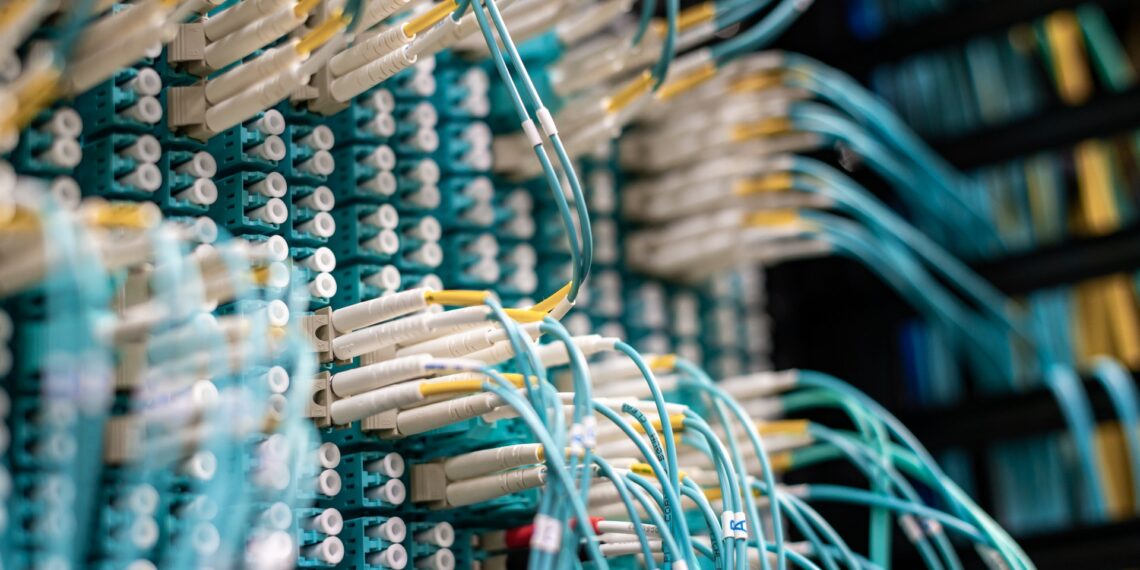
According to him, “You should be aware that there is a consistent vandalization of infrastructure in this country. Some days, you could get as many as 50 to 60, 70. We get hundreds of these cuts every month. So, things are not getting easier. These things cost money, they are bought with foreign exchange, so getting to constantly maintain these things is becoming quite a drag.
“For instance, if you look at the road projects going on, you tend to see road construction projects breaking fibers all over the country. This is an unfortunate situation. It is really inhibiting achievement of these targets, they also impact on the quality of service because once there is disruption depending on the infrastructure involved, you could actually get service cuts in an entire area.”
Affordability is also a major concern. Under the broadband plan, data is supposed to cost no more than N390 per 1GB by the end of 2025. But for millions of Nigerians, especially in rural areas, the high cost of data remains a barrier to adoption.
The challenge has been compounded by the depreciation of the naira and dwindling foreign investments into the telecom sector. Operators say they are finding it difficult to import equipment needed for expansion because of the skyrocketing dollar rate.
Other News
According to Mr Gbolahan Awonuga, the Head of Operations at the Association of Licensed Telecommunications Operators of Nigeria (ALTON), “The significant rise of the dollar from about N460 last year to over N1,600 this year has disrupted the operators’ plans for importing equipment.”
Adeolu Ogunbanjo, President of the National Association of Telecommunications Subscribers (NATCOMS), believes the solution lies in protecting telecom infrastructure.
He said, “We have to ensure that telecom masts are critical to national infrastructures. I do not know what the legislators want. Why have they not passed the bill? What are they waiting for? That is what will protect the telecom infrastructures and we can then move forward. Because that is one of the things that is disturbing the broadband penetration.”
The National Critical Infrastructure Bill, when passed, is expected to address the problems of fibre cuts, vandalism, and network congestion. Former Executive Vice Chairman of the NCC, Prof. Umar Garba Danbatta, had said the bill would help solve these sectoral issues and pave the way for faster broadband expansion.
Former President of the Association of Telecommunications Companies of Nigeria (ATCON), Engineer Ikechukwu Nnamani, believes the 70 per cent broadband target is still achievable if the right investments are made.
According to him, “What is required is multiple simultaneous deployment in various cities. That requires funding. If the funding is available it is achievable.”
Meanwhile, the NCC says it is deploying new strategies to tackle vandalism and improve broadband rollout. Mr Maska said the Commission has adopted a proactive model of monitoring infrastructure across the country to respond faster to incidents.
“Instead of waiting for a total report, we are looking at every single site over the country to see what is going on there, so that if there are issues, they are addressed faster than if you had to wait for the monthly reports to come in,” he said.
Maska also disclosed that the Commission is shifting focus to satellite broadband as an alternative to fibre optic cables.
“Now, to maintain the plan on course, the Commission has started to look elsewhere. Ordinarily, most of those targets were based on assumptions that we will get fibers laid all over the country. This is not happening for many reasons.
“The investment is not coming in as it should. You all know the economic situation in the country, so the Commission has now turned to looking at satellite broadband. There is what is called aloe Earth orbit (LEO), like Starlink and many others that are coming. So, we are hoping that this will now provide the necessary coverage all over the country as well as the connections to the operators.
“We are aware that it is expensive at this stage, but what makes it attractive is the fact that it is not just one company coming in, but, there are many others because once we have competition, the cost would go down.”
He expressed optimism that with new approaches, the broadband target could still be achieved.
“So, the hope is that those broadband targets would still be achieved but from a different approach. So, rather than fiber optics, we will rely more now on the satellite connectivity that is promising to give us much faster roll out, covering all areas of the country,” he said.
The Federal Government is currently implementing several initiatives to improve broadband penetration. One of the key efforts is the planned rollout of 90,000km of fibre-optic cables across the country, which is expected to increase Nigeria’s total fibre network to 125,000km by the end of 2025.