Follow Us on Google
By Adewale Sanyaolu
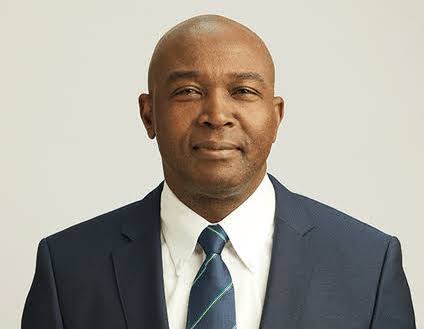
The Secretary-General, Gas Exporting Countries Forum (GECF), Mr Phillip Mshelbila, has warned that Nigeria must urgently scale investment in natural gas or risk deepening energy deficits that could undermine economic growth as its population expands rapidly.
Speaking yesterday at the Nigeria International Energy Summit (NIES) 2026, Mshelbila said planning energy supply without accounting for demographic growth poses significant economic risks. Africa’s population is projected to rise to about 2.5 billion by 2050, including nearly 400 million Nigerians, even as more than 600 million Africans currently lack access to electricity and millions rely on unclean cooking fuels.
He noted that global primary energy demand is expected to increase by nearly 20 per cent by mid-century, stressing that Africa’s total energy consumption must at least triple to support industrialisation, job creation, and rising living standards. Failure to do so, he warned, would constrain industrial output, raise energy costs, and weaken long-term growth prospects.
“You cannot tell the African gas story without Nigeria,” Mshelbila said, highlighting the country’s strategic position as a pioneer member of the GECF and its holder of the forum’s rotating presidency in 2026.
He added that Nigeria’s ability to monetise its gas resources would shape not only its own economic outlook but also Africa’s broader energy trajectory.
Other News
Natural gas, he said, offers the most commercially viable pathway to meeting rising demand, describing it as the cleanest hydrocarbon and a critical bridge fuel in the global energy transition. GECF projections indicate that gas will increase its share of global primary energy from about 23 per cent to 26 per cent by 2050, though more than 80 per cent of future supply has yet to be developed, underscoring the scale of investment required.
Mshelbila identified Nigeria’s vast but largely untapped deepwater gas reserves as a major opportunity to meet domestic demand through power generation, fertiliser production, LPG for clean cooking, and wider industrial development.
However, he cautioned that delays in project execution would raise financing costs and divert capital to competing gas provinces.
He acknowledged recent policy reforms, including the Petroleum Industry Act (PIA), the Decade of Gas initiative, and NNPC’s gas master plan, describing them as positive signals to investors. But he stressed that policy intent must translate into bankable projects, infrastructure rollout, and regulatory certainty to attract sustained capital inflows.
Mshelbila reaffirmed GECF’s commitment to working with Nigeria and other African countries to support a just and orderly energy transition, warning that the cost of underinvestment in gas, amid rapid population growth, would be measured in lost growth, jobs, and competitiveness rather than energy statistics alone.