Follow Us on Google
From Aidoghie Paulinus, New York
The African Group has called on the United Nations to address structural conditions that create an overreliance on primary commodity exports.
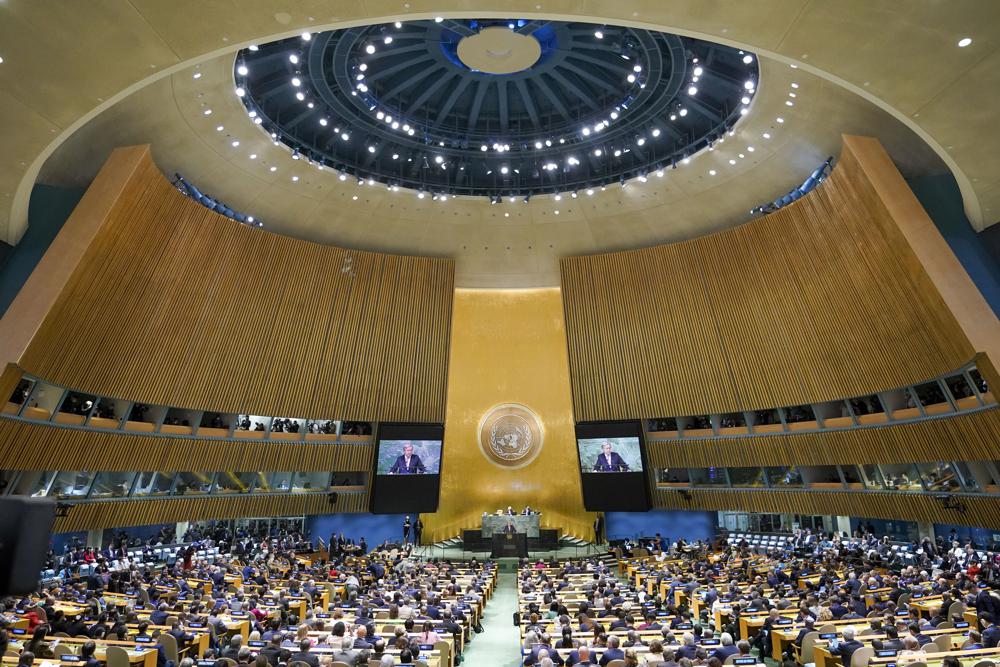
The Permanent Representative of Angola to the United Nations, Ambassador Francisco Jose Da Silva, made the call on behalf of the African Group at the United Nations General Assembly Informal Interactive Dialogue on Commodity Markets which was held in New York, United States.
The African Group stated that the challenge, exacerbated by COVID-19, has left the African continent with significant economic repercussions.
It further said commodities remained a substantial segment of international merchandise trade, representing 28.8 percent of global exports from 2019 to 2021.
Energy products, the group added, comprised 38.6 percent, agricultural products 35.6 percent and minerals and metals 25.6 percent of all commodity exports.
The African Group also said the price volatility of commodities undermined export and fiscal revenue stability, affecting budgeting and development plans, and heightening the vulnerability of reliant countries to external economic shocks.
“Economies with limited diversification, particularly in Africa, suffer disproportionately due to a heavy reliance on natural resource extraction.
“Climate change poses a significant threat, particularly to African economies reliant on agriculture. This reliance has broad implications for economic vitality, growth, and employment.
“The 2023 UNCTAD Report reveals a high level of commodity dependence among member states, with 101 out of 191 exhibiting such dependence between 2019 and 2021. However, diversification success stories offer hope for breaking this reliance.
“Addressing structural conditions that create an overreliance on primary commodity exports is imperative, alongside implementing transformation and diversification strategies,” the African Group said.
The African Group added during the dialogue that African economies, especially least developed countries, heavily depend on a narrow range of primary commodity exports.
“This focus hampers economic growth, making them vulnerable to external shocks.
“The number of commodity-dependent countries increased from 40 to 45 between 2009 and 2019. Nonetheless, a decrease in commodity export share from 81.9 percent to 76.7 percent suggests diversification progress.
“Commodity dependence remains an obstacle to achieving inclusive and widespread economic growth and substantially reducing poverty.
“Price volatility complicates macroeconomic management for commodity-dependent countries, impacting resource mobilization, investment, trade deficits and fiscal stability.
“While higher commodity prices can benefit exporters, they strain the budgets of import-dependent nations, threatening food security and the provision of essential services.
“We face disproportionate impacts from climate change, which threatens agricultural markets. Strategies to mitigate these effects are essential for promoting sustainable development.”
The African Group, however, said supporting resilience against market shocks and price volatility is critical for socio-economic stability in developing nations.
It also said progress towards structural transformation in Africa remained insufficient,