Follow Us on Google
From Juliana Taiwo-Obalonye, Abuja
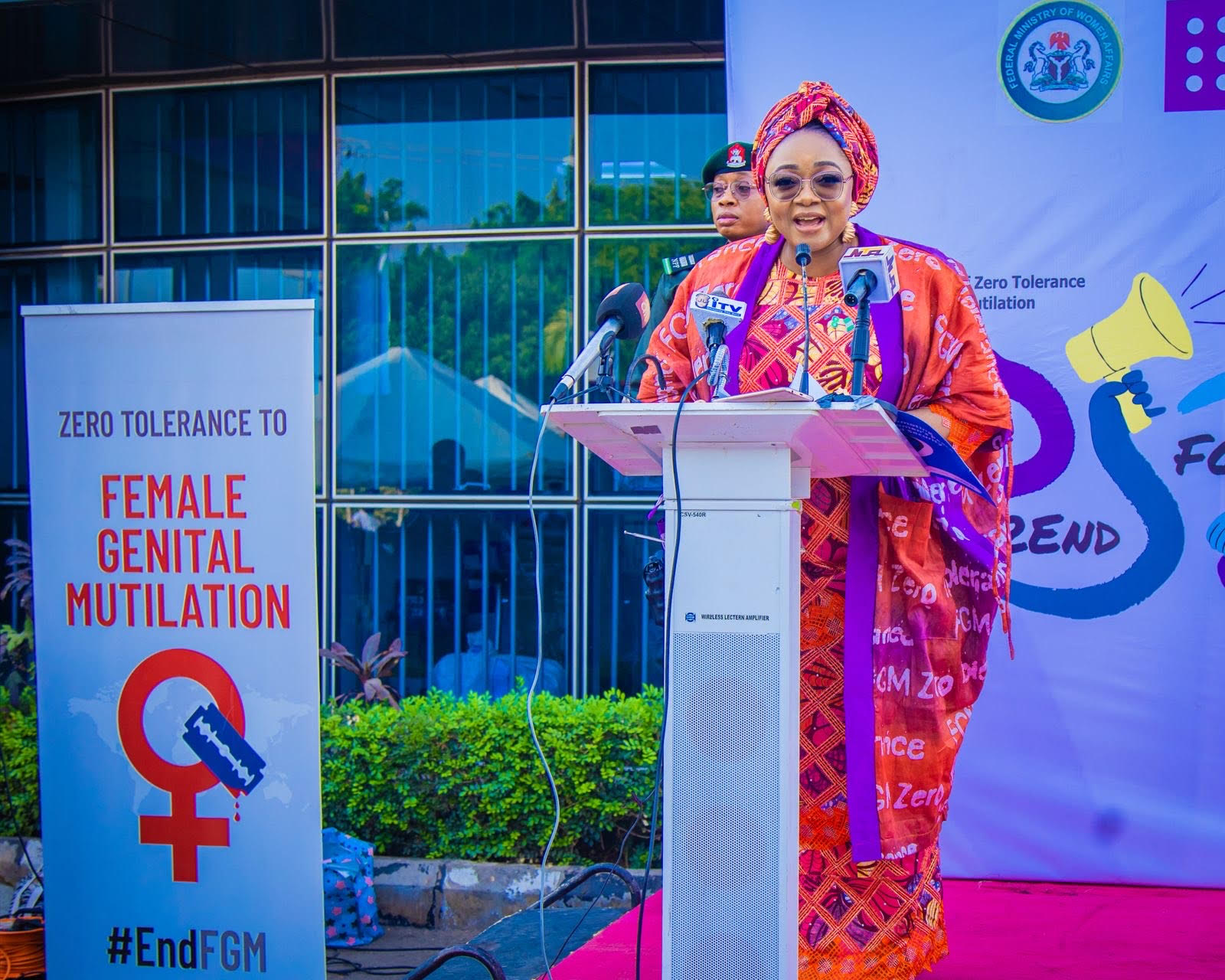
The Minister of Women Affairs, Imaan Sulaiman-Ibrahim, has declared that Nigeria must spearhead the campaign to eliminate Female Genital Mutilation (FGM), given the staggering number of 19.9 million women and girls affected in the country.
She said this places Nigeria as having the third-highest number of FGM cases worldwide. The 2018 National Demographic and Health Survey (NDHS) indicates a 20% prevalence rate among women aged 15–49.
The Minister’s call to action came on the International Day of Zero Tolerance for Female Genital Mutilation, with the theme: “Stepping Up the Pace: Strengthening Alliance and Building Movements to End Female Genital Mutilation”.
She said: “Nigeria remains among the countries with the highest burden of FGM globally. With 19.9 million women and girls affected (NDHS, 2018), our nation bears a significant responsibility to lead the charge in eliminating this harmful practice,” Sulaiman-Ibrahim stated, emphasising the urgent need for intensified action.
The 2018 Nigeria Demographic and Health Survey (NDHS) reveals that 20% of women aged 15–49 have undergone FGM, with particularly high rates in the South East (35%), South West (30%), and South-South (24%) regions.
FGM, a violation of the right to life, health, and dignity of women and girls, has been recognised by the Nigerian government as a discriminatory practice requiring policy intervention since 2002.
Nigeria has adopted the Sustainable Development Goals (SDGs) framework and is obligated to meet the target of reducing the proportion of girls and women aged 15–49 years who have undergone FGM.
Other News
Speaking at a joint ministerial press briefing on the International Day of Zero Tolerance for Female Genital Mutilation, Sulaiman-Ibrahim described FGM as “not merely a cultural practice but a fundamental breach of human dignity, a direct assault on the total well-being of women and girls, and a significant impediment to sustainable development.”
She underscored the commitment of President Bola Tinubu’s administration to reinforce legal frameworks, expand community-level interventions, and foster behavioural and cultural shifts to eradicate FGM.
“Today, we will share our template, outline our multi-sectoral strategy, and the collective action needed to accelerate efforts on ending Female Genital Mutilation (FGM) once and for all,” Sulaiman-Ibrahim stated, stressing the importance of a unified approach to tackle this deeply entrenched issue.
The commemoration included an advocacy walk to the National Assembly, aimed at engaging lawmakers to strengthen legal measures against FGM, alongside discussions with community leaders, religious figures, and policymakers to stress the critical need to abandon the practice.
Dr. Maryam Ismaila Keshinro, Permanent Secretary and Consultant Medical Doctor, defined FGM as the partial or total removal of the external genital organs for non-medical reasons. She further explained that FGM is “a public health problem often undertaken as a traditional rite to supposedly protect chastity by limiting sexual enjoyment”.
Keshinro warned against the adverse health impacts and life-threatening complications associated with FGM, including severe bleeding, infection, childbirth complications, and long-term psychological trauma. “Beyond its physical harm, FGM is a tool of discrimination that deprives women and girls of an essential part of their bodies in an attempt to control their sexuality,” she added.
Representatives from various organisations, including the Federal Ministry of Health, UNFPA, UNICEF, UN Women, WAVE Foundation, and NCWS, pledged their support to eliminate this “ugly, barbaric practice”.
The most common types of FGM practised in Nigeria are Type I (clitoridectomy) and Type II (excision), with Type III (infibulation) and Type IV (unclassified) also occurring. Traditional healers, traditional circumcisers, traditional birth attendants, and community members are known to perform FGM.