Follow Us on Google
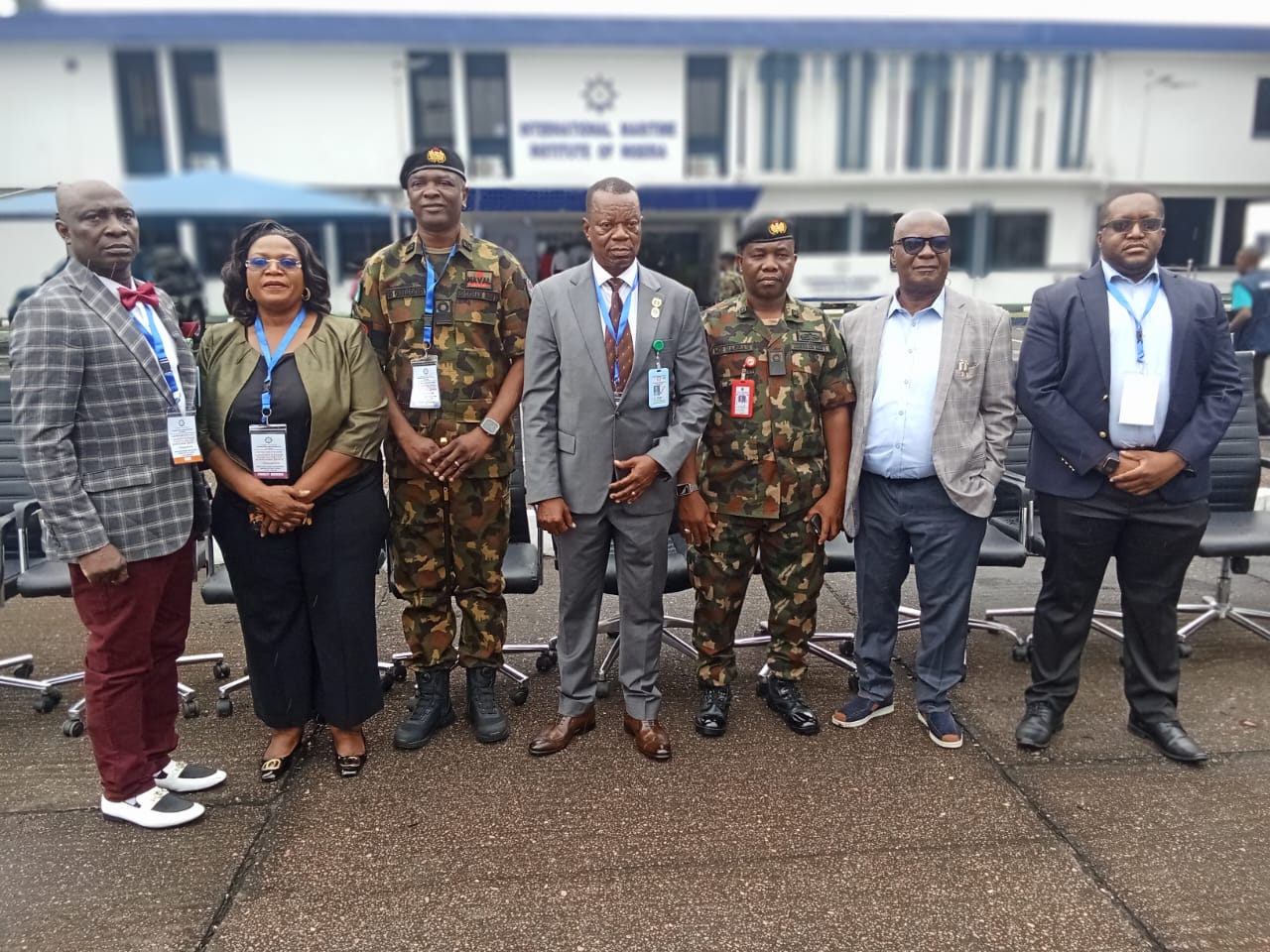
The Director-General of the International Maritime Institute of Nigeria (IMION), Dr Thaddeus Udofia, has called on Nigeria to position itself as a competitive maritime and logistics hub in Africa and beyond.
Udofia said efficient logistics would reduce the cost of doing business, improve competitiveness, strengthen supply chains and enhance the capacity of Nigerian ports and maritime corridors to support international trade.
He spoke at the opening of an executive course organised by the institute in Lagos, saying the programme was designed to address logistics bottlenecks, reduce port inefficiencies and strengthen trade facilitation to unlock the opportunities in Nigeria’s blue economy.
The three-day executive programme, themed “Logistics and Trade Facilitation for Blue Economy Growth,” brought together stakeholders from the maritime, logistics, security, regulatory and academic sectors.
Udofia said effective trade facilitation required cooperation and coordination among specialised stakeholders, including the Nigeria Customs Service, port authorities, regulatory agencies, shipping companies and logistics operators.
He said, “We must therefore move from working in institutional silos, as the future of the blue economy requires greater collaboration, digitalisation, transparency, interoperability and coordinated policy implementation.”
According to him, the blue economy offers Nigeria significant opportunities for sustainable economic growth, job creation, increased trade and regional integration.
He noted that Nigeria’s vast maritime resources, including its coastline, Exclusive Economic Zone, inland waterways, creeks, estuaries and the Niger Delta Basin, could only be translated into economic prosperity through efficient logistics, modern infrastructure and coordinated institutional frameworks.
Udofia said the movement of goods, people, information and services across maritime corridors must be improved if Nigeria was to maximise the benefits of its blue economy.
“Logistics is the backbone of the maritime industry,” he said, stressing that a substantial proportion of global trade was transported by sea.
He warned that Nigeria’s blue economy would be unable to realise its full economic potential without an efficient and integrated logistics system.
The IMION Director-General explained that the executive programme was designed to identify challenges affecting the movement of goods and services within Nigeria’s maritime environment and develop practical solutions.
He said participants would gain professional knowledge, practical logistics solutions, opportunities to interact with industry experts and valuable professional networks.
Udofia also called for greater collaboration among customs authorities, port operators, regulators, shipping companies, freight forwarders, transport operators, technology providers and financial institutions.
He said Nigeria could no longer afford to operate institutions in isolation, stressing that the future of the country’s blue economy depended on collaboration, digitalisation, transparency and effective policy implementation.
The programme, he added, would explore ways to reduce port delays and transaction costs, improve cargo clearance and supply chain visibility, attract investment, and promote employment and socioeconomic development.
Logistics key to Blue Economy
Also speaking, the Dean of the School of Transport and Logistics at Lagos State University, Prof. Ogochukwu Ugboma, described logistics as a major driver of efforts to transform the various components of the blue economy into economic value.
Ugboma said the blue economy extended beyond maritime trade to include coastal resources, tourism and other economic activities.
She stressed that logistics involved more than the physical movement of goods, explaining that information and financial flows were equally important to the effectiveness of supply chains.
Speaking on the challenge of transporting cargo from Lagos ports to the hinterland, Ugboma said improving operations within port terminals alone would not solve Nigeria’s logistics problems.
She called for better access roads, improved gate turnaround times and stronger connectivity between ports and the hinterland.
According to her, logistics efficiency could only be achieved through an interconnected system rather than isolated improvements.
Nigeria losing value to port inefficiencies
Similarly, the Founder and Chief Executive Officer of Supply Chain War Room and Director-General of the African Centre for Supply Chain, Dr Obiora Madu, said Nigeria was losing considerable economic value due to inefficiencies and congestion within its port and logistics systems.
Madu urged stakeholders to begin viewing ports as economic corridors rather than merely gateways for imports and exports.
He said the effectiveness of any port depended largely on its connectivity to the hinterland.
According to him, delays and congestion at Nigerian ports increase the cost of doing business, with the additional expenses eventually passed on to consumers.
Madu said reducing logistics costs and improving customer service should remain key priorities in efforts to reform Nigeria’s supply chain and maritime sectors.
He also urged IMION to sustain research into Nigeria’s performance on the World Bank’s Logistics Performance Index and develop practical recommendations to improve the country’s competitiveness.
Navy support for IMION
Udofia used the occasion to acknowledge the support of the Chief of Naval Staff, Vice Admiral Idi Abbas, particularly for supporting IMION and facilitating the participation of Nigerian Navy personnel in the programme.
The IMION Director-General also unveiled the second edition of the IMION Newsletter, which he said would serve as a platform for documenting developments, innovations and emerging issues within Nigeria’s maritime industry and the wider Gulf of Guinea.
The programme featured discussions on modern logistics systems, customs procedures, port operations, multimodal transportation, supply chain management, trade facilitation and sustainable blue economy development.
The programme is expected to equip participants with practical knowledge and strengthen professional networks that could support the development of a more efficient, competitive, resilient and sustainable blue economy in Nigeria and Africa.
Participants included representatives of the Nigerian Navy, Nigeria Customs Service, port authorities, regulatory agencies, maritime organisations, logistics companies, government institutions, academic institutions and the Nigerian Immigration Service.