Follow Us on Google


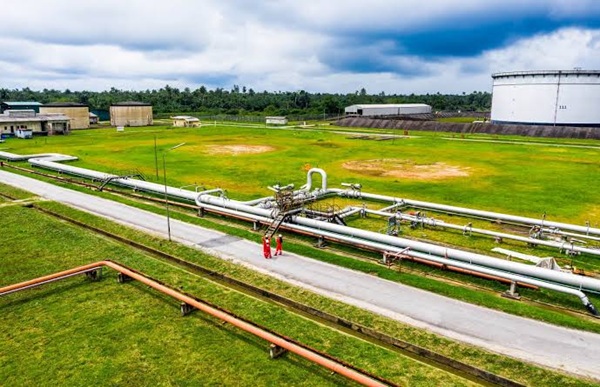
Nigeria’s failure to translate its abundant oil and gas resources into production and economic prosperity has come under renewed scrutiny, with the Federal Government disclosing that the IMA gas field, discovered in 1973, only reached a Final Investment Decision (FID) in September 2026, after more than five decades.
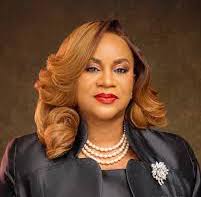
The Special Adviser to the President on Oil and Gas, Olu Arowolo Verheijen, disclosed this on Monday, at the 44th Annual International Conference and Exhibition of the Nigerian Association of Petroleum Explorationists (NAPE) in Lagos.
She said the delay illustrated how policy uncertainty, slow contracting, uncompetitive economics and unreliable access to paying customers had undermined investment in Nigeria’s petroleum industry.
Verheijen said the gas field’s development decision demonstrated that the country’s investment challenges were not necessarily caused by a lack of resources but by conditions that made projects difficult to finance.
She said: “The gas did not suddenly appear in 2026. The conditions for investing in it changed.”
According to her, Nigeria had for too long expected its favourable geology to compensate for weaknesses in its investment environment, including unclear responsibilities, slow contracting processes, uncompetitive fiscal terms and unreliable routes to paying customers.
Verheijen said the Tinubu administration had embarked on reforms aimed at changing the investment proposition through fiscal adjustments, negotiations and the removal of obstacles preventing investment decisions.
She explained that the reforms were designed to reward production, protect existing revenues, maintain workable rules and provide incentives tailored to specific resources.
In the gas sector, she said, fiscal reforms had to be accompanied by commercial negotiations, adding that access to customers and prices capable of justifying investments were critical to making projects financially viable.
She cited the opening of opportunities for third-party gas supply to Nigeria LNG Limited (NLNG) as part of the efforts to improve the commercial viability of gas investments.
The presidential aide disclosed that the IMA project had joined Ubeta and Bonga North, which reached FIDs in 2024, as major projects whose investment decisions were now moving them into execution.
She, however, warned that securing investment decisions was only the beginning, stressing that the government and industry must now translate the improved investment environment into higher production and broader economic benefits.
“ We have begun to change the investment story. We must now change the production story, and through it, the economic story,” she said.
Verheijen said Nigeria must also intensify exploration, strengthen indigenous technical capacity and deploy technology to improve production efficiency if it hopes to sustain growth in the petroleum industry.
She urged operators to bring forward exploration programmes capable of replenishing their reserves and identify the government decisions required to unlock new investments.
On indigenous participation, she said the growing presence of Nigerian independent oil companies offered an opportunity to drive growth in onshore and shallow-water operations, while international oil companies could concentrate on deepwater and integrated gas projects.
She, however, stressed that Nigerian ownership must be backed by sound governance, strong balance sheets, technical competence and environmental responsibility.
According to her, local content should produce lasting capabilities, including Nigerian engineers capable of leading complex developments and indigenous fabrication companies able to compete for contracts beyond the country’s borders.
The presidential aide further called for greater adoption of technology, including artificial intelligence, improved seismic interpretation, reservoir modelling and digital monitoring, to reduce operational uncertainty, lower costs and minimise production losses.
Beyond the petroleum industry, Verheijen said Nigeria’s oil, gas and electricity sectors must operate within a coordinated national energy strategy to support industrialisation and economic growth.
She noted that unreliable electricity supply was undermining the competitiveness of factories, while inadequate processing, storage and transportation infrastructure prevented farmers from maximising the value of their produce.
She said gas development would only deliver its full economic potential if industries, power producers and other consumers could access reliable supplies and suppliers had confidence that they would be paid.
She identified the resolution of legacy power-sector debts, improved metering and targeted support for vulnerable electricity consumers as essential components of a viable energy market.
According to her, Nigeria must move beyond exporting raw resources to manufacturing more of what it consumes, processing more of what it produces and supplying more energy products to neighbouring countries.
Verheijen acknowledged that Nigerians were entitled to demand tangible improvements in their living conditions rather than rely on government policy announcements.
“A family struggling with the cost of living cannot spend a forecast. A business cannot run on a policy announcement. Nigerians are entitled to ask when reform will make their lives better. We owe them honest answers and sustained delivery,” she said.