Follow Us on Google
From Adanna Nnamani, Abuja
The Nigeria Labour Congress (NLC) has warned that the country is steadily losing the battle against corruption and illicit financial flows (IFFs), as entrenched systems of looting continue to undermine governance, economic growth, and citizens’ welfare.
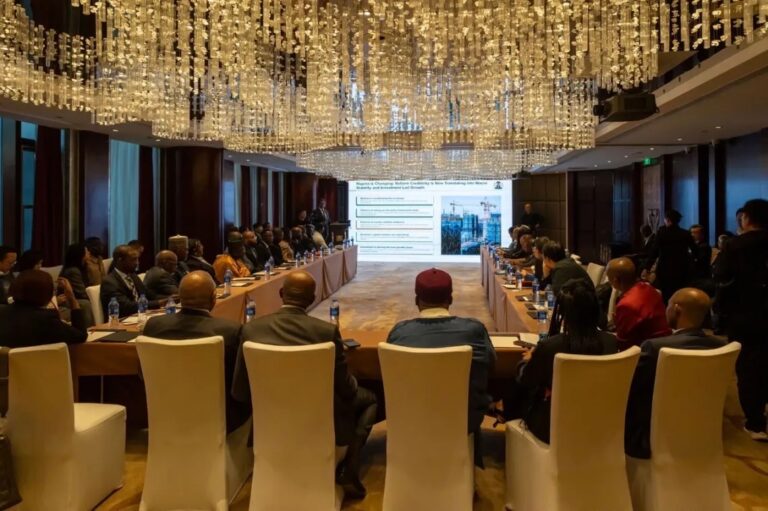
The warning came at a meeting of trade unions and civil society organisations (CSOs) focused on strengthening coalitions to combat kleptocracy and illicit financial flows, where labour leaders said the country’s anti-corruption framework has failed to deliver meaningful results.
Speaking at the event, NLC General Secretary, Emmanuel Ugboaja, described the situation as a war for the soul and wealth of Nigeria, noting that despite years of reforms and interventions, corruption remains deeply institutionalised.
Ugboaja, who was represented by NLC Assistant Secretary-General, Onyeka Chris cited findings from a labour-backed study which revealed that corruption in Nigeria is no longer limited to isolated incidents but driven by a system of kleptocracy, where public institutions are captured and used to serve elite interests.
He explained that massive financial leakages, particularly through inflated contracts, weak regulatory systems, and capital flight, have deprived the country of critical resources needed for infrastructure, healthcare, education, and job creation.
The labour leader also criticised what he described as selective enforcement of anti-corruption laws, where low-level offenders are prosecuted while politically exposed persons evade justice through influence and patronage.
He further warned that weak rule of law, compromised institutions, and constitutional protections such as immunity clauses have created a culture of impunity, allowing corruption to thrive unchecked.
He said: “We are not here to merely discuss problems and produce another communique for the shelves. We are here because we are at war which we seem to be losing. It is a war for the soul and the wealth of Nigeria, and we have assembled the necessary forces to change the terms of engagement. Our people must win and Nigeria must win.
“We are confronting a system of kleptocracy, where the state itself has been captured and weaponized by a parasitic elite. They govern for their own gain, treating the treasury as their private account and the nation’s resources as their inheritance.”
Other News
Ugboaja further explained that the aim of the engagement was to move from analysis to action by building a coalition that is not just a talking shop but a fighting front.
“We will forge a structure with clear roles, responsibilities, and decision-making mechanisms that ensures we are agile, strategic, and effective. We will develop a national action plan that identifies our priority advocacy areas and charts a clear way forward,” he added.
Also speaking, the Deputy Regional Director for Africa at the Solidarity Center, Margie Peters, said corruption and illicit financial flows pose a direct threat not only to economic stability but also to democracy and social development.
Peters noted that African countries continue to lose substantial revenues to illicit practices, weakening governments’ ability to provide basic services and protect vulnerable populations.
“Illicit financial flows rob citizens of access to essential services and erode trust in public institutions,” she said, adding that empowering workers and civil society is critical to reversing the trend.
In his remarks, James Eustace, representing the Tax Justice and Governance Platform, said civil society groups are intensifying advocacy for transparency, accountability, and fiscal justice, particularly in the implementation of tax policies and financial regulations.
He noted that the platform, which brings together organisations such as ActionAid, Oxfam, Christian Aid, and CISLAC, has played a key role in pushing for reforms aimed at curbing illicit financial flows and promoting equitable economic policies.
Participants at the meeting agreed that the current anti-corruption approach requires a major shift, stressing that government institutions alone cannot address the crisis without sustained pressure from organised labour and civil society.
They called for urgent reforms, including stronger whistleblower protections, enforcement of beneficial ownership transparency, judicial independence, and mechanisms for the recovery and accountable use of stolen assets.
The stakeholders also emphasised the need for a coordinated national and international response to dismantle the structures enabling illicit financial flows, warning that failure to act decisively could further weaken Nigeria’s democracy and economic prospects.