Follow Us on Google
By Steve Agbota, [email protected]
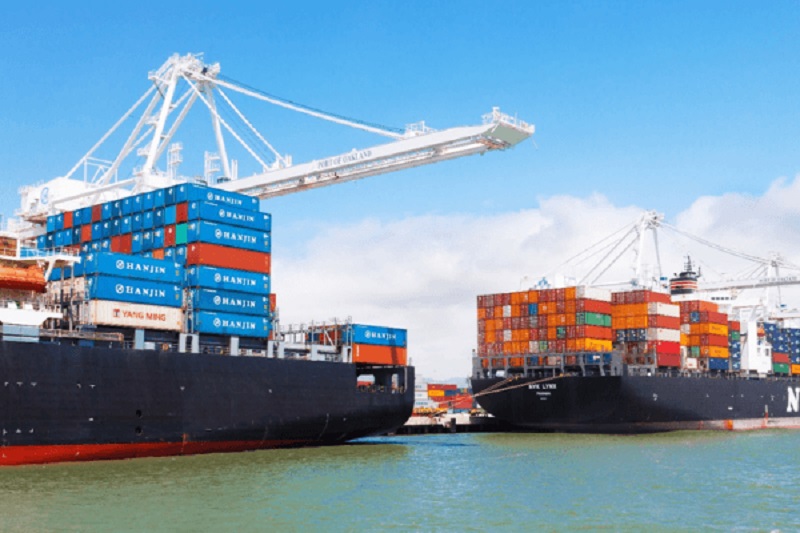
Nigeria’s maritime sector has reportedly lost about $2.5 billion in five years following the government’s failure to implement the International Cargo Tracking Note (ICTN).
The system is meant to monitor imports and exports, curb under-declaration and secure vital port revenues.
Daily Sun learnt that the multimillion-naira ICTN initiative was first introduced into Nigeria in 2010, during the late President Yar’Adua administration.
The intention was to tackle several challenges, such as under-declaration, concealment, and wrong classification of imported cargo. These challenges are the primary causes of revenue leakages, insecurity and safety issues at the seaports and other borders.
The International Cargo Tracking Note (ICTN) scheme is designed to enable port authorities to track the movement of vessels in real time, ensuring proper planning for docking and cargo handling. However, the initiative, which could have transformed port operations in Nigeria, was abruptly suspended in 2011 amid allegations of large-scale corruption. Since then, repeated efforts by successive administrations to revive the scheme have failed to gain traction.
Originally introduced after the September 11, 2001 terrorist attacks in the United States, the ICTN was adopted globally to enhance maritime security, transparency, and trade efficiency. Today, over 26 African countries, including Ghana, Togo, and Benin Republic, have successfully deployed the system at major ports such as Tema, Lome, and Cotonou. These countries are already reaping significant benefits from improved cargo monitoring, enhanced revenue collection, and reduced fraud, gains Nigeria continues to miss out on.
In 2023, the administration of former President Muhammadu Buhari approved the nationwide installation of the Electronic Cargo Tracking Note (ICTN) for all Nigerian seaports through the Federal Executive Council (FEC). The initiative was conceived as a dual-purpose platform—to curb the importation of arms fueling insecurity and banditry, and to boost government revenue through more transparent cargo monitoring.
However, the continued delay in implementing the system has sparked widespread frustration. The issue escalated to a public hearing at the National Assembly, where stakeholders in the maritime sector expressed deep concern over the government’s inaction.
More than a year after that October 2024 hearing, maritime industry leaders are again raising the alarm, warning that the ICTN may become “dead on arrival” if urgent steps are not taken. They emphasize that the system is crucial for enhancing cargo security, streamlining port operations, and protecting revenue.
Also known as the Advanced Cargo Tracking Note, the ICTN provides advance data on cargo content and movement, enabling authorities to monitor shipments before they reach Nigerian ports. Once implemented, the system is expected to drastically reduce smuggling, under-declaration, and procedural delays, while safeguarding billions of naira in potential revenue losses.
Daily Sun learnt that the initial target for ICTN implementation was the third quarter of 2024.
Experts have argued that ICTN would provide a proactive mechanism to monitor cargo before arrival, replacing reactive post-clearance inspections that often fail to prevent smuggling and under-declaration.
Stakeholders warn that continued foot-dragging could undermine confidence in Nigeria’s port modernisation efforts and complicate compliance for freight operators already grappling with high costs and bureaucratic bottlenecks.
Speaking with Daily Sun, a freight forwarder, Ojinma Onyekachi, said that corruption and fraud will not allow the cargo tracking note function in Nigeria. He said corruption has become a culture in Nigeria, adding that without corruption, nobody seems to survive.
“In Cotonou, they are implementing a cargo tracking note. Any goods without a cargo tracking note can never enter Cotonou. A cargo tracking note is what you use to track everything on a ship and the movement of the goods.
“For instance, I’m bringing goods from America. They will issue a cargo tracking note from America, meaning the goods are exactly as declared. But you know Nigeria is a country of fraud, where anything goes. They wouldn’t want the ICTN to scale through because Customs officers know they cannot manipulate things when there’s a cargo tracking note.
“Corruption in Nigeria has become an endemic issue. The government might not even listen when you talk about cargo tracking notes because they don’t understand. They’ll ask, ‘What are you tracking? How does it put money in our pockets?’ Yet, the ports have become the biggest smuggling points, even more than the borders,” he said.
According to him, there is not much smuggling at the borders anymore because procedures have been simplified and people can now move their goods and pay appropriately.
“But at the seaports, corruption is at its peak. If your goods are supposed to pay 100 percent duty, some pay just 20 percent. I doubt if the cargo tracking note will ever work in Nigeria because many importers won’t have the patience to comply.
“In Cotonou, for example, when you import goods, you pay 250,000 CFA francs to the government. They issue the note, and what you declare is exactly what you carry.
“It’s only in Nigeria that the cargo tracking note isn’t working. In African countries like Ghana, Togo, and Benin Republic, you must present the cargo tracking note before dealing with shipping companies. That’s the difference, corruption is part of our culture here. Anything without corruption can’t work in Nigeria.
“If you clear cargoes in Nigeria and pay 100 percent duty, you’ll suffer for it because you give them nothing. But those who cut corners get their goods released in two hours. That’s Nigeria for you. So, I don’t think cargo tracking notes will save this country because it has failed before,” he explained.
The National President of the Africa Association of Professional Freight Forwarders and Logistics of Nigeria (APFFLON), Frank Ogunojemite, said Nigeria must maintain close relationships with the countries where most cargoes originate.
“We must partner with countries of origin for these shipments. That will boost revenue and enhance security. Otherwise, people will continue making false declarations. Cargo Tracking Note is not new. It was initiated by America in 2011 after the terrorist attacks. The United States later urged the International Maritime Organisation (IMO) to recommend the system globally, and IMO directed other countries to adopt it,” he said.
However, he blamed inter-agency rivalry and inconsistent policies for the delay in implementing the ICTN.
“Initially, the Nigerian Ports Authority was mandated to implement the ICTN before the Federal Government directed the Nigerian Shippers’ Council to take over. For me, if they can stop inter-agency rivalry and clean up the system, they should reintroduce it to protect our borders and generate revenue,” he said.
Meanwhile, Babatunde Mukaila, former Secretary of the Association of Nigerian Licensed Customs Agents (ANLCA), said the delay reflects the hidden power struggles that often plague government processes.
“The ICTN could have been a reliable tool for intercepting illicit shipments, including tramadol and ammunition. It would have stopped many smugglers in their tracks.
“But we’re yet to see action. The focus seems to have shifted from security and trade efficiency to pecuniary interests, and this foot-dragging isn’t just about who gets what. When they finally share the spoils, a new crisis could emerge.
“The ICTN has the potential to transform cargo monitoring in Nigeria, but without political will and stakeholder buy-in, it risks becoming another paper promise while Nigeria keeps losing billions in preventable revenue,” he said.
Also, Stanley Ezenga, a chieftain of the National Association of Government Approved Freight Forwarders (NAGAFF), criticised the ICTN as potentially redundant.
“The information provided by ICTN is already captured in manifests and bureau records. Introducing a separate tracking note could amount to double taxation, increasing the financial burden on already strained importers,” he said.
Dr. Kayode Farinto, former Acting President of ANLCA, argued that the ICTN could be “dead on arrival” under the current administration’s approach.
“The government is trying to avoid placing more burdens on Nigerian shippers, but that may weaken the ICTN’s original purpose. If implemented, its cost should be embedded in freight charges rather than imposed separately; otherwise, industry players will resist it,” he said.