Follow Us on Google
By Steve Agbota
Despite possessing rich aquatic life surrounded by the Atlantic Ocean in the Gulf of Guinea and a maritime area of over 46,000 sq km and having over 200 different species of fish, Nigeria still spends over $1 billion on fish importation annually.
Economists describe it as suffering in the midst of abundance and a huge loss to the nation.
Amid frustration, stakeholders in the fisheries sector are calling for the creation of a dedicated development fund and the issuance of Blue Bonds to boost growth, cut imports and secure food self-sufficiency.
Today, Nigeria is grappling with a fish production deficit of more than two million metric tonnes, while 90 per cent of fish trawling operators have gone moribund, and the few ones in operation are struggling with Chinese, Indian, and Lebanese trawlers who always invade the nation’s waters to fish illegally.
Fishing is one of the cardinal powers of any nation’s blue economy. The blue economy is the sustainable use of ocean and coastal resources for economic growth. It integrates environmental, social, economic, and institutional objectives into the use of marine resources. It includes a wide range of sectors and resources related to oceans, seas, coasts, and waterways. The ocean economy supports 90 per cent of global trade and provides millions of jobs.
Marine fisheries and reefs, seagrass, and mangroves are worth $6.9 trillion, but unfortunately, Nigeria is not benefiting from this huge fortune due to unregulated and illegal activities in the sector.
Stakeholders said that out of 3.6 million metric tonnes of fish needed in the country for consumption, domestic production barely rises to 1 million metric tonnes, leaving a gap of over 2.6 million metric tonnes.
Daily Sun learnt that while fishing contributes to food security and income, Nigeria lacks modern fish harbour enforcement and value chains, while marine biotechnology, pharmaceuticals, or eco-solutions remain untapped.
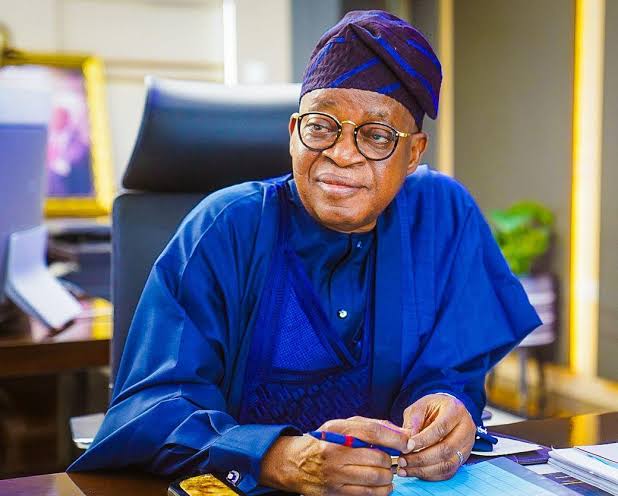
While meeting with fisheries cooperative groups in Abuja, the Minister of Marine and Blue Economy, Adegboyega Oyetola, said that the Federal Government has put plans in place to end Nigeria’s reliance on imported fish by boosting local production through comprehensive reforms in the aquaculture and fisheries sector as part of the sector reforms.
He said that the government is determined to reposition the sector as a critical driver of food security, job creation, and export development.
“Nigeria must chart a new course towards self-sufficiency in fish production. The Federal Government is fully committed to supporting the fisheries and aquaculture subsector through policy, technical support, and financial inclusion.
“We will scale up domestic fish production, reduce dependency on imports, and reposition the sector for sustainable growth,” he said.
Oyetola disclosed that the Ministry is intensifying efforts to empower women and youth with start-up grants and other support initiatives.
“Increasing youth participation in aquaculture is not only vital for food production but also a strategic solution to reducing unemployment. We are committed to ensuring that young people and women are not left behind in this transformation,” he said.
However, at a recent 3rd Citizens and Stakeholders Engagement organised by the Ministry of Marine and Blue Economy, operators pointed out that there is a need for alternative funding to boost fish production locally and reduce the capital flight annually.
Meanwhile, Acting National President of the Fisheries Cooperative Federation of Nigeria (FCFN), Mashi Gabriel Sani, lamented that despite Nigeria’s annual demand of 3.6 million metric tonnes of fish, domestic production falls short by more than two million metric tonnes, leaving the country dependent on costly imports that drain foreign exchange and export local jobs.
According to him, the country’s fishers and aquaculture farmers, who form the backbone of the sector, remain hampered by limited access to affordable credit, high interest rates, inadequate insurance coverage, and poor infrastructure.
Sani warned that without deliberate and strategic financing mechanisms, the objectives of the National Policy on Marine and Blue Economy risk remaining unrealised.
Sani explained that Nigeria must take bold steps to establish a dedicated Fisheries and Aquaculture Development Fund with single-digit interest rates and repayment terms aligned with natural production cycles.
He further stressed the need to strengthen cooperative financing models to de-risk lending and ensure grassroots inclusion while also embracing public-private partnerships and blended finance models supported by government guarantees to attract private equity and venture capital into the sector.
He pointed to the potential of Nigerian Blue Bonds, citing examples from Seychelles and Kenya, which could help raise capital for transformative projects such as hatcheries, feed mills, and processing hubs.
Beyond this, he urged the country to actively seek funding from international donors and development finance institutions, including the World Bank, IFAD, AfDB, and the Green Climate Fund.
He added that insurance and risk-sharing mechanisms must also be developed in partnership with NAIC and private providers to protect farmers and boost investor confidence.
“Our fishers and aquaculture farmers are the bedrock of this sector, yet they face persistent challenges such as limited access to affordable credit, high interest rates, inadequate insurance coverage, and poor infrastructure. Without deliberate and strategic financing mechanisms, the objectives of the National Policy on Marine and Blue Economy risk remaining unrealised,” he said.
Also speaking, a local boat builder and fishing expert, Mr. Christopher Ajayi, commended the Federal Government’s efforts in improving maritime security, noting that piracy on Nigerian waters has drastically reduced.
According to him, the development has restored confidence among vessel operators and reduced risks associated with maritime trade.
While lauding the progress in security, Ajayi emphasised the need for critical attention to Nigeria’s fisheries sector.
He noted that countries like Seychelles, despite their small size, have become major exporters of key commodities, arguing that Nigeria possesses the capacity to surpass such achievements.
He lamented Nigeria’s heavy dependence on fish importation, pointing out that the country spends over $1 billion annually importing fish despite having vast water resources and a long coastline.
“We are a littoral country with over 830 km of coastline, rivers, and lagoons. Why then do we continue to import fish?” Ajayi asked.
“In the past, there was a large chunk of funds involved in securing our vessels. But today, our waterways are safe, and piracy is near zero. Now, you can put your vessels in the sea and come back safely. One of the things our organisation has been doing in the last five to seven years is training over 200 boat builders. Acquiring vessels costs a lot, but building fishing vessels locally, especially fibre vessels suitable for our waters, is not rocket science. Encouraging enterprises to invest in this sector will be highly profitable,” he explained.
On his part, the Chieftain of the Lagos State Crayfish Cooperative, Mr. Ben Mosan, raised concerns about regulatory bottlenecks in fisheries management.
He accused multiple agencies of creating overlapping controls over fishermen, which has led to double registration demands, conflicts, and unnecessary financial burdens on fishing communities.
“This has also resulted in poor enforcement of fisheries law. Responsibilities that should be centralised under the Marine and Blue Economy Ministry are being duplicated, causing confusion and inefficiency,” Mosan stated.