Follow Us on Google

From Aidoghie Paulinus, Abuja
The Republic of Korea has expressed its readiness to deepen economic cooperation with Nigeria by shifting bilateral trade beyond the traditional exchange of crude oil, gas, automobiles and electronics to local manufacturing, agricultural mechanisation, technology transfer and industrial development, as trade between both countries reached approximately $1.1 billion in 2025.
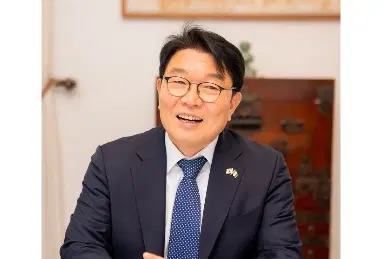
Korean Ambassador to Nigeria, Jeon Yoan, who disclosed this while briefing journalists in Abuja, said although political and economic relations between the two countries had continued to improve, the next phase of their partnership must focus on investments that would create jobs, strengthen Nigerian industries, develop local capacity and provide greater opportunities for young people.
The envoy said Nigeria remained one of Korea’s largest trading partners in Africa but stressed that the existing trade structure needed to evolve from the export of primary commodities and importation of finished products to a more productive relationship driven by local assembly, manufacturing, skills development and technology.
He identified agricultural machinery, digital technology, maritime development, energy, clean water and the emerging Korean beauty industry as areas with considerable potential for investment and cooperation.
“Today, Nigeria sells us mostly oil and gas. Korea sells mostly cars, electronics and machinery. We can do much more than that,” he said.
Yoan noted that Korean companies had maintained a significant presence in Nigeria for decades, citing Daewoo Engineering and Construction’s involvement in major projects, including the Nigeria Liquefied Natural Gas Train Seven and the Indorama fertiliser plant, as well as the operations of Samsung, LG, Hyundai and Solpia in various sectors of the economy.
“The next chapter should be ‘Made in Nigeria.’ Local assembly. Machinery for rice farmers. Digital skills. The maritime sector,” he declared.
He said the Korea Trade-Investment Promotion Agency (KOTRA), through its Lagos office, was positioned to facilitate stronger business relationships by helping Korean companies identify investment opportunities in Nigeria while assisting Nigerian businesses to access the Korean market.
“Our KOTRA office in Lagos can be a strong partner here. It helps Korean firms find their way into Nigeria, and it helps Nigerian firms find buyers in Korea. Please think of it as an open door,” he said.
The ambassador also identified Korean skincare and cosmetics, popularly known as K-beauty, as an emerging area of commercial cooperation, noting that Nigeria’s large youth population and growing consumer market presented opportunities for local distribution, partnerships and employment.
He, however, stressed that Nigeria needed to strengthen investor confidence through predictable economic policies, particularly in foreign exchange administration, customs procedures and taxation.
According to him, the double taxation agreement signed by Nigeria and Korea in 2006 remained unratified two decades later, a situation he said required attention to provide greater certainty for investors seeking to establish or expand operations in both countries.
“Investors need one thing above all: predictability. Clear rules on foreign exchange, customs and tax. Our two countries signed a double taxation agreement in 2006. Twenty years later, it is still waiting for ratification. Moving it forward would send a strong signal to investors,” he stated.
On political relations, Yoan said ties between Abuja and Seoul were becoming increasingly closer, pointing to recent diplomatic engagements and growing cooperation at bilateral and multilateral levels.
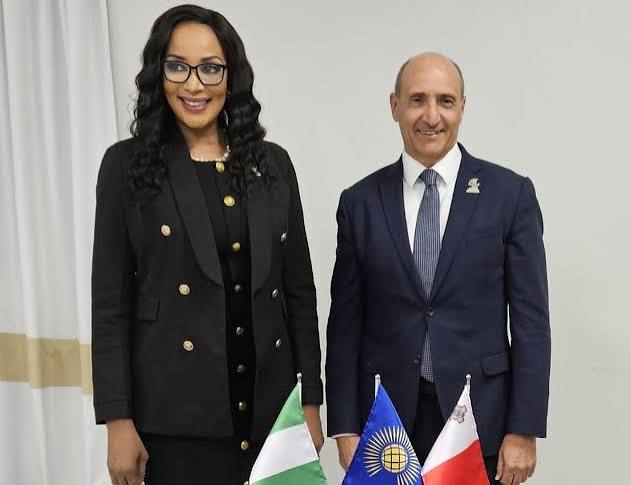
He recalled that Korea hosted the first Korea-Africa Summit in Seoul in June 2024 and subsequently convened the first Korea-Africa Foreign Ministers’ Meeting in June 2026, where Nigeria was represented by a delegation led by the Minister of Foreign Affairs, Bianca Odumegwu-Ojukwu.
The ambassador said Nigeria’s message at the meeting was particularly significant because it emphasised the country’s preference for mutually beneficial economic cooperation rather than dependence on external assistance.
He quoted the minister as saying that “Nigeria seeks partnership, not charity,” adding that Korea fully supported that position.
Yoan disclosed that preparations were being considered for the seventh session of the Korea-Nigeria Joint Commission, which Nigeria had offered to host in Abuja.
“Nigeria has offered to host it here in Abuja. We value this offer, and we look forward to working on it together. We also value our friends in the National Assembly, including the Nigeria-Korea Parliamentary Friendship Group.
“In every channel, our approach is the same. Korea will be an equal partner. And we respect Nigeria’s own priorities.
“Our political ties are growing closer,” he said.
Drawing from Korea’s economic transformation, the envoy recalled that the country’s per capita income was below $100 in 1953, following the Korean War, but that sustained investments in education, industrial development, hard work and international partnerships helped transform its economy.
He stressed, however, that Nigeria must develop its own economic model based on its peculiar circumstances rather than attempt to replicate Korea’s development experience.
“Korea knows the road of development. In 1953, after the Korean War, our income was less than 100 dollars per person. Education, hard work and good partners changed our story. But the key word is not ‘copy.’ The key word is ‘adapt.’ Nigeria will write its own story. Korea is ready to share what we have learned,” he said.
Yoan disclosed that approximately 2,000 Nigerian officials had received training in Korea through the Korea International Cooperation Agency (KOICA), while the Smart School project implemented in partnership with the Universal Basic Education Commission (UBEC) had reached 8,000 children and trained more than 300 teachers and school leaders.
He said the interventions were designed to strengthen institutional capacity, improve educational outcomes and equip Nigerians with skills relevant to economic development.
The ambassador also highlighted the Abuja Centre for Entrepreneurship, whose groundbreaking ceremony was performed in September through a partnership involving KOICA, the Small and Medium Enterprises Development Agency of Nigeria (SMEDAN) and the United Nations Development Programme (UNDP).
He explained that the centre would support young entrepreneurs in transforming innovative ideas into viable businesses, while another initiative involving KOICA and the Food and Agriculture Organisation (FAO) was focused on creating green employment opportunities for young Nigerians in agriculture.
On cultural and people-to-people relations, Yoan said exchanges between both countries had expanded considerably, with increasing interest in Korean entertainment, cuisine, sports and education among Nigerians, alongside growing appreciation of Nigerian music and films in Korea.
He disclosed that about 350 athletes participated in the 14th Korean Ambassador’s Cup Taekwondo Championship held in Abuja late last month, while more than 400 young people attended the Korean Pop Festival in Lagos in June.
“K-dramas, K-pop and Korean food are now part of daily life for many Nigerians. And in Korea, more and more young people dance to Afrobeats and watch Nollywood films. This is a two-way street,” he said.
The envoy added that Nigerian students continued to benefit from Korean Government Scholarships, describing educational exchanges as an important foundation for enduring relations between the two countries.
He said Korea regarded Nigeria’s youthful population as a major national asset and would continue to pursue partnerships that promoted skills acquisition, entrepreneurship, stronger local businesses and improved living standards.
“Our shared goal is simple: more opportunities for young people, stronger local businesses, and better lives for our people,” he stated.