Follow Us on Google

From Ndubuisi Orji, Abuja
It was the Justice Mohammed Uwais panel on electoral reforms that first recommended the establishment of an Electoral Offences Commission and Tribunal. Since 2008 when the Uwais panel submitted its report, the desirability of an Electoral Offences Commission that will be saddled with the task of prosecuting electoral offenders, have been a reoccurring issue in political discourse in the country.
However, about 15 years after the idea was mooted, the Commission/ Tribunal is yet to be established while on the other hand, cases of electoral offences have continued to increase by the day; and posing serious threats to the country’s democracy.
Nevertheless, hopes heightened last August on the setting up of the Electoral Offences Commission/Tribunal, after the House of Representatives held a public hearing on a bill proposing an establishment of the anti-electoral offences commission. The Senate had passed its own version of the private member bill. Thus, the Green chamber needed to pass it as well, after which it was to be sent to the President for assent.
The proposed legislation prescribes a 15-year jail term or a minimum of N5 million fine for anyone convicted of vote buying, in any election, in the country, as well as a 20 -year jail term or a fine of N40 million for persons convicted of ballot box snatching.
The parliament is also proposing a 15 years jail term for anyone convicted of destroying or defacing a voter’s card, sells or offers to sell or purchase or offers to purchase a voter’s card from any person, while anyone convicted of hate speech or action which incites violence shall be liable to a minimum of 10 years imprisonment or a fine of at least N40 million.
Similarly, the bill prescribes at least 6-month jail-term or a minimum fine of N100,000 for anyone convicted of disturbing public peace at the venue of election. Also, security personnel and staff of INEC convicted trying to influence an election in favour of a candidate in an election shall be liable to at least 6-month imprisonment or a minimum fine of N500,000.
Other proposals include at least a 15-year jail term, without option of fine, for any judicial officer convicted of perverting electoral justice and at least 10 year-jail term or a fine of 5million, or both, for anyone convicted of impersonating a candidate in an election amongst others.
Stakeholders who spoke during the public hearing had lauded the bill, describing it as a panacea to the hydra-headed challenge of electoral offences, which have become a dent on the country’s electoral system.
For instance, chairman of the Independent National Electoral Commission ( INEC), Mahmood Yakubu had stressed the need for the prosecution of sponsors of electoral offences in the country, as a means of curtailing the menace. Yakubu had argued that the reform of the country’s electoral system will be incomplete without effective sanctions for electoral offenders.
According to him, “at present, INEC is saddled with the responsibility of prosecuting electoral offenders under the Electoral Act. This has been very challenging for the Commission. For instance, since the 2015 General Election, 125 cases of electoral offences were filed in various Courts out of which 60 convictions have been secured so far, including the most recent one in Akwa Ibom State.
“The Commission would like to see more successful prosecution of offenders, not just ballot box snatchers, falsifiers of election results and vote buyers at polling units but most importantly, their sponsors. We look forward to the day when highly placed sponsors of thuggery, including high-profile figures that seek to benefit from these violations, are arrested and prosecuted. We believe the work of the proposed Commission will help in this regard.”
The INEC boss explained that in as much as the electoral body is desirous of seeing more successful prosecution of electoral offenders, its efforts are hampered by its other functions, hence the need for a National Electoral Offences Commission.
He said, “the Commission’s incapacity to arrest offenders or conduct investigation that leads to successful prosecution of especially the high-profile offenders, led to the suggestion to unbundle the commission and assign some of its extensive responsibilities to other agencies as recommended by the Uwais and Nnamani Committees.
“For those who argue that the solution does not lie in expanding the federal bureaucracy by creating a new Commission, we believe that the National Electoral Offences Commission should be seen as an exception. While there are other security agencies that deal with economic and financial crimes, I am yet to hear anyone who, in good conscience, thinks that it is unnecessary to have established the anti-corruption agencies.”
In the aftermath of the public hearing, stakeholders had expressed optimism that the commission would have been put in place before the commencement of the 2023 general elections. This is especially as the Senate last September had assured that the Electoral Offences Commission Bill would be passed for use in the 2023 general elections.
Nevertheless, hope that the Electoral Offences Commission bill will be passed and commission established to deal with electoral offences in the 2023 general elections has dimmed considerably as the House is yet to complete work on the proposed legislation to the chagrin of stakeholders.
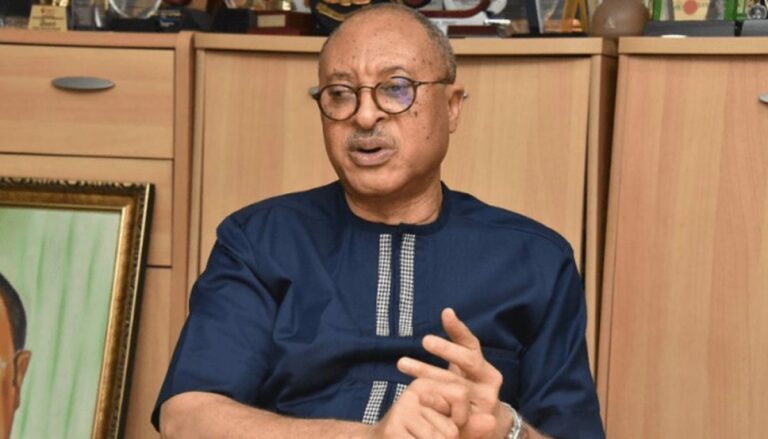
A political analyst, Jide Ojo told Daily Sun that the non passage of the Electoral Offences Commission Bill is an indication that that National Assembly does not want a change of the status quo. Like the INEC boss, Ojo believes that the establishment of the Electoral Offences Commission will help to end the culture of impunity in electioneering in the country.
“Unless, we have Electoral Offences Commission, there will always be culture of impunity. And that is what we need to deal with to be able to have sanity in our electoral process because as we can see right from when the campaign started, there have been so many infractions. Now, we are approaching the election D-Day; there will still be many other infractions.
“Why has the House of Representatives been foot dragging? They know that if electoral offences bill is passed and assented to by the president, many of them who are seeking re-election might be caught by the law.
“Unlike now where there is a bit of lethargy and incapacitation on the part of INEC to prosecute given the fact that the police are the one that are given the power to make arrests, and investigate whereas the power to prosecute was given to INEC, if there is Electoral Offences Commission, the commission will be vested with the three powers- arrest, investigation, prosecution.
And that means those who make the law may end up falling victim of it,” Ojo stated.
Regardless, the chairman, Partners for Electoral Reforms, Ezenwa Nwagwu told Daily Sun that in as much as he shares in the optimism that the Electoral Offences Commission will help to improve the integrity of elections in the country, relevant agencies should be able to enforce extant laws, in the absence of the commission.
Nwagwu explained that the major challenge is the weakness of the law enforcement regime in the country, noting that if security agencies do their work well, the situation will be better.
According to him, “if election fails, it is a failure of law and order. The Electoral Act has sufficient provision already to deal with the challenges that the Electoral Offences Commission will deal with. Let’s take for instance the issue of multiple PVCs. If you are found with multiple PVCs, the Electoral Act has no warning. The police doesn’t have to warn anybody. If you are found with that, you can be prosecuted and you can have a room in the correctional center.
“Murder on election day, is not different from the murder in our laws. This whole idea of political murder is a fraud. If somebody is slapped on election day, it is assault. There are laws in our books for assault.
“If the security agencies decide to maintain law and order professionally, I think we get the best results. Even if it is not established, those who have responsibility should do their job.”
Analysts say in the absence of the Electoral Offences Commission, all eyes will be on the police and other security agencies to bring electoral offenders to book. Whether or not they will live up to expectation is another issue all together.