Follow Us on Google

This is the last of our series on Nigeria @66. This time we are focusing on what can take Nigeria to the happy shores of success. Let’s start with the paradoxes that have haunted Nigeria since independence. We are a crude oil and gas exporting country and yet we import refined petroleum products. Why? Because of poor leadership. We have a large expanse of arable land good enough for food cultivation yet we import food. Why? Because of poor leadership. We have several universities of technology yet we have stunted technological development. Why? Because of poor leadership. We have about 40 solid minerals yet we import several things that our solid minerals could have done for us. Why? Poor leadership. We have gold deposits in abundance yet our women go abroad in search of gold trinkets. Why? Poor leadership.
Our leaders have depended since independence on the dollars that our oil and gas have produced. The fact is that we do not appreciate the gift of crude oil and gas because we did not create them. God just gave them to us a gift, a gift we never worked for. So we stay in bed and the dollars roll in. but we forget that the two assets are finite. We have done nothing, almost nothing to develop other sectors of the economy. We have failed to use the oil windfall profitably because we believe that the dollar will keep dropping in our wallets for ever. That is what is called “resources curse.” If we had had forward looking, thinking leaders we would not have been in the mess we are in today. But we don’t need to keep crying over spilt milk. Let us move forward by electing good leaders in 2027 to man our affairs in the Centre and the States. Let us also move away from the feeding bottle federalism that we practise today. Let us reduce the powers at the Centre so that the States can recover their creativity and generate funds for development. I know of no other country in the world that leaders of constituent entities troop to the nation’s capital to collect funds they never worked for. People do not truly appreciate that awoof because they never worked for it. They also do not utilize it well because it is a free gift from an unthinking father. If we want to have a better country like the other 25 federations in the world we must dismantle this hegemonic centripetalism. It puts too much power in the Centre and makes the struggle for Nigeria’s presidency a life-and-death affair. We must also limit ourselves to three or four parties. There are several advantages of having fewer parties than we have now. One, more worthy leaders will be on offer for selection. Two, voters will be able to choose wisely from the few candidates available. Three, fewer candidates make the contest worth the while of the voters. Four, INEC expenditure on elections will be lower than what it is now.
For us to become a great country, we must look beyond oil, gas and solid minerals. These three items will not last for ever. We must pay serious attention to mechanized agriculture, manufacturing, energy development and high technology. That means that our education must emphasise STEMM (Science, Technology, Engineering, Mathematics and Medicine) at the tertiary level above other subjects. Our institutions such as INEC, employment institutions, anti-graft agencies, wealth creation and preservation agencies and ombudsman organisations must do their duties towards having a country that is safer, fairer and saner than what we have now. These institutions are manned by Nigerians and if they are chosen largely on merit it behoves on them to make their impact felt in the resetting of the country. It is not only the leaders that can make a country great. The followers have a lot to contribute towards the greatness of their country. In fact the bulk of the work for that realisation depends more on the followers than on the leaders because it is the followers who elect the leaders during elections; it is followers who pay the bulk of the taxes needed for development; it is the followers who form the bulk of the country’s work force; it is the followers who live in the 774 local governments and have access to useful information in their territories. So the followers are supreme, not the leaders but in Nigeria the followers have downgraded themselves through corrupt practices, ethnicity and religious or regional affiliation.
Other News
During the 2014 national conference in Abuja, we assembled more than 600 recommendations that we thought could substantially improve Nigeria’s quality of implementation. These recommendations included some sensible recommendations we lifted from past national conferences which were never implemented. We added them to the new ideas we generated at that conference. If those recommendations had been implemented Nigeria would not have been what it is today. It would have been a better, a much better, country than what it is now. These ideas are still implementable today.
Our economy must shift emphasis from being largely import dependent to being largely export dependent. A lot of our raw materials need to be utilised as value-added manufactured products of good quality.
There are several countries that do not have abundant natural resources but have moved from third world to first world. Such countries include Switzerland, Japan, Singapore and Taiwan. Why are they successful? They are successful because they decided to build enterprise-driven economies powered by human capital and strong institutions. They have largely invested in capital development, innovation and global trade. These are what made them what they are today, successful countries that are the envy of other countries, even the ones that have abundant natural resources. They did so by prioritizing education, vocational training and science. We have many universities in Nigeria, owned by the Federal Government, State Governments and private sector organisations. What is their impact on Nigeria’s development? Or are they just towers of babel that teach our children what they got from foreign textbooks?
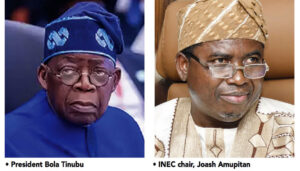
The Tinubu government has come up with something it calls Nigeria First. Nigeria First, in my opinion, means that we should patronize Nigeria made goods first before thinking of goods from other climes. But many Nigerians prefer foreign made goods because of their high quality which many Nigerian manufacturers are not interested in. For the policy of Nigeria First to succeed, Nigerians must be told to improve the quality of their products and not engage in fakery. These are many fake products in the market ranging from medicine, food, fuel, footwear to handbags. There ought to be a massive campaign for the drastic improvement of the quality of Nigerian products. Any product produced for the global market must be good enough to stand out among other products of the same specie in the market.
Perhaps the most important component of our search for greatness is Nigeria being able to establish a good governance culture that emphasizes transparency, accountability, prudent resource management free from corruption and extravagance. Nigeria has been very poorly managed since independence by its leaders. There is an excessive display of vanity by Nigerian leaders, something that is absent in many other countries. There is abundant corruption in our system for which only a few past leaders have been brought to justice. If we had a stricter and fairer system a lot of our leaders who are walking around freely today would have been in jail. But that is the system we have and except someone has the political will to take more serious steps on corruption we will continue to be in the hole. But achieving greatness depends not just on the leaders but even more importantly on the workforce. Many Nigerians with high quality skills are leaving Nigeria for other countries. This japa business has to be halted if we are to have skilled workforce that can take Nigeria to a higher level than we are now. As it is now, we don’t have many Nigerians who trained abroad returning home. Rather we have those trained both here and abroad staying or going abroad. That is a disaster too deep to mention. Efforts must be made by the various governments to bring them back home because it is highly skilled persons that can drive high quality development.