Follow Us on Google
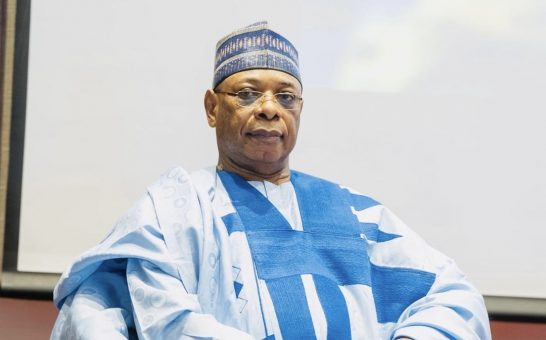
Secretary General, Maritime Organisation of West and Central Africa (MOWCA), Dr Paul Adalikwu, has said that the Niger Delta has the natural and economic assets to emerge as a major gateway for African trade, shipping, logistics and industrial production, but these resources must be deliberately developed into businesses, jobs and investment opportunities.
Adalikwu spoke on Wednesday at the inaugural Niger Delta Economic and Investment Summit (NDEIS), held at the Obi Wali International Conference Centre, Port Harcourt.
The three-day summit, organised by the Niger Delta Chambers of Commerce, Industry, Trade, Mines and Agriculture (NDCCITMA) in partnership with the Niger Delta Development Commission (NDDC), has as its theme: “Driving Investment, Innovation and Industrial Growth in the Niger Delta.”
Adalikwu said the region’s oil and gas resources, waterways, wetlands, coastline, ports, fisheries, entrepreneurial communities and large young population provided the foundation for sustained economic growth. He, however, said having abundant resources alone would not translate into prosperity unless they were converted into productive assets, industries, jobs, trade and investment.
He said the region must “move from extraction to value addition; from isolated projects to integrated economic systems; and from dialogue to bankable deals.”
According to him, the Niger Delta should move beyond exporting crude oil to producing and exporting refined petroleum products, petrochemicals, gas-based products, processed agricultural commodities, manufactured goods, maritime services and knowledge.
He also called for the development of the region’s waterways as economic corridors and its coastline as the base of a competitive maritime economy.
Describing the Niger Delta as “fundamentally a maritime region”, the MOWCA chief said maritime activities must be placed at the centre of the region’s development strategy.
He identified shipping, ports, inland waterways, shipbuilding and repair, marine engineering, fisheries, aquaculture, offshore services, logistics, maritime tourism and marine technology as areas capable of generating jobs and wealth.
Adalikwu explained that an efficient port does not only create business for shipping companies but also increases demand for trucking, warehousing, banking, insurance, information technology, manufacturing, construction and hospitality.
He said efficient inland waterways could also reduce transportation costs and reconnect communities that are currently difficult to access.
According to him, the blue economy should be treated as an integrated system covering fisheries and aquaculture, inland water transport, ports and logistics, ship repair, offshore energy services, marine technology, coastal tourism, renewable offshore energy, marine biotechnology, waste management and climate-resilient coastal infrastructure.
“Imagine a region where agricultural products from inland communities are transported through efficient waterways to processing centres, from processing centres to logistics hubs, and from those hubs through modern ports into regional and international markets,” he said.
Adalikwu said the Niger Delta’s position along the Gulf of Guinea should also be treated as a strategic economic advantage because of its proximity to major producing and consuming markets across Africa.
He said MOWCA, which has 25 member states comprising 20 coastal and five landlocked countries, wants the Niger Delta to become a gateway to the West and Central African maritime economy rather than remain largely identified as an oil-producing region.
He linked the proposal to the African Continental Free Trade Area (AfCFTA), saying trade agreements alone could not move goods across borders.
According to him, infrastructure, logistics, shipping and efficient border systems are required to turn trade agreements into actual commerce.
He called for stronger intra-African maritime connections, feeder shipping services, coastal shipping and increased access to shipping finance to enable African businesses capture more value from the continent’s growing trade.
Other News
On agriculture, Adalikwu backed the development of processing industries, using palm oil as an example of how the region could produce, process, package, finance, transport and export commodities.
He said the same approach should be applied to rubber, cassava, cocoa, fisheries and other products produced in the region.
He also called for better connections by air, road, rail, inland waterways, ports and digital networks, saying investors would naturally be attracted to locations where goods, people, money and information could move efficiently.
The MOWCA secretary-general identified trust as critical to attracting investment, saying predictable regulations, quick approvals, secure land titles, reliable electricity, efficient dispute resolution and transparent public-private partnerships were necessary for investors to commit capital.
He also described peace and security as economic infrastructure, stressing that sustainable investment could not thrive without security.
He called for a development, security and investment approach that would ensure communities benefit from economic activities, young people gain access to jobs and skills, local businesses participate in supply chains and investors can protect their investments.
Adalikwu identified the region’s youth population as its biggest untapped economic asset.
He urged governments and businesses to create pathways linking education with technical skills, entrepreneurship, finance, markets and jobs, particularly in marine engineering, naval architecture, port operations, logistics, hydrography, maritime law, data science and environmental management.
He said Africa could not build a competitive maritime economy if it continued to depend heavily on foreign technical expertise.
To turn the summit’s discussions into actual investments, Adalikwu proposed a Niger Delta Investment and Blue Economy Compact involving governments, the NDDC, development finance institutions, private investors, communities and technical partners.
He proposed 10 priority areas, including a regional development bank, an integrated maritime and logistics corridor, an air-connectivity network, gas utilisation and industrialisation, palm oil and agro-industrial clusters, a blue economy investment programme, inland waterway development, ship repair and offshore services clusters, coastal resilience and environmental restoration, as well as a youth maritime, technology and entrepreneurship programme.
He said every proposed project should have a sponsor, feasibility plan, financing strategy, implementation timetable and measurable targets.
He added that each project should clearly state what it seeks to achieve, its economic and social value, the amount of capital required, the proposed financing or public-private partnership structure and what is needed to achieve financial closure.
Adalikwu said MOWCA was ready to support the region in maritime connectivity, safety and security, port and shipping development, inland waterways, manpower development, ship repair, blue economy investments and harmonisation of maritime policies.
He said the Gulf of Guinea should no longer be viewed only through the lens of maritime security but also as a major economic production and connectivity zone.
“Security must create the conditions for commerce; commerce must create prosperity; and prosperity must reinforce stability,” he said.
Adalikwu called for a new focus on investment, innovation, enterprise, maritime connectivity, industrialisation and shared prosperity.
“The future should not be something that happens to the Niger Delta. The future must be built by the Niger Delta and built for the prosperity of its people, Nigeria and Africa,” he said.