Follow Us on Google
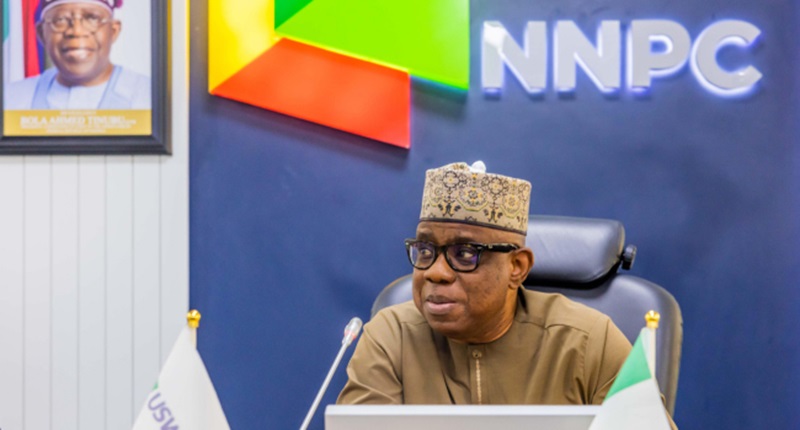
In a country long habituated to political doublespeak and corporate euphemisms, clarity is a rare commodity. At the Nigeria International Energy Summit (NIES) 2026, Engr. Bashir Bayo Ojulari, Group Chief Executive Officer of NNPC Limited, offered exactly that—a kind of candidness that is, in itself, revolutionary. In a fireside chat with Vimbai Mutinhiri-Ekpenyong of Arise TV, Ojulari did not merely speak; he signalled a philosophical shift in how Nigeria’s largest oil company views itself, its mandate, and its future. He moved the conversation from what is politically convenient to what is economically essential.
For decades, NNPC carried a weighty, self-imposed burden: it was expected to be everything for everyone. The corporation had to serve as a treasury cash cow, a subsidised fuel provider, a social welfare agency, and a national symbol, all while running world-class refineries and competing on the global stage. The consequence of this overreach, Ojulari candidly stated, was monumental—value destruction for its sole shareholder, the Nigerian people, and other stakeholders. The nation’s refineries, particularly those in Port Harcourt, Warri, and Kaduna, became emblematic of this failure: perpetual money pits with minimal output.
At NIES 2026, Ojulari addressed this legacy with surgical precision. On the halted rehabilitation of the refineries, he made it clear that the issue is neither political nor emotional. “The issue is not emotional, political, or symbolic,” he said. “It is economic.” For NNPC, he explained, the guiding question must now be whether an investment creates or destroys value—a language of commercial pragmatism, not sentiment, aligned with the Petroleum Industry Act (PIA).
Ojulari’s forthrightness underscores why his leadership is widely described as that of a “straight shooter.” The refinery problem was long misdiagnosed as a technical glitch fixable with additional capital. Ojulari reframed it publicly as a structural and governance failure. Simply pumping money into broken systems, he stressed, is not rehabilitation; it is fiscal recklessness.
His proposed solutions are strategic, not symbolic. He spoke of joint venture partnerships, equity restructuring, and operational reconfiguration—market-tested tools designed to revive distressed assets. This approach signals an NNPC willing to share risk, attract real technical expertise, and submit to the accountability that comes with private capital. It acknowledges that solutions are not monopolised by the corporation; rather, the Bank must carefully curate partnerships to deliver results.
Beyond technicalities, Ojulari’s candour injects something long missing from Nigeria’s energy discourse: institutional maturity. There is no defensive bluster, no overblown promises of instant restoration. Instead, there is sober recognition that continuing on the old path would compound losses. This honesty, while jarring to some, builds credibility, reassuring investors, partners, and citizens that the company is under leadership committed to truth over comforting illusions.
Other News
The stakes could not be higher. The PIA was intended to transform NNPC into a commercially driven, profit-oriented enterprise. Ojulari’s statements are an unequivocal executive confirmation that this transformation is now operational. Sentimentality must give way to commerciality; symbolic ownership must give way to value creation. The emphasis must shift from holding assets for national pride to managing them for national prosperity.
For Nigerians, the message is clear: this is a moment to rally behind strategic, principle-driven leadership. Supporting Ojulari is not about endorsing an individual—it is about supporting a principle: that national assets should be guided by logic and value creation, not nostalgia or political noise. The paused refinery rehabilitation is not abandonment; it is a necessary recalibration to design a viable path forward.
The road to a profitable, efficient, and sustainable NNPC will be challenging. It will demand discipline, governance reform, and the political courage to execute partnership deals. But for the first time in a long while, the ship’s captain is navigating by the right compass: value creation, commercial viability, and transparent accountability.
Engr. Bashir Bayo Ojulari has confronted a historically intractable problem, called it by its true name, and charted a credible course to solve it. For the sake of Nigeria’s energy security and economic future, this leadership deserves not just attention, but full-throated support. The era of trying to be everything for everyone is over. The era of delivering value for everyone has begun.
Adeyemi Adegbola is an Oil & Gas lawyer based in London.