Follow Us on Google
By Chukwuma Umeorah
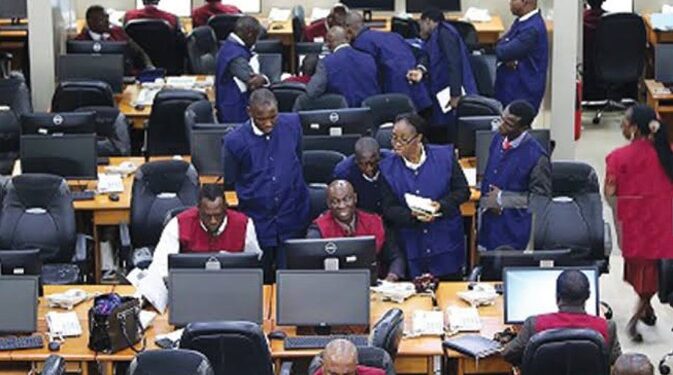
The Nigerian equities market endured its bleakest month on record in November 2025, losing N6.54 trillion in market value as panic-driven selloffs swept through the Nigerian Exchange (NGX).
The rout, triggered by swelling investor anxiety over the planned 30 per cent Capital Gains Tax (CGT) set to take effect on January 1, 2026, has gone down as the most severe monthly loss since the exchange crossed the N10 trillion mark in January 2013.
According to a comprehensive review of market capitalisation trends by Nairametrics, no other month in the NGX’s modern history compares in scale or velocity.
November’s slump dwarfed previous historic downturns, including April 2024’s N3.5 trillion loss, October 2022’s N2.57 trillion decline and the N2.55 trillion erosion recorded during the March 2020 COVID-driven crash.
By the close of trading in November, the NGX’s total market capitalisation had nosedived to N91.29 trillion, down sharply from N97.83 trillion at the end of October. The 6.69 per cent month-on-month contraction translated to a massive N6.54 trillion wiped from investor portfolios.
The All-Share Index (ASI) mirrored the shock, falling by 10,605.93 basis points—or 6.88 percent—to settle at 143,520.53 points, its deepest monthly decline since October 2022, when losses exceeded 10.5 percent.
The sheer scale of the pullback highlighted how deeply fiscal policy risks have begun shaping market sentiment. What started as cautious portfolio rebalancing early in the month snowballed into a wave of aggressive profit-taking as fears over CGT implementation mounted. Analysts say the root cause was never the tax itself, but the uncertainty around its enforcement.
“Investors were reacting more to ambiguity than taxation,” one institutional trader said. “The lack of clarity created panic, and the market simply priced in the worst-case scenario.”
That panic reached its peak on Tuesday, November 11, when Nigerian equities suffered their worst single-day loss ever. The ASI crashed by 5.01 percent to 141,327.30 points, and the market shed a staggering N4.6 trillion within hours. The abrupt collapse was fuelled by comments from government officials across multiple investor platforms, which—rather than calming nerves—heightened confusion around how the 30 percent CGT would be applied, monitored and enforced.
Institutional investors, who typically provide market stability in turbulent periods, were among the first to retreat. Their rapid exit accelerated the carnage as large-cap stocks were dumped indiscriminately. Blue-chip counters that had led the market’s impressive 2025 rally became the biggest victims of the selloff.
Relief came briefly when Finance Minister Wale Edun visited the NGX during the listing of the N1 trillion MOFI Funds. His reassurance that government was committed to protecting market stability triggered a temporary rebound. The market clawed back N2.6 trillion in value, while the ASI recovered roughly 4,000 points. For a moment, confidence flickered back to life.
But the optimism was short-lived. By Friday, November 28, profit-taking resumed with renewed intensity. The modest recovery evaporated, pushing month-to-date losses to N6.98 trillion. Even though the market managed gains in three of the week’s five sessions, equities still shed an average of N128 billion weekly in November.
Sector performance during the month revealed the depth of investor fear. The NGX Industrial Goods Index led the declines, crashing by 13.80 percent as cement and construction-linked stocks came under pressure. The Insurance Index fell 12.07 percent, reflecting investors’ retreat from financial services amid regulatory uncertainty. The Premium Index, home to the market’s largest corporates, dropped 10.44 percent—clear evidence that blue-chip stocks bore the heaviest blows. Banking stocks fell 5.77 percent, while the Oil & Gas Index lost 7.33 percent on the back of weak global energy trends. Even the relatively defensive Consumer Goods segment could not escape the drag, sliding 3.20 percent.
Broader market indicators reinforced the grim picture. The Main Board Index slipped 4.68 percent, the NGX 30 lost 7.09 percent and the Corporate Governance Index fell 6.27 percent. Every major index closed the month in the red.
Yet, in spite of November’s devastation, the market remains comfortably positive year-to-date. As of November 28, the NGX had posted N28.57 trillion in market capitalisation gains in 2025, up 45.45 percent from its N62.76 trillion opening level. The ASI has also delivered a strong 39.44 percent year-to-date return, gaining 40,594.13 basis points from its December 2024 close.
But the sharp reversal in November has raised caution across trading floors. Many analysts warn that unless clarity emerges on CGT modalities, December could remain volatile. “Investors want certainty, and until they get it, the market will trade defensively,” a Lagos-based portfolio manager said. Others argue that while the long-term outlook for Nigerian equities remains positive, fiscal policy communication must improve to avoid unnecessary shocks.
As the countdown to January 1 continues, the market now waits for clearer guidance. Whether confidence returns—or the selloff persists—may hinge entirely on how decisively government addresses the confusion that triggered the worst monthly loss in Nigeria’s market history.
Other News
Meanwhile, Nigeria’s equities market added N28.52 trillion in the first 11 months of 2025, driven largely by reforms in the foreign exchange market and broader fiscal adjustments introduced by the federal government to stabilise the economy.
Data from the Nigerian Exchange Limited (NGX) show that the market capitalisation rose from N62.76 trillion at the start of January to N91.29 trillion as of November 28, representing a 45.45 per cent increase. The All-Share Index (ASI) also advanced by 39.44 per cent to close at 143,520.53 basis points within the period, up from 102,926.40 points at the end of last year.
Analysts cite geopolitical tension, tax concerns for November decline
Analysts attributed the month’s sharp losses to heightened caution triggered by geopolitical tension and the federal government’s plan to implement Capital Gains Tax (CGT) by 2026.
Investment banker Tajudeen Olayinka said investors reacted swiftly to President Donald Trump’s threat of potential military action and his designation of Nigeria as a Country of Particular Concern. Although the initial tensions have doused, he explained that “the combination of global risk signals and tax uncertainty encouraged widespread profit-taking in big-cap stocks.”
NGX points to underlying market strength
Despite the November downturn, NGX Group Chief Executive Officer, Temi Popoola, said the year’s overall performance still reflected strong investor confidence. He noted that surpassing the 151,000-point threshold earlier in the year underscored the market’s resilience and continuing appeal to both local and foreign investors, even amid global economic challenges.
He reiterated, “At NGX Group, we are committed to driving innovation, transparency, and market expansion to sustain this growth trajectory. This milestone reinforces our belief that the Nigerian capital market remains a critical enabler of economic transformation.”
Economy still tilted in favour of stock
While market participants linked the market’s 11-month rally to foreign exchange stability, improved corporate earnings, recovery from FX losses, higher liquidity, strong domestic investor participation, and reforms in the banking and insurance sectors, the apex bank’s monetary policy decision has further created a positive signal.
The Central Bank of Nigeria’s Monetary Policy Committee (MPC) recently retained the Monetary Policy Rate at 27 per cent, but its decision to maintain tight parameters reinforced expectations of slower fixed-income returns. Treasury Bill yields have fallen to 15 per cent from 18 per cent earlier in the year, redirecting interest toward equities.
Improved inflation, liquidity support buying interest
Managing Director, Globalview Capital Limited, Aruna Kebira, said the moderation in inflation and slight reduction in interest rates offered some comfort to investors. He added that many companies have reported stronger nine-month results in 2025, and expectations of interim dividends could boost market activity in the months ahead.
Liquidity has also improved, prompting some investors to position ahead of the 2026 dividend season.
“Those parameters alone gave the capital market investors a moment of respite in the nine months of 2025. The yields in the money market are not looking as attractive as they were in 2024, making discerning investors in search of better yields consider the capital market as their investment destination.
“In the last MPC, the MPR was reduced, including other metrics. This sends positive signals that, as the inflation figure and money market yields are downward-looking, the MPC would have a reason to lower the MPR further, which is not always fixed-income-friendly.”
According to him, if the various issuers demonstrate a performance higher than the corresponding period of 2024 and declare an impressive interim dividend, the stock market will move to appreciate their prices. “I also see an improvement in the liquidity around the stock market arena, which will boost market participation and invite the bull into the market,” he added.