Follow Us on Google
From Fred Ezeh, Abuja
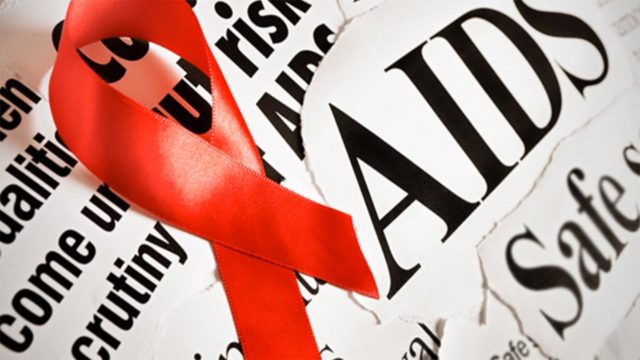
Nigeria will, on Monday, December 1, 2025, join the global community to celebrate the 2025 World AIDS Day, under the theme “overcoming disruption: sustaining Nigeria’s HIV response.”
The annual event provides the opportunity for the global leaders to assess their efforts ahead of the 2030 global deadline to end new transmission of HIV/AIDS in the world.
The UNAIDS noted that the theme of event is a strategic priority, and a declaration of resilience, calling for sustained political leadership, international cooperation, and human-rights-centred approaches to end AIDS by 2030.
Similarly, the World Health Organization (WHO) noted that after decades of progress, the HIV response stands at a crossroads because life-saving services are being disrupted, and many communities face heightened risks and vulnerabilities. But amid the challenges, hope endures in the determination, resilience, and innovation of communities who strive to end AIDS by 2030.
However, the 2025 event focuses on addressing challenges like funding gaps and stigma, highlighting the resilience of communities, and reaffirming global commitment to ending the epidemic by 2030. Key aspects include advocating for sustained political leadership, international cooperation, and human-rights-centered approaches to HIV prevention, treatment, and care.
Meanwhile, the new UNAIDS report indicated that the global response to HIV has suffered its most significant setback in decades. It said that overcoming disruption, transforming the AIDS response details the far-reaching consequences of international funding reductions and lack of global solidarity, which sent shockwaves through low- and middle-income countries heavily, affected by HIV.
It noted that ending AIDS means addressing the inequalities that drive the epidemic. Children, adolescent girls and young women face heightened vulnerabilities, particularly across the Africa region, and key populations including men who have sex with men, trans and gender diverse people, people who use drugs, sex workers and people in prisons in all regions face increased HIV risk.
Hence, protecting rights and ensuring access to services for everyone is essential to stopping new infections and achieving health equity.
HIV/AIDS situation in Nigeria
In the beginning of 2025, the decision of US Government to withdraw financial support to the fight against HIV in low and middle-income countries like Nigeria sent a shockwaves to stakeholders involved in the fight against HIV/AIDS in Nigeria.
But inspite of that, the National Agency for Control of AIDS (NACA) maintained that signs are showing positive outcomes. It noted that over the past few years, Nigeria, like the rest of the world, faced unprecedented disruptions, notably, a global pandemic, economic uncertainty, fluctuating donor support, and shifts in the global health financing landscape.
Yet, despite the challenges, Nigeria’s HIV response has not faltered. It has adapted. It has innovated. It has endured. NACA maintained that Nigeria remains firmly on track to end AID as a public health threat by 2030, and it will not stop until the goal is achieved. Nevertheless, records from NACA indicated that over the past year, Nigeria has continued to record important achievements in its HIV response.
The Director General of NACA, Dr. Temitope Ilori, said, “we have maintained an impressive 87–98–95 performance toward the global 95–95–95 targets. This demonstrates significant progress in diagnosis, treatment coverage, and viral suppression across the country.
“In simple terms, it means that 87 per cent of people living with HIV in Nigeria know their status; 98 per cent of those who know their status are on life-saving treatment; while 95 per cent of those on treatment have achieved viral suppression. It simply means they cannot transmit HIV.
“In the last decade, Nigeria has recorded a 46 per cent decline in new HIV infections and more Nigerians living with HIV are enrolled and retained in care than ever before. State-led efforts in the prevention of mother-to-child transmission have strengthened early infant diagnosis and pediatric treatment, though these areas continue to require focused attention.”
The challenges
But despite the gains, significant challenges remain. Stigma and discrimination continue to limit access to services for many Nigerians. Heavy reliance on external funding threatens the long-term sustainability of the achievements.
Records indicated that Nigeria still contributes a disproportionate share of global paediatric HIV infections, underscoring the need to accelerate progress in Prevention of Mother-to-Child Transmission (PMTCT). Furthermore, hard-to-reach and insecure areas remain underserved, and economic pressures continue to affect service continuity and supply chains.
The NACA Director General added: “as we look ahead to 2026 and beyond, our focus will be on scaling up domestic financing by deepening collaboration with states, the private sector, and philanthropic organizations to operationalize HIV Trust Funds and strengthen political commitment.
“We will intensify implementation of the PMTCT Acceleration Plan to ensure that every pregnant woman is tested, linked to care, and retained on treatment. Prevention efforts for key and vulnerable populations will be expanded, including wider access to Pre-Exposure Prophylaxis (PrEP) and differentiated service delivery models tailored to the needs of adolescents, young people, and key populations.”
The gains
Regarding the gains made over the period, NACA highlighted that the collaboration with civil society and community-led organizations has further strengthened community systems, helping to expand access to HIV testing, prevention, and treatment services especially among key populations, adolescents, and young people.
But according to the NACA DG, in 2024 alone, 204,201 individuals from key populations were actively receiving antiretroviral therapy, with strong viral suppression rates among those retained in care.
She also stated that domestic resource mobilization efforts are deepening, with several states increasing budget allocations and strengthening HIV Trust Funds to enhance sustainability and national ownership.
The NACA boss, however, commended the President, Bola Ahmed Tinubu, for his urgent intervention in HIV funding in Nigeria. “When global funding uncertainties threatened to disrupt essential services, the Federal Government under the leadership of President Tinubu stepped in decisively injecting $200 million to ensure uninterrupted delivery of HIV prevention, testing, and treatment services as well as allied infections. It represents Nigeria’s commitment to its people.
“We have also made measurable progress in integrating HIV services into broader health systems across the 36+one states of the federation. With the establishment of the AIDS, Tuberculosis, and Malaria Technical Working Group (ATM-TWG), and an increased enrolment of people living with HIV into state health insurance schemes, we are improving efficiency and long-term programme sustainability.
“Additionally, innovations in digital reporting tools have strengthened strategic information systems, resulting in an improved data accuracy, better monitoring, and stronger accountability across the response.”
She further disclosed that Nigeria is also advancing local production of antiretrovirals and other HIV commodities to strengthen national self-reliance and reduce dependence on imports.
“But above all, we will continue to strengthen multisectoral coordination as ending AIDS require contributions from education, youth, gender, labour, and social protection sectors. Also, our commitment to tackling stigma, discrimination, and human rights violation remains resolute, as we work to create safe and inclusive work place environments,” she noted.
She called on all Nigerians including government at all levels, partners, civil society, communities, and the media to join hands in sustaining the progress made so far in the fight against HIV/AIDS particularly as the 2030 global deadline draw closer.
“Let us continue to drive collective action, deepen domestic ownership, and ensure that every individual, especially the most vulnerable, can access life-saving HIV services with dignity.”
She appreciated partners, notably, the US Government, the Global Fund, UNAIDS, WHO, implementing Partners and the private sector, stressing that their support and engagement remain vital to the future of our response.
She maintained that Nigeria is closer than ever to achieving an AIDS-free generation. “This vision is not simply a target; it represents our collective resolve, compassion, and unity. Let us sustain the momentum and continue pushing until AIDS is no longer a threat to any Nigerian.”