Follow Us on Google
From Isaac Anumihe, Abuja
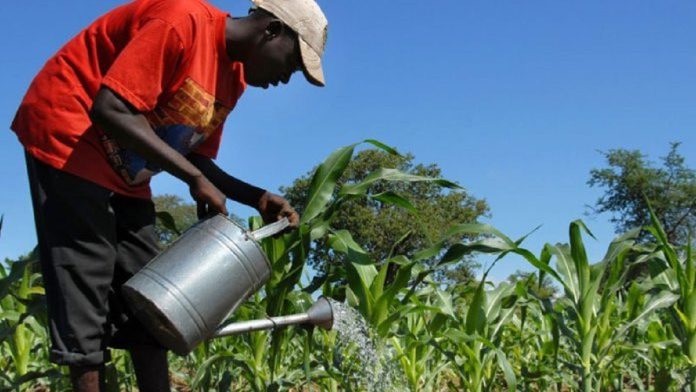
The long-standing debate over the scope of Nigeria’s agricultural sector has been settled with the release of the National Agricultural Sample Census (NASC) report. This landmark study, launched in Abuja on Monday, reveals that Nigeria boasts approximately 40.2 million agricultural households.
The National Bureau of Statistics (NBS), which released the report, provided detailed insights into the agricultural practices across the country. According to the findings, 91 percent of these households are engaged in crop cultivation. Of these, 35 percent focus solely on crop farming, while 48 percent also raise livestock. Additionally, the census shows that 16 percent of households raise 58 million cattle, 41.2 percent rear around 124 million goats, 42.5 percent engage in poultry farming—primarily chickens—and only 5 percent are involved in fisheries.
Using digitized Enumeration Area (EA) maps, the census covered 767 out of 774 LGAs, with partial coverage in three LGAs (two in Imo State and one in Borno State) and four LGAs not covered due to insecurity. In total, 30,546 EAs were surveyed, out of the proposed 30,960.
The report marks a significant advancement in understanding and supporting Nigeria’s agricultural sector, offering a foundation for informed decision-making and strategic planning to boost agricultural productivity and ensure food security.
The report highlights regional variations in agricultural practices. Lagos State recorded the lowest percentage of households engaged in crop cultivation at 48 percent, whereas Ebonyi State had the highest at 99.5 percent. In livestock production, Jigawa State led with 84.2 percent of agricultural households involved, followed by Bauchi State with 79.7 percent. Benue State had the highest percentage of households involved in poultry farming at 65.2 percent, closely followed by Ebonyi State at 63.3 percent.
In his remarks, the Statistician General of the Federation, Adeyemi Adeniran, emphasized the historical significance of the NASC report. He noted that for over two and a half decades, the absence of comprehensive agricultural data had hindered the sector’s progress and deterred investment.
“For over two and a half decades, the absence of comprehensive data on Nigeria’s agricultural sector has been a significant barrier to progress. This gap has limited the ability of policymakers, investors, and stakeholders to make informed decisions critical to the sector’s growth and overall food security in Nigeria. However, the conduct of the 2022 NASC exercise, the first of its kind in over 27 years, marks a turning point,” Adeniran said.
He highlighted that with over 65 percent of Nigeria’s population dependent on agriculture for their livelihoods, the NASC results provide invaluable insights into the sector’s foundations. The data offers a detailed picture of farm holdings, land ownership, and operational structures, crucial for developing evidence-based policies and programs to enhance food security and agricultural productivity.
Adeniran pointed out that the NASC data is vital for rebasing National Accounts, commonly known as GDP, and for crafting targeted solutions to agricultural challenges. “The data will further empower us to develop evidence-based solutions for pressing challenges. By understanding the current state of agriculture, we can design targeted policies and programs to address issues related to food security, promote sustainable agricultural practices, and enhance overall productivity.”
He also noted that the data would attract private sector investment by providing investors with the confidence and knowledge needed to make informed decisions about agricultural ventures in Nigeria. Furthermore, the results will serve as benchmarks for tracking progress toward national and international agricultural development goals, including the UN’s Sustainable Development Goals (SDGs).
Other News
Senator Abubakar Atiku Bagudu, Minister of Budget and Economic Planning, underscored the importance of supporting Nigeria’s 40.2 million agricultural households to sustain economic growth. “Nigeria is blessed with an agricultural populace who are proud to identify themselves as such. They are very proud to be farmers and very proud to be fishing communities.”
Bagudu emphasized the need for continuous support to enhance the productivity and output of these households, noting that the report should inspire the calibration and coordination of government programs to meet local needs. He also highlighted that the census covered nearly 98 percent of the 774 local government areas, dispelling the notion that insecurity is a predominant barrier to agricultural activity.
The NASC represents a pivotal moment for Nigeria’s agricultural sector, aligning with the United Nations Food and Agricultural Organization (FAO) standards, and is expected to be conducted every five to ten years. The primary objective is to gather comprehensive information on agricultural activities at the household level, providing a robust framework for ongoing agricultural surveys.