Follow Us on Google

From George Onyejiuwa
The Nigerian Export Promotion Council (NEPC) says it has taken serious steps to checkmate the prevalence of aflatoxins in locally processed food products moving into the export market.
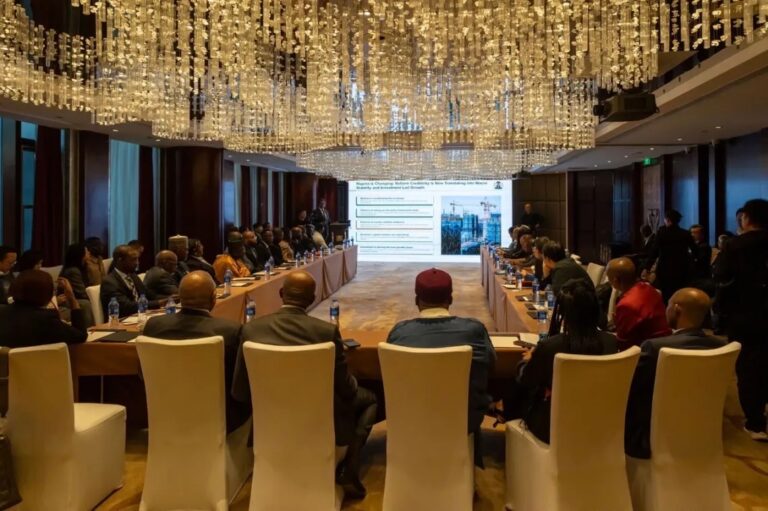
Executive Director of the NEPC, Mrs Nonye Ayeni, disclosed this at a one day training on minimizing aflatoxin contamination in agricultural produce, organised by the council in Owerri, the Imo state capital on Thursday.
Ayeni, represented by the NEPC’s Coordinator, Mr Anthony Ajuruchi, advised farmers and food processors to watch out for “ poisonous aflatoxins that contaminate our food products especially post harvest “.
She also urged farmers to take care of the soil on which plants are grown, adding that when the soil is filled with toxins, plants are easily contaminated, and the human consumers are not spared.
“ We must care for our soil the way we care for ourselves because plants derive most of their food from the soil.
Other News
“ We must therefore detoxify not just the harvested produce but also the soil “, she said.
Prof. Clifford Owuamanam, of the Federal University of Technology, Owerri (FUTO) and a guest speaker , warned that aflatoxins can cause the damage of the kidney, liver and other body organs.
Owuamanam, who head of Department of Food Science and Technology, described aflatoxins as “secondary metabolites produced from fungi moulds “.
He said that aflatoxins could be mitigated by prompt drying of produce after harvest, monitoring of grain in the farm, and the application of proper biological and chemical control methods for pests.
Similarly, the Head of Produce department of the state’s Ministry of Trade, Commerce and Investment, Mr Canice Nze, said that the state government’s task force would continue to ensure that only standard goods are moved into and out of the state.
Also, Mr Justice Alihie, the Chief Executive Officer of Do It Yourself, an agriculture consulting firm, called for proper disposal of lead containing materials such as batteries and other toxic materials to ensure soil safety for healthy planting.