Follow Us on Google

From Uche Usim, Abuja
With global declining appetite for fossil fuels, the Nigeria Extractive Industries Transparency Initiative (NEITI) has joined private sector companies, government agencies and other players in extractive industry to deepen conversations around extractive resources benefits sharing and energy transition in West Africa, with a focus on Nigeria, Ghana and Senegal.
The stakeholders gathered on Tuesday in Abuja for the 1st National Extractives Dialogue (NED) co-hosted by NEITI and Spaces for Change (S4C), an indigenous civil society organization, with support from the Ford Foundation.
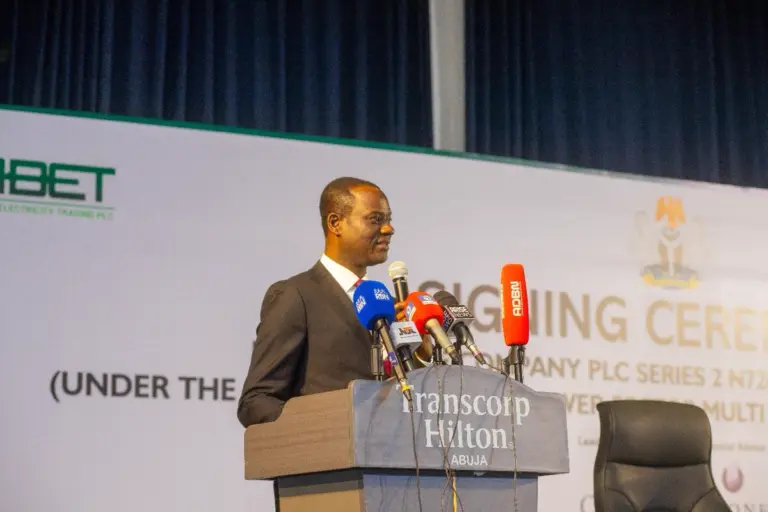
Speaking at the event, the Executive Secretary of NEITI, Dr Orji Ogbonnaya Orji, said the overall goal of NED was to enable governments, companies, civil society and communities to evaluate the energy industry and proffer evidence-based policy recommendations for the efficient and effective management of natural resource benefits and the transition from fossil fuel to a renewable energy regime.
He added that the dominant philosophy of the global Extractive Industries Transparency Initiative (EITI), which NEITI implements, was the belief that the phenomenon of the resource curse can be addressed through regular disclosures of extractive information and effective citizens’ participation in resource governance in ways that foster accountability and shared prosperity.
He added that NEITI was currently coordinating the efforts to deliver on these important tasks and ensure that the provisions of the Petroleum Industry Act (PIA) regarding contract disclosures are activated.
“Specifically, an inter-agencies committee on contract transparency in the extractive sector has been set up and NEITI is serving as its Secretariat. The Committee has produced a draft implementation roadmap and work plan. Similarly, NEITI is serving on the Presidential Petroleum Industry Act Implementation Steering Committee.
“Transparency and information sharing among stakeholders is the first step and necessary entry point to an equitable sharing of natural resource benefits. The need for disclosures across the extractive industries’ value-chain and empowerment of accountability actors is the basis for establishing NEITI.
“The sharing of natural resources benefits among governments, extractive companies, investors and communities should transcend monetary values and profits and address issues of injustice and inequality in the extractive sector value-chain.
“Critical questions such as what benefits are to be shared, the sharing formula and when and how these benefits are shared, sanctions for infractions and redress mechanisms are the many questions that this Dialogue should provide answers to. Also on the table for discussion is the global debate about the transition to a sustainable, decarbonized economy which is reshaping the extractive industries’ operations. This will have profound implications for the outlook of the extractive industries and the kinds of data, disclosures and dialogues that will be required to support accountability” Orji explained.
Also speaking, Victoria Ibezim-Ohaeri, the Executive Director, Spaces for Change, said it was soothing to witness some reforms, especially in the oil and gas as well as in the mining, which stakeholders have perennially clamored for.
“Through these reforms, lessees, licensees and permit holders are now required to furnish and publish specified information relating to upstream petroleum operations which shall be published in the National Data Repository of the Nigerian Upstream Petroleum Regulatory Commission.
“Under this new legal regime, texts of any new licence, lease or contract or amendment to it shall not be confidential and shall be published by the Commission immediately following the granting or signing of such texts. Beyond making extractive contracts more open, this significant drift towards transparency will enable countries, citizens, the civil society and host communities to know the amount of revenues accruing from natural resources, make equitable demands, and hold extractive companies/investors accountable when there is non-compliance with the dictates of the contracts.
“In Ghana, the petroleum register established in 2018 serves as an online repository where all agreements, licenses, permits and authorizations that concern the Ghana upstream petroleum sector is kept and made available to the public. In Senegal, extractive contracts are published on the EITI Senegal website. All of these are important reforms in the West African subregion.
Through the dialogues we will be having over the next two days, we will together, assess the (policy, regulatory and institutional) progress that has been made in the subregion to improve contract transparency, benefit sharing, energy transition as well as the inclusion of host communities in these processes. Industry stakeholders from countries in the subregion, especially Nigeria, Ghana and Senegal, will learn from each other, finding solutions to common problems and identifying best and inclusive practices for improving the resilience of national economies in the face of increasing commodity price volatility around the world while preparing meaningfully for the transition to a low-carbon future,” she stated.