Follow Us on Google
From Fred Ezeh, Abuja
The National Agency for the Prohibition of Trafficking in Persons (NAPTIP) has raised the alarm over the growing cases of Sexual and Gender-Based Violence (SGBV) across the country.
The agency, however, linked the development to the escalating insecurity in some parts of the country, which has brought about large-scale displacement, and ultimately, pushed up the level of SGBV in the country.
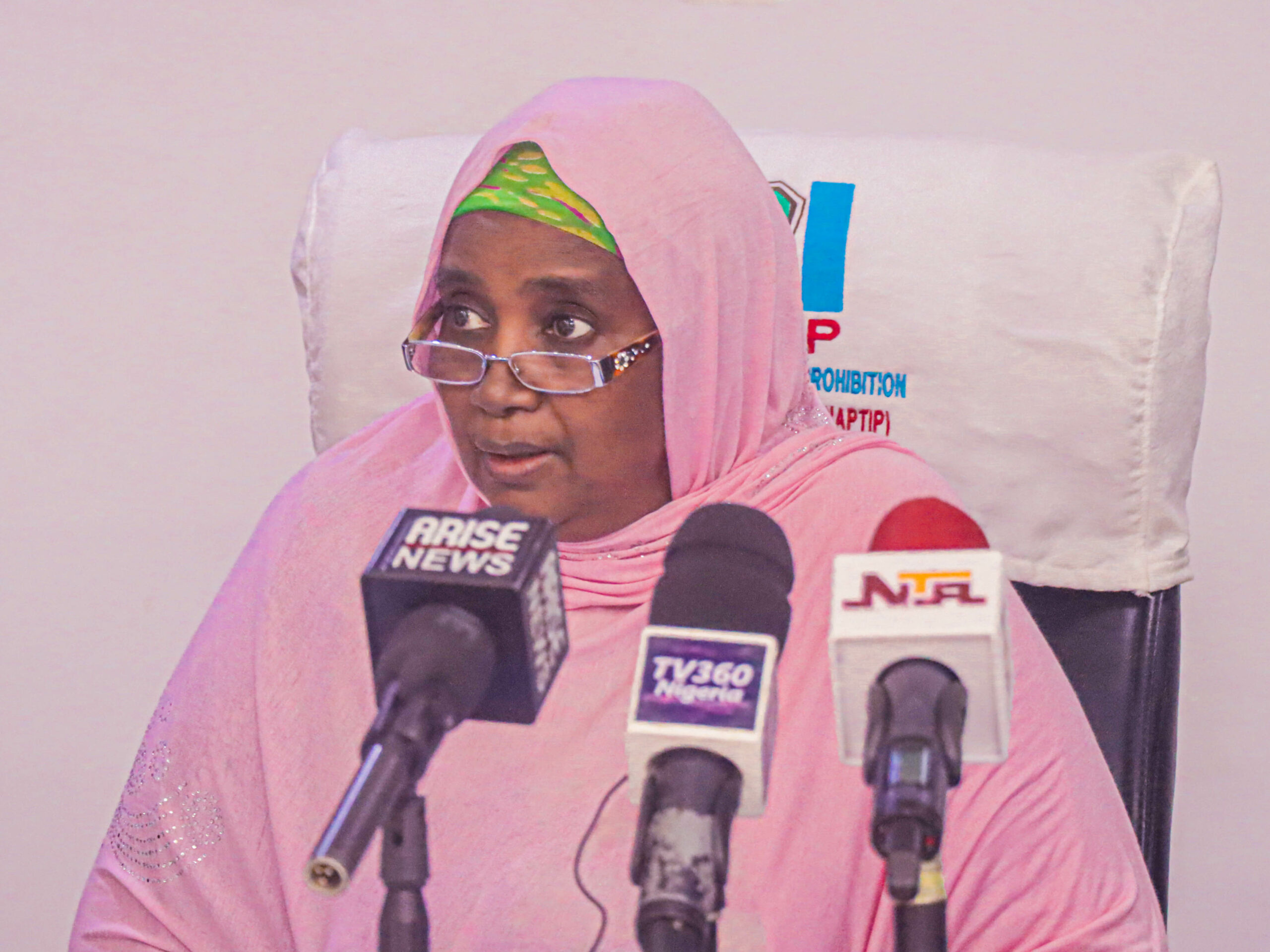
NAPTIP Director General, Binta Adamu Bello, stated this in Abuja, yesterday, at a press conference to herald the 2025 edition of the16 days of activism against gender-based violence, on the theme, ‘Unite to End Digital Violence Against All Women and Girls.’
“This simply means additional responsibilities for all frontline respondents and stakeholders. In addition, society’s role is pivotal in changing perceptions and behaviours that condone or perpetuate violence.”
She urged parents and guardians to educate young boys and girls on gender equality and respect, pushing that religious and cultural leaders should be at the forefront of advocating for non-violence and the protection of vulnerable groups.
She also urged community members to be extra vigilant and proactive in reporting abuse, supporting victims, and condemning acts of violence, while the civil society organisations and the media also play critical roles in raising awareness, holding perpetrators accountable and pushing for policy reforms.
“As an agency of government with the responsibility of implementing the legal instrument, the Violence Against Persons Prohibition (VAPP) Act, this is not a promise; it is a law that must be enforced to the letter, irrespective of the status of the offender.
“The VAPP Act enacted in 2015 is the cornerstone of our legal framework in Nigeria. It criminalises various forms of violence, including domestic violence, sexual assault and emotional abuse. It also offers protective measures for victims and sanctions for offenders.
“NAPTIP has relentlessly worked to ensure its effective implementation across states, advocating for capacity building among law enforcement agencies, the judiciary, health workers and community leaders. We are also facilitating the establishment of VAPP multi-sectoral committees that coordinate efforts at the local levels.
“Additionally, it prohibits a wide range of violent acts, including physical assault, infliction of injury, sexual violence, including rape, and incest, female genital mutilation, harmful widowhood and traditional practices, forced ejection, stalking, deprivation of liberty, forced financial dependence or economic abuse, forced isolation/separation from family and friends, placing a person in fear of physical injury, abandonment of spouse, children and other dependents without sustenance, attack with harmful substances, wilfully making false witness and so on.
Other News
“It provides for penalties and remedies, including fines, imprisonment and where appropriate, compensation and protection order, and it has been widely acclaimed as a robust legal framework and clear demonstration of the political will by the government in combating issues of gender-based violence in Nigeria.”
The NAPTIP boss said this year’s 16 days of activism against gender-based violence campaign would provide the opportunity to raise awareness and activate actions to end violence against women and girls globally.
“It will highlight the fact that violence against women is a human rights violation. It also serves as a powerful reminder of our collective obligation to eliminate violence against women and girls, and to promote equality, dignity and human rights,” she further explained.
FCTA Mandate Secretary for Women Affairs, Adedayo Benjamins-Laniyi, promised a stronger collaboration with NAPTIP and other partners to highlight the challenges of gender-based violence in Nigeria.
She stated that the sexual and gender-based violence is not limited to the girl-child anymore, stressing that the boy-child is also exposed to the dangers of sexual violence.
The representative of the International Centre for Migration Policy Development (ICMPD), Mr Mathias Esene, in his remarks, said this year’s theme focused on ending digital violence against all women and girls with the purpose of advocating for policy changes to prevent and respond to violence against women and girls, promoting a culture of respect and equality and supporting survivors and amplifying their voices
“These challenges demand coordinated action across justice, security, migration and protection systems, and this gathering is an encouraging reflection of that shared commitment.”
He said that ICMPD remains a dedicated partner to Nigeria in its efforts to reinforce migration governance, improve victim protection frameworks, and support national institutions in developing sustainable, evidence-based responses.
“Through our ongoing work with NAPTIP and other government institutions, we continue to prioritise capacity building, data-driven approaches and stronger cross-border cooperation to ensure that victims receive timely and effective protection.”
He commended NAPTIP for its leadership and unwavering dedication and promised that ICMPD would continue to support efforts through technical expertise, partnership and joint advocacy to ensure that every individual, regardless of gender, age or circumstance, can live free from violence, exploitation and abuse.