Follow Us on Google
From Idu Jude Abuja
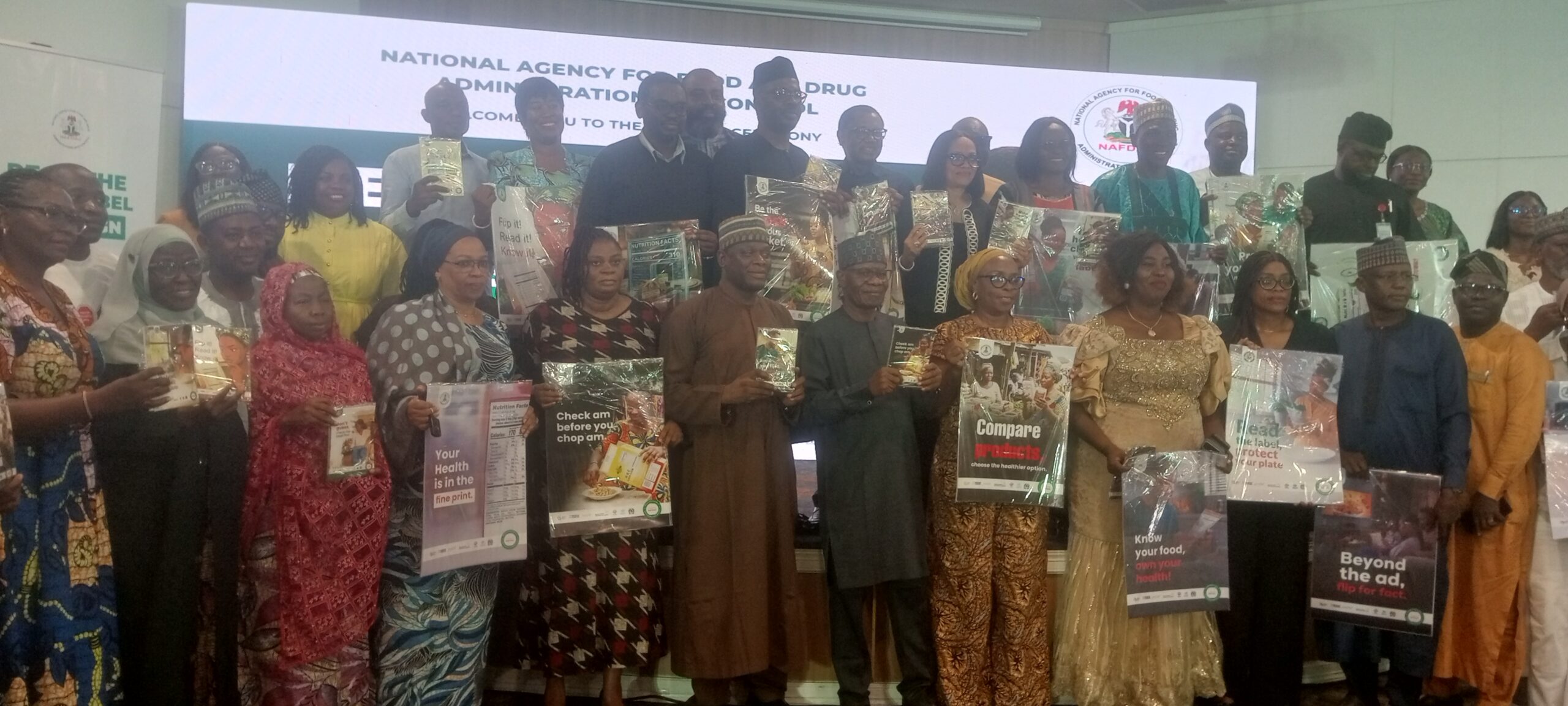
The National Agency for Food, Drug Administration and Control (NAFDAC), in collaboration with the World Health Organization (WHO) UNICEF, Cooperate Accountability and public participation Africa (CAPPA), as well as other stakeholders’ has launched a nationwide campaign on compulsory reading of product labels before purchase.
Director General NAFDAC Professor Mojisola Adeyeye, while declaring the campaign open, for the ‘read the label campaign on Friday in Abuja, remarked that the aim is to ensure control and reduce food-related non-communicable diseases like cardiovascular diseases, hypertension, and other non-communicable diseases. She said the annual campaign, is also to sensitize consumers on the need to read the food packaging containers before buying.
She also said that the campaign was aimed at empowering consumers with the knowledge needed to understand food labels and make healthier food choices amid the growing burden of diet-related illnesses.
“Today marks another significant milestone in our collective efforts to protect and promote the health of Nigerians by empowering consumers with the knowledge and tools they need to make informed food choices,” she said.
So This Happened (EP 406) reviews: Nigeria’s foreign reserves hit a 15-year high
According to the NAFDAC boss, food labels are not merely regulatory requirements but important public health tools that provide consumers with critical information about the nutritional content and safety of food products.
“Reading food labels should become a shared responsibility. Everyone who purchases food should make it a habit to read food labels before making a purchase,” Adeyeye said.
She recounted how a childhood reaction by her son to a food additive inspired her to develop the habit of checking food labels whenever she shops.
“My son reacted to a food additive when he was very young. That experience made me develop the habit of reading food labels because I wanted to ensure my family stayed healthy. Whenever I go shopping, I immediately check the sugar content, sodium level, and other nutritional information,” she said.
Adeyeye warned that excessive consumption of foods high in salt, sugar, saturated fats, and trans fats has contributed significantly to the increasing prevalence of hypertension, diabetes, obesity, cardiovascular diseases, and other non-communicable diseases in Nigeria.
Citing data from the World Health Organization, she said non-communicable diseases account for about 29 per cent of all deaths in Nigeria, with cardiovascular diseases responsible for the largest share.
“The ability of consumers to understand, interpret, and apply information on food labels has never been more important,” she added.
She explained that the Read the Food Label Campaign is a long-term public health intervention designed to institutionalise a culture of reading food labels and using nutritional information to make healthier dietary choices.
Speaking at the event, the Lead Investigator on Cardiovascular Health at the University of Abuja, Prof. Dike Ojji, said unhealthy diets have become a major contributor to cardiovascular diseases and other chronic illnesses in Nigeria.
He noted that the university has played a leading role in generating research evidence that informed national policies on nutrient profiling and front-of-pack food labelling.
Also speaking, Akinbode Oluwafemi,
Executive Director, CAPPA who was represented by Mr. Abayomi Sarumi, Associate Director and Healthy Food Policy Manager at CAPPA
welcomes the launch of the National Agency for Food and Drug Administration and Control’s (NAFDAC) ‘Read the Label’ campaign, saying, “It is a timely and important step towards empowering Nigerians to make informed food choices.
“Nigerian consumers are increasingly exposed to aggressively and deceptively marketed ultra-processed food and beverage products, the consumption of which is worsening Nigeria’s non-communicable diseases burden (NCDs).
“Understanding what is in those products is a public health necessity. Reading food labels helps consumers identify products that contain high levels of sugar, salt, trans fats, and other nutrients of concern that are risk factors for diet-related illnesses such as hypertension, diabetes, obesity, stroke, and heart disease.
“We commend NAFDAC for taking proactive measures to improve consumer awareness and promote healthier dietary habits. The campaign aligns with our healthy food policies campaign, which places public health at the centre of Nigeria’s food policy.
Dr. Pinda Wakawa, Director of the WHO Nutrition technical officer in Nigeria who represented the Country Director Dr. Parvel Ursu, said that the launch of the read the label campaign in Nigeria, came at a critical time when the war against food-related diseases is prevalent in the country.
He said that Nigeria has taken a better part and would always get WHO support as the program progresses.
Dr. Emmanuel Sokpo Country Director, Network for Health Equity, remarked that “The ‘Read the Food Label’ campaign is about building a culture of informed decision-making and healthier dietary habits.
Other News
“More importantly, it represents a critical step towards creating a food environment where people are empowered with the information they need to make healthier choices, contributing to stronger food systems and improved health outcomes for all Nigerians.”
Mrs Nanlop Ogbureke, Executive Director of Resolve to Save Lives, Nigeria, she said, while praising NAFDAC.
“We commend NAFDAC for championing this timely and important initiative, which represents a significant milestone in advancing public awareness, consumer protection, and healthier food environments in Nigeria.
“The Read the Food Label Campaign is a powerful step towards empowering Nigerians with the knowledge and confidence to understand what is in the foods they purchase and consume, enabling them to make healthier and more informed choices for themselves and their families.
“As Nigeria continues to grapple with the rising burden of diet-related non-communicable diseases, consumer awareness has become more important than ever. While food labels contain valuable nutritional information, many consumers still find them difficult to interpret due to the use of technical language, small print, and the complexity of the nutritional information. As a result, critical information about nutrients of concern such as sodium, sugar, and unhealthy fats is often overlooked at the point of purchase.
Speaking at the event, the Lead Investigator on Cardiovascular Health at the University of Abuja, Prof. Dike Ojji, said unhealthy diets have become a major contributor to cardiovascular diseases and other chronic illnesses in Nigeria.
He noted that the university has played a leading role in generating research evidence that informed national policies on nutrient profiling and front-of-pack food labelling.
“The University of Abuja has been at the forefront of ensuring proper food labelling in Nigeria. Our research findings have been highly valuable in developing national policies on nutrient profiling and front-of-pack food labelling,” Ojji said.
He added that the institution would continue to support efforts aimed at improving public awareness and promoting healthier food choices among Nigerians.
Also speaking, the President of the Nutrition Society of Nigeria, Prof. Salisu Maiwada, pledged the society’s support for the initiative, saying nutrition professionals across the country would drive awareness campaigns in schools, communities, and local government areas.
“We have members in every local government area of Nigeria. We are present in schools and communities, and we will take this campaign to every part of the country. We will also dedicate part of our annual conference in September to promoting the campaign,” Maiwada said.
The representative of CAPPA, Abayomi Sarumi, described the campaign as a timely intervention that would improve nutrition literacy and encourage consumers to make healthier dietary decisions.
Nigeria is facing a growing burden of diet-related non-communicable diseases as changing lifestyles and increased consumption of ultra-processed foods continue to fuel cases of hypertension, diabetes, obesity, cardiovascular diseases, and certain cancers. Public health experts have consistently advocated stronger food labelling regulations and consumer education to enable Nigerians to understand the nutritional content of packaged foods before purchase.
The Read the Food Label Campaign is part of NAFDAC’s broader strategy to improve nutrition literacy, encourage healthier eating habits, and support national efforts to reduce the burden of non-communicable diseases through informed consumer choices.