Follow Us on Google
By Uche Usim
The Centre for the Promotion of Private Enterprise (CPPE) has warned that Nigeria’s public finances are edging into dangerous territory, with debt servicing now consuming such a large share of national income that it threatens to suffocate development spending entirely. The message forms the core of its review of the 2026–2028 Medium-Term Expenditure Framework (MTEF), which the organisation describes as a step toward fiscal realism, but one overshadowed by the crushing weight of debt obligations.
CPPE notes that Nigeria’s public debt profile, repeatedly criticised over the past decade for its rapid and poorly aligned growth, has now metastasised into a full-blown fiscal constraint. According to the figures embedded in the new MTEF, the Federal Government plans to spend ₦15.91 trillion on debt servicing in 2026 alone. When juxtaposed with the year’s projected revenue of ₦34.33 trillion, it becomes clear that nearly half, about 46 per cent, of all expected income will be swallowed before the government can fund infrastructure, education, healthcare, security or social programmes.
This, CPPE stressed, is not just an accounting problem, but a structural threat that undermines national development, weakens policy execution and erodes public confidence in the budget as an instrument of progress.
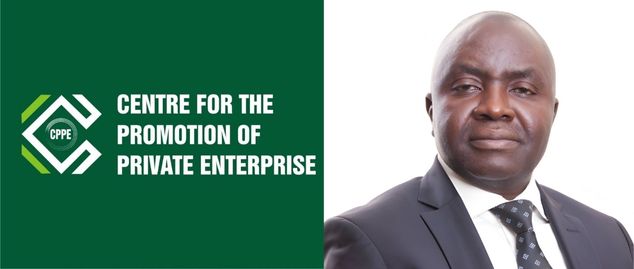
Dr. Muda Yusuf, the organisation’s Director-General, describes the scenario as “the nation budgeting primarily for its creditors rather than its citizens.”
The implications are severe. With almost one in every two naira going toward debt obligations, Nigeria’s fiscal space is shrinking at an alarming pace. Critical sectors already suffering from years of underinvestment will face even tighter constraints. Projects may be delayed, abandoned or downsized; strategic reforms could stall for lack of funding; and capital expenditure, which should be driving growth and job creation, risks becoming a mere afterthought.
CPPE argues that the debt-servicing dominance is not an accidental outcome but the compound result of years of unrealistic revenue projections, oil-sector volatility, aggressive borrowing, and weak expenditure discipline. Governments regularly overestimated crude oil output, inflated benchmark assumptions, and projected revenue capacity far beyond actual collection trends. When revenue inevitably fell short, borrowing became the fallback option, deepening obligations and compounding future repayments.
The 2025 budget, in Yusuf’s view, exemplified the consequences of this pattern. Its inflated numbers created a mismatch between aspiration and implementation, resulting in unmet targets and widened credibility gaps. The new MTEF, while notably more conservative, cannot escape the weight of past decisions.
Other News
According to CPPE, the federal government’s pivot toward more restrained forecasting, such as adopting a slightly more modest crude oil benchmark price, adjusting production expectations, and revising revenue projections downward, is commendable. But even as these reforms create a more credible foundation for fiscal planning, they are overshadowed by the ballooning cost of debt, which neutralises much of the expected relief from realistic projections.
Beyond the headline figures, CPPE also highlights the dangerous interaction between debt servicing and exchange-rate dynamics.
With the MTEF projecting an exchange rate of N1,540 to the dollar in 2026, foreign-denominated debts will become even more expensive to settle. Every depreciation of the naira widens the repayment burden, tightening the fiscal noose.
The organisation warns that unless Nigeria fundamentally rethinks its borrowing strategy and accelerates domestic revenue mobilisation through tax reforms, administrative efficiency, and economic diversification, the country will continue to operate on a treadmill, running harder each year only to stay in the same precarious place.
It further cautions that the late submission of the MTEF to the National Assembly undermines the credibility of the fiscal process, as it compresses legislative scrutiny and risks producing a rushed, less rigorous budget for 2026. In a period when debt has become the dominant fiscal factor, CPPE insists that Nigeria cannot afford shortcuts or procedural lapses.
In its concluding analysis, the organisation acknowledges that the MTEF represents progress toward fiscal realism but emphasises that realism alone cannot rescue a budget weighed down by debt. What Nigeria needs, CPPE argues, is a deliberate political and economic shift, one that prioritises sustainable borrowing, disciplined spending, and aggressive revenue expansion.
Until then, the country’s budget will increasingly reflect a harsh truth; that Nigeria is spending more to service its past than to build its future.