Follow Us on Google
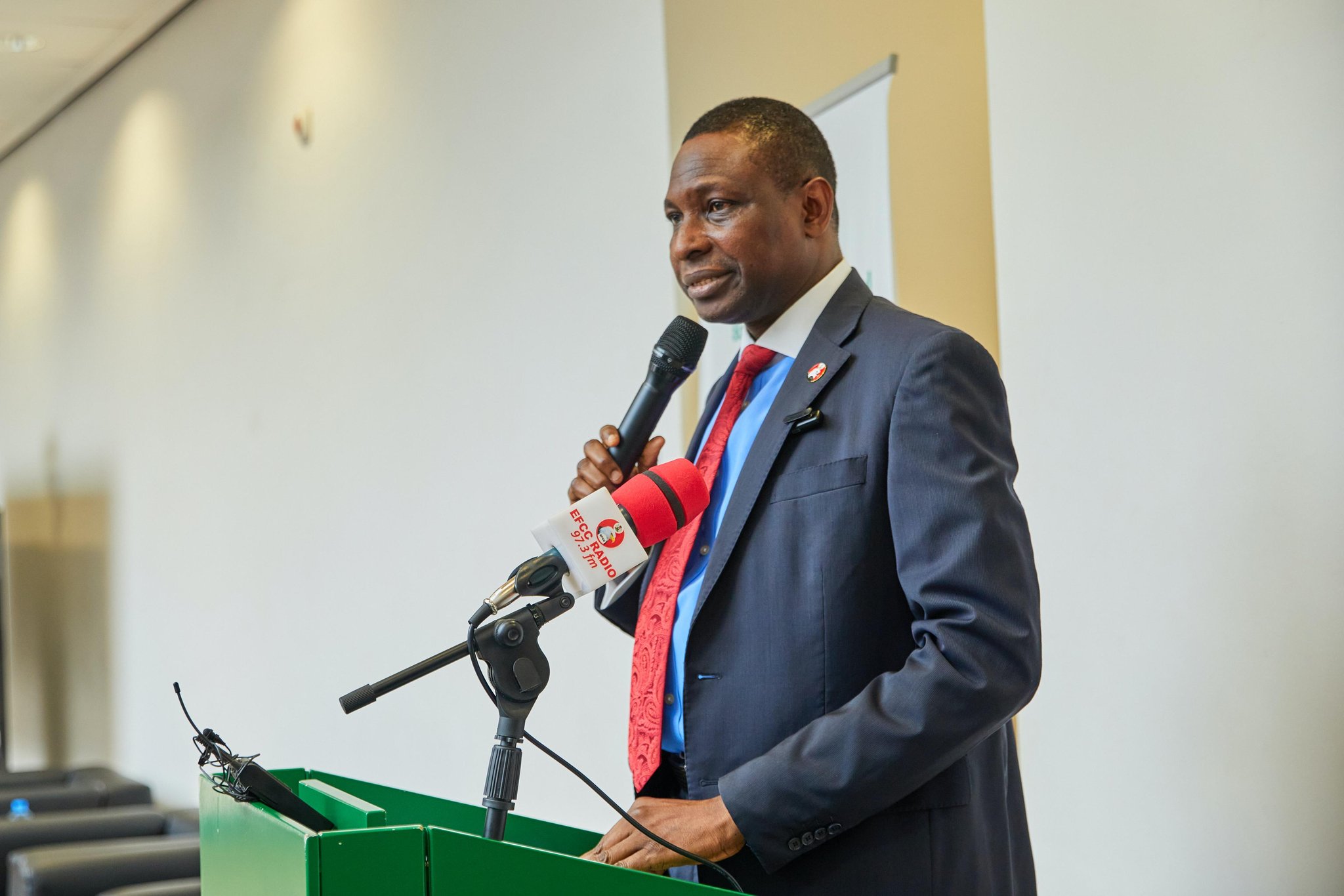
The Chairman of the Economic and Financial Crimes Commission (EFCC), Ola Olukoyede, has revealed that pastors, imams and other religious figures feature prominently among people investigated, prosecuted and convicted for financial crimes.
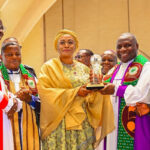
Olukoyede made the disclosure on Wednesday at the 2026 Second Council Meeting of the Nigeria Inter-Religious Council in Abuja, where he called for greater scrutiny of religious titles and urged faith leaders to take a stronger stand against corruption.
The EFCC chairman said the commission’s case files contained numerous suspects identified by religious titles, adding that some had already been convicted and were serving prison sentences.
“So many case files, pastor, imam indicted for financial crimes. And some of them are even badly convicted, and they are in jail,” Olukoyede said.
He expressed concern that some convicted persons continued to be addressed by their religious titles even while serving jail terms.
“And while in jail, they still refer to them as pastor and imam,” he said.
Olukoyede therefore called for a review of the use of religious titles, arguing that such titles should not influence how individuals accused of financial crimes are treated.
“I advocated for a review of the titles we give to men of God. Maybe, if it is possible for us to remove those titles, pastor and imam
“If it is possible for us to remove that title: pastor, Imam, bishop, sheik. And you know what? I have my case files full of these titles,” he said.
He said religious identity should be judged by conduct rather than titles or appearance, stressing that religious status would not shield anyone from investigation or prosecution.
“Because the spirit of God is by their fruits, not their appearance. Not what we call ourselves. It is by the fruits,” Olukoyede said.
The EFCC chairman recounted an encounter with a suspect who introduced himself using several religious titles when brought to the commission for investigation.
“Somebody was brought in for investigation. And he demanded to see me… As he entered, he said, I am reverend, doctor, bishop,” he narrated.
Olukoyede said he focused on the allegation against the suspect rather than the titles he claimed, warning that religious affiliation would not determine the commission’s treatment of financial crimes.
“So, if you think you’re a Christian or you’re a pastor here, and you commit financial crime, I will be your enemy. I won’t be your friend,” he declared.
He also challenged religious leaders and their followers to examine whether Nigeria’s strong religious identity was reflected in public and economic conduct.
“We are a deeply religious people. Our churches and mosques are full,” he said.
“Yet, we must have the courage to ask ourselves, has the depth of our religious profession been sufficiently reflected in the integrity of our public and economic life?”
Olukoyede said churches and mosques had an important role in preventing corruption by shaping the conduct of their members, adding that the fight against financial crime should not begin only after money had been stolen.
He also criticised religious institutions for celebrating unexplained wealth, warning against accepting large donations without questioning their sources.
“A public servant says he has built a mosque that is worth more than his earnings in the next 500 years. And you go there to dedicate it. You are dedicating the process of crime,” he said.
Olukoyede stressed that financial crime cuts across religious and ethnic lines and urged faith communities to use their influence to promote integrity and discourage the celebration of wealth whose source cannot be explained.