Follow Us on Google
By Merit Ibe
The Organised Private Sector (OPS) has expressed concerns over the federal government’s 2025-2027 Medium-Term Expenditure Framework (MTEF), questioning the feasibility of certain assumptions in the proposed budget amid the prevailing scorching economic challenges.
The sector viewed that the proposed N47.9 trillion expenditure for 2025 is an increase of 36.64% compared to N35.06 trillion in 2024, marking the highest-ever budget in nominal terms. Voicing its concerns, the Lagos Chamber of Commerce & Industry (LCCI), questioned the feasibility of the economic projections, highlighting the critical challenges posed by inflation, exchange rates and national debt.
In its review of the MTEF, The LCCI pointed out that the federal government’s assumptions regarding key macroeconomic factors appear overly optimistic in light of the current economic environment.
Specifically, the chamber criticised the assumption that the exchange rate will stabilize at N1,400 to the dollar, considering the actual average of above N1,600 in both official and parallel markets.
In addition, the LCCI found the projected inflation rate of 15.8% to be unrealistic, given that inflation had already reached 33.88% as of October 2024.
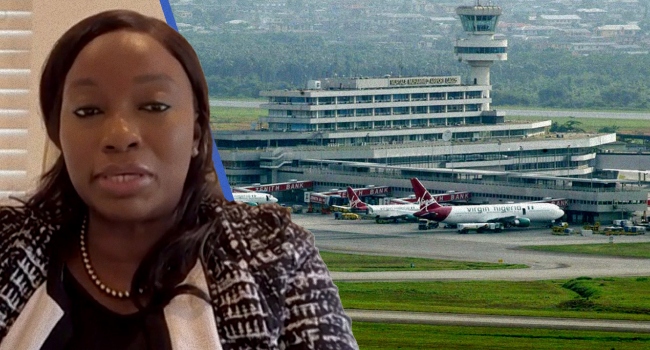
Dr. Chinyere Almona, Director General of LCCI, emphasised that these inflationary pressures, combined with an overvalued exchange rate assumption, could jeopardize the federal government’s fiscal performance for 2025.
“With inflation at a 33-year high and rising costs, it is highly unlikely that inflation will fall drastically by 51% within a year,” she noted.
Another major concern raised by LCCI was the substantial increase in debt servicing. The 2025 MTEF proposes a 91.2% rise in debt service, bringing the total to N15.38 trillion, which accounts for 32.1% of the total budget.
The LCCI described this as unsustainable, particularly given the current national debt of approximately N134 trillion as of June 2024.
Furthermore, the proposed fiscal deficit of N13.08 trillion, coupled with N9.22 trillion in new borrowings, raises significant alarm about the country’s ability to manage such a heavy debt load.
LCCI has called on the Central Bank of Nigeria (CBN) to continue its support for the federal government’s budget through the Ways and Means Advances program, but within a limited five percent cap for fiscal years 2024-2025.
The chamber also urged the government to adhere to the Fiscal Responsibility Act to ensure fiscal discipline in managing its budget and borrowing.
LCCI further emphasised the importance of strategic investments in sectors that drive economic growth and stability, such as food production, energy supply, and infrastructure.
“The current economic conditions require a focus on sectors that are resilient and have the potential to drive economic recovery,” said Almona.
The LCCI specifically recommended prioritizing food production (including crop, livestock, fisheries, and poultry), improving power supply, addressing insecurity, and promoting a stable policy and regulatory environment.
The chamber also stressed the need for a comprehensive approach to combating the impacts of climate change.
In recent months, Nigeria has witnessed widespread destruction of lives and properties due to climate-related events, and LCCI called for increased funding to tackle both climate change mitigation and adaptation strategies. LCCI’s statement underscored the importance of a robust and coordinated approach between monetary and fiscal policies, particularly in areas such as energy costs, supply chain disruptions, and reducing youth unemployment through skills acquisition and support for Small and Medium Enterprises (SMEs).
The chamber also called for more proactive measures to address the country’s infrastructure deficits, which continue to constrain economic growth and development.
Dr. Almona also called on the federal government and lawmakers to adopt more realistic assumptions in the 2025 budget, ensure greater fiscal discipline, and focus on economic policies that foster long-term growth, stability, and resilience.
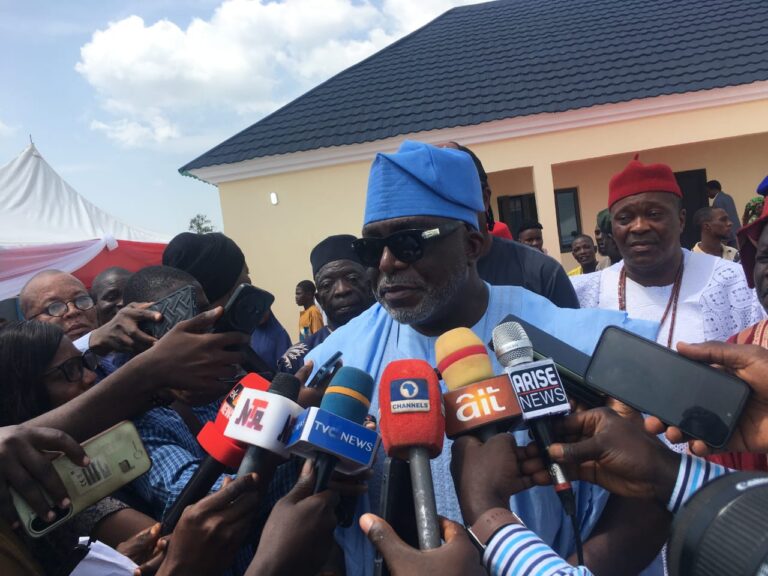
On his part, President, Calabar Chamber of Commerce and Industry (CALCCIMA), David Etim viewed that the 2025 budget proposal like every budget is just a proposal, saying the real work is in implementing and how far government is able to meet the demand and the financial requirements to fully implement the budget.
Etim pointed out that if the government must achieve the goals set out in the budget, there must be financial prudence in governance. “Discipline in the implementation that goes beyond just figures is very critical to the success of the budget; these are things we need to look at.
“I never look at budgets as anything more than a proposal for me. The budget implementation is really where the work is.
Anybody can write any budget and say anything but implementing is the work.
“And so there must be fiscal discipline to achieving the goals that are set out in the budget.
“Government has said it is no more subsidising hajj, several things have been said but are we going to see that
efficiency in governance.
“Are we going to see the financial prudence in governance
We are hopeful but we have to be prudent .
We have to hold the government’s feet to the fire in the implementation and that’s a social responsibility that every citizen owes.”
“Now if we look at the budget, it’s about over 2 million barrels of crude oil to be produced.
“If we bring into focus the Taiwo Oyedele work on taxation where there’s simplification and harmonization of taxes for better tax efficiency and now
refined petroleum products are no longer to be imported it will be produced locally; there is some degree of hope.
“If we are able to tackle the issues of electricity generation and have a better energy efficiency,
If there is improved productivity at a lower rate, it will give us a better productivity.’
He lamented that 90 percent of nigerians still generate their own electricity through generating sets or solar panels, noting that there is a huge loss of capital in private generation” but where we are able to improve all of these
it should give us a better productive state.”
For Daniel Dickson-Okezie, an SMEs expert, Nigeria’s budget estimate of 2025, having a figure of N47.9 trillion, on the surface, those figures are not feasible considering the economic realities of today.
Dickson-Okezie however said the budget cannot fully be analyzed until allocations to various sectors are made clear.
“But presently, the budget is based on a projection of GDP growth rate of 4.6% and exchange rate of $75 to the Naira and oil output of 2.06 million barrels per day.
“The 4.6% GDP growth rate doesn’t seem workable or feasible.
I don’t know how they are going to work with that particular exchange rate of $75 to the Naira.
“The output of 2.06 million barrels per day is just an estimate, it’s a projection.
But considering the economic realities of today those figures don’t seem to add up.”
He emphasised that the the major expectations that will make the budget perhaps more meaningful is the expectation that the budget will pay greater attention to infrastructure development, education, healthcare and also the budget would be such that will show strategies that the government has to pull Nigeria away from relying on petroleum as a major source of revenue.
“We can only make enough analysis of this budget when we understand the estimates that can be found in the various sectors.
“But again, the fact that the N47.9 trillion Naira is about twice the size of that of 2024, we don’t know why that figure is that way.
“When we look at the various sectors then we will be in a position to know if the budget estimate is well figured out or not.
“Like I said earlier, at the end of it all, the most important thing that will make this
budget estimate workable or not is its ability to really pay greater attention to infrastructure development, education, healthcare and then the budget ought to show the governments strategies
that will help Nigeria to improve revenue, and looking away from the already existing over reliance on petroleum.”