Follow Us on Google
Every election is unique, with its peculiarities and characteristics. The contestants may differ, their agenda may be different but there are defining principles. Elections are supposed to usher in hope for the future. They are moments of high expectations, occasions to assure and reassure the people, the electorate, that the errors of the past would be corrected. In other words, elections are times of fresh beginning.
This is why election periods are moments of excitement, when the incumbents asking for term renewal and other aspirants offer hope to the people. They tell the voters what they would do further or do differently, if elected or get re-elected. For presidential candidates, the task is more and enormous. They carry on their shoulders the burden of marketing themselves and their political parties. They are the faces of their parties, their poster boys or girls. That is why being the standard-bearer of a political party is a big deal. It is not a contest for the boys but for serious minds. The office itself – the presidency – demands a lot, hence the instructive remarks by Gerald R. Ford, the 38th President of the United States, that the presidency is not a prize to be won but a duty to be done. American essayist, John Dickerson, adds, in his piece on the White House, that the office is the hardest job in the world. According to Dickerson, when the national fabric rends, the President will administer needle and thread or at least reach for the sewing box of unity.
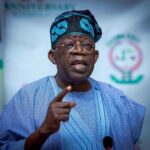
This is a big lesson for those aspiring for Nigeria’s presidency in 2027. But it is doubtful if President Bola Tinubu, the candidate of the All Progressives Congress (APC), reckons with this huge demand and the weight of the mandate he is seeking to renew. Going by his declaration to members of his party’s Presidential Campaign Council not to expect him to accompany them to every campaign ahead of the 2027 general election, Tinubu demonstrated very poor knowledge of what the position he occupies entails. Tinubu’s reason in making the gaffe is that he must remain focused on governance and the country’s economic challenges, preferring, rather, to ask the team to take the party’s message to Nigerians across the states and local government areas while he continued to attend to matters of governance. “You’ve warned me not to allow the rigour of the campaign to distract me from governance, I hear you. I am in full agreement with your decision. Nigeria needs more attention now,” Tinubu said, as he told council members to excuse him from accompanying them to every campaign.
This is not the way to go, Mr. President! Nigeria is in a democracy, not the feudal medieval era where the king and his court receded in the closet and dished out to the people the decisions of the palace. Democracy is not a silhouette or game of proxy but about physical presence and participation. Nigerians need to know and hear from the candidates seeking election and reelection, in this instance, the President. Knowing or hearing from the candidates is not merely knowing their names, identifying their faces or the political parties they are flying their flags. The voters need to engage them, interrogate them on issues of the day, assess their level of sophistication and emotional intelligence.
The people need to know what the candidates represent in ideology and their programmes at repositioning the country. For a system that has been maliciously held down by a chain of rapacious leaders in the greater part of its 66 years of statehood, having such details on those aspiring for the highest office in the land is not asking too much. Such disclosures will enable perceptive voters make informed decisions on how to cast their ballots. Tinubu should not offer any excuse in avoiding the people. The electoral constituency of a candidate for the presidency covers the entire length and breadth of the country, not the narrow confirms of Aso Rock Villa.
Other News
The dangers in Tinubu’s ploy to dodge the people are many. Without hearing directly from him, it may be difficult to hold him accountable to promises by his foot soldiers if he emerges the President. The experience with his disastrous three and half years in office is enough to illustrate the problem in allowing hired hands be the ones to tell Nigerians what to expect from him. Recall that, at the height of his campaign in 2023, Tinubu had laid out a bouquet of ideas for fixing Nigeria. These included comprehensive overhaul of dilapidated infrastructure, strengthening and stabilising the naira against other currencies, re-engineering the economy, tackling corruption and insecurity, as well as fiscal and physical restructuring of the country. He had particularly pledged to confront the erratic power sector, vowing to fix the challenge within six months of coming to office. But on inauguration on May 29, 2023, Tinubu turned back on his pledges, choosing rather to inflict excruciating pains on Nigerians by casually removing subsidy on petroleum products and floating the naira. Since then, the price of fuel has been on the rise. By the last count, a litre of premium motor spirit sold for over N1,400 in some parts of the country. The naira has equally been in free fall. The consequences have been catastrophic. According to the 2026 Global Multidimensional Poverty Index, Nigeria recorded the world’s largest increase in the number of people living in multidimensional poverty, with an additional 17.9 million Nigerians falling into poverty between 2021 and 2024. The report, published by the United Nations Development Programme and the Oxford Poverty and Human Development Initiative, placed Nigeria ahead of Afghanistan, which recorded an increase of 5.3 million poor people during its latest assessment period. It stated: “In absolute terms, the largest increase in the number of poor people is seen in Nigeria, where although poverty had decreased in the previous period (2018–2021), in the recent period (2021–2024), 17.9 million people became multidimensionally poor, followed by 5.3 million in Afghanistan.”
The situation is not better in other fields. Nigeria ranks fourth globally in the Global Terrorism Index 2026 by the Institute for Economics & Peace, with its national Terrorism Index score rising to 7.79 points. Nigeria hosts approximately 3.5 to 3.7 million internally displaced persons (IDPs), making it one of the largest internal displacement crises in Africa. These are worrisome statistics that the President and other contestants need to address and present to the citizens ways and strategies to overcome. The explanations cannot be made by middlemen or agents. The lessons of former President Buhari dumping the manifesto of his APC on coming to power should serve as enough guide in not allowing Tinubu sell this dummy of cronies running his campaign. Buhari had at inauguration in 2015 simply distanced himself from the pledges by APC, claiming that most of the promises were not made by him but by the party. For the greater part of his eight years, his administration kept tottering and floundering in most of its policy initiatives. That has been the case with the current government.
President Tinubu therefore owes Nigerians the duty of engaging them physically, not by proxy. The Presidential candidate of the Nigeria Democratic Congress (NDC), Peter Obi. scored it that: “Surrogates can speak for the President, but they cannot answer for his failures. They can repeat his promises, but they cannot make those promises a reality. They can campaign in his name, but they cannot carry his responsibility”. The President cannot delegate accountability. He cannot outsource the defence of his record to political allies, party chieftains, and praise singers while millions of Nigerians struggle with the consequences of his government’s policies.
Tinubu needs to hear from Nigerians on how they feel; whether they are better off today than they were before his coming to office. He should be able to stand before the people, talk to them and listen to them. This is the true meaning of democracy which Abraham Lincoln, the 16th President of the United States, defined as the government of the people, by the people, for the people. The options are there for Tinubu. He should make himself available to the people for assessment or back out of the race if he lacks the strength and stamina to go through the whole hog. Opting out in the face of glaring inadequacies, would not be a mark of cowardice on his part but taking a noble route, in line with the advice by the 33rd U.S. President, Harry S. Truman, that “If you can’t stand the heat, get out of the kitchen”. After all, the Nigerian Presidency is not a do-or-die affair, nor a retirement home.