Follow Us on Google

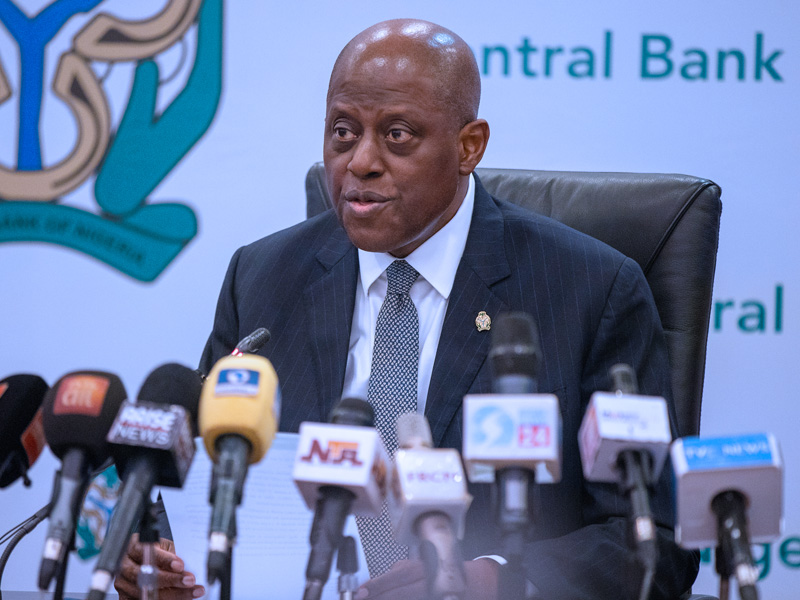
•Say food crisis, weak output threaten inflation fight
By Chinwendu Obienyi
Members of the Central Bank of Nigeria’s (CBN) Monetary Policy Committee (MPC) have warned that monetary policy alone cannot deliver sustainable economic growth, citing food insecurity, weak productive capacity, inadequate infrastructure and fiscal pressures as major obstacles to Nigeria’s fight against inflation.
The members stressed the need for complementary fiscal and structural reforms to sustain disinflation, improve food supply and strengthen the economy’s productive capacity.
Their concerns were contained in personal statements by MPC members Bandele Amoo, Murtala Sabo Sagagi and Aku Pauline Odinkemelu following the committee’s recent monetary policy decision, which reset the interest rate at 23 per cent.
Although, Nigeria’s headline inflation rate eased to 14.63 per cent year-on-year (y/y) in September 2026, down from 15.39 per cent in August and 20.98 per cent in September 2025, according to the National Bureau of Statistics (NBS), in his statement, Amoo said his primary concern was the limited responsiveness of productive sectors to improvements in macroeconomic conditions.
He expressed hope that renewed fiscal-monetary cooperation would help address structural supply-side constraints, adding that sustained agricultural harvests could support greater price stability.
However, he warned that food prices remained vulnerable to structural challenges that monetary policy alone could not resolve.
According to him, agricultural productivity continues to be constrained by infrastructure gaps, logistics inefficiencies, insecurity, inadequate storage facilities and limited irrigation coverage.
Amoo said sustained price stability would require coordinated action, pointing to the memorandum of understanding signed by the CBN and the Federal Ministry of Finance as an important step towards improving policy consistency.
He added that better coordination could help reduce conflicting signals between fiscal and monetary authorities and suppress risks associated with budget implementation and forthcoming general elections.
Nevertheless, Amoo cautioned that cooperation should not blur institutional responsibilities, insisting that monetary policy decisions must remain anchored on empirical evidence and medium-term price stability considerations.
Similarly, Sagagi warned that monetary policy adjustments alone could not deliver the economic growth Nigeria required, arguing that the country’s productive capacity remained weak.
He identified inadequate infrastructure, clashes in farming and mining communities, weak governance and the growing public debt burden as major constraints to economic expansion.
Sagagi called for complementary fiscal, structural and governance reforms to make federal and state governments more responsible and responsive.
Also highlighting the social consequences of inflation, Odinkemelu cited the International Monetary Fund’s projection that 34.7 million Nigerians could face acute food insecurity during the 2026 lean season.
She said the situation illustrated the reality behind inflation figures, arguing that strengthening monetary policy transmission and supporting disinflation were essential to protecting household purchasing power.
Odinkemelu described the CBN-Finance Ministry memorandum of understanding as an important institutional development that could reduce policy conflicts and support Nigeria’s transition towards an inflation-targeting framework.
She maintained that fiscal discipline would be critical to the credibility of such a framework, adding that effective coordination between fiscal and monetary authorities could strengthen the disinflation process.
The three statements collectively highlight the limits of monetary tightening in an economy where supply-side constraints continue to influence prices and productive activity.
While monetary policy can help moderate demand and inflationary expectations, insecurity, infrastructure deficiencies and agricultural supply disruptions require complementary government interventions.
The members’ observations therefore point to the importance of aligning monetary discipline with fiscal responsibility, structural reforms and measures to improve domestic production.
Sustaining the recent moderation in inflation, they suggest, will depend not only on monetary policy decisions but also on the government’s ability to address the structural weaknesses that constrain production, increase costs and threaten household welfare.