Follow Us on Google
• Corridor of commerce turns into corridor of hardship
By Lukman Olabiyi
For thousands of commuters, traders and farmers who depend on the Mowo–Ikoga Zebbe–Ado Odo corridor in Badagry, each new day begins with uncertainty.
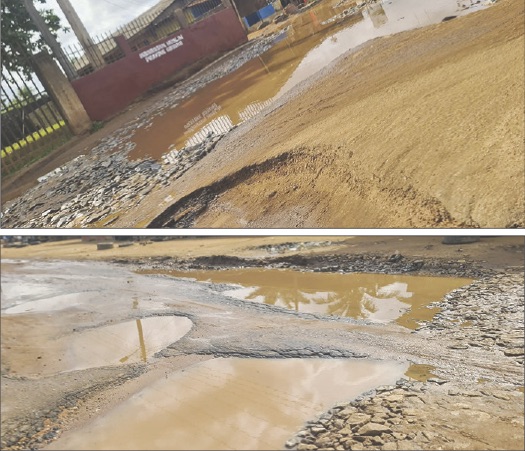
What was once a lively inter-state route linking communities in Lagos State to neighbouring Ogun State has now deteriorated into a punishing stretch of broken asphalt, yawning potholes and muddy shoulders.
The road, which serves as a critical gateway between Badagry and Ado Odo, has become a symbol of infrastructural decay, its craters widening alongside residents’ frustration.
At dawn, commercial buses line up cautiously, their drivers calculating not distance, but damage. What should be a relatively short commute now stretches into hours of painstaking manoeuvres as motorists zigzag between deep potholes or crawl through gridlock caused by stalled vehicles.
During rainfall, the situation worsens dramatically. Large portions of the road become submerged, concealing dangerous craters beneath murky water. Drivers unfamiliar with the terrain often plunge into hidden depressions, damaging tyres, axles and suspension systems.
For many, a single trip along the axis can mean an unexpected visit to the mechanic.
“It is no longer just a bad road,” said Prince Samuel Mawutin Ofade, a Badagry-based public commentator who recently drew attention to the crisis.
In a statement issued on February 16, 2026, he described the corridor as “a national and state embarrassment,” attributing its condition to years of neglect by relevant authorities.
Mowo–Ikoga Zebbe–Ado Odo road is more than a transport link; it is an artery of commerce.
Farmers from surrounding communities rely on it to move produce into markets across Lagos and Ogun states.
Traders shuttle goods daily, while artisans and civil servants depend on the corridor for their livelihoods.
But deteriorating infrastructure has turned commerce into a gamble.
Vehicle maintenance costs have surged and commercial drivers admit that frequent repairs have forced them to increase fares.
The burden, inevitably, falls on passengers and small businesses. Perishable goods often arrive late or spoiled after spending hours in traffic.
Farmers report shrinking profit margins, while customers hesitate to travel through the axis due to fear of breakdowns or delays.
Small shop owners along the corridor say foot traffic has reduced significantly.
“People avoid coming this way unless it is absolutely necessary. It affects our sales every day,” Blessing, a trader noted.
The risks on this route extend beyond economics. Broken-down vehicles frequently stall in the middle of the carriageway, creating hazards for oncoming traffic.
At night, limited visibility and failed sections of the road heighten fears of accidents.
Parents escorting children to school tread carefully along muddy edges, while motorcycle riders struggle to maintain balance on uneven surfaces.
For pedestrians, the absence of safe shoulders means sharing precarious space with vehicles navigating erratically around potholes.
Residents warn that without urgent intervention, the road could soon become completely impassable.
Community members say appeals to authorities have yielded little visible improvement.
Attention has increasingly turned to elected representatives at both state and federal levels.
The corridor’s strategic importance, linking communities in Lagos and Ogun has prompted calls for collaboration between state governments and federal agencies.
Residents argue that members of the Lagos State House of Assembly and representatives in the National Assembly must intensify advocacy to secure funding and oversight for reconstruction.
The Chairman of Badagry Local Government, Hon. Babatunde Hunpe, has also been urged to escalate the issue to higher authorities, given the direct impact on communities within his jurisdiction.
Prince Ofade questioned what he described as repeated political assurances, including unverified claims that President Bola Tinubu had awarded a contract for the road’s rehabilitation in the past year.
According to him, residents have yet to see tangible progress.
“The condition of this road is no longer just a transportation problem. It is a human rights issue. People living along this axis are exposed to daily danger and economic hardship,”he said.
Older residents recall when the corridor bustled during the era of Molue and Bolekaja buses, symbols of vibrant commercial movement across Lagos.
Today, that vibrancy has faded, replaced by cautious driving and anxious commutes.
As political activities gradually gather momentum ahead of the 2027 elections, voices across Badagry are growing louder. For many, the issue transcends party lines and campaign slogans.
It is about restoring dignity to communities that feel overlooked despite their economic contribution.
The Mowo–Ikoga Zebbe–Ado Odo road was built to connect people, markets and opportunities.
Instead, it now reflects the strain of prolonged neglect, its battered surface mirroring the hardship endured daily by those who depend on it.
For residents and commuters along the corridor, the demand is simple and urgent: meaningful intervention before the damage becomes irreversible.
Until then, every journey remains a test of patience, resilience and hope.