Follow Us on Google
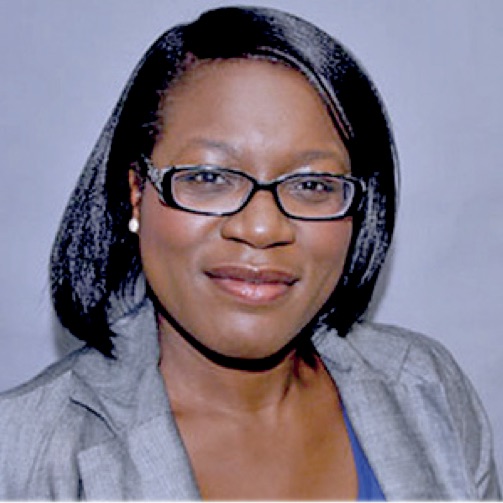
By Vivian Onyebukwa
Modupe Oshikoya is arguably the greatest female athlete in the history of Nigeria’s track and field sporting category. In her days, she was spectacular. She ruled Africa and the Commonwealth in her time, winning five gold medals for Nigeria at the All African Games of 1973 and 1978. She won Nigeria’s first medal at the Commonwealth Games. Modupe was an Olympian in 1972 and 1976. Many have described her in different ways, including ‘The goddess of the African track and field,’ and ‘African queen of track and field.’
An alumna of Methodist Girls High School, Yaba, Lagos, and the University of California, Los Angeles, she came to Nigeria in January this year from California where she has been residing after her retirement to receive an award of excellence by Association of Former Female Athletes of Nigeria in Lagos. The award was in recognition of her selfless service to Nigeria as a national athlete (track/field) in the 1960s and 1970s.
In this interview, she spoke about her career as a sports personality, her retirement from sports and life generally.
You recently received an award here in Nigeria. What does it mean to you?
It means a lot to me because it shows that there are some people out there who are concerned about retired athletes, because it is a group of women that put all these together so that old athletes are not forgotten. That really opened the doors. Hopefully, we can continue doing that so that when you retire, people don’t forget you.
What inspired you to go into sports?
I don’t know. When I was young, I was becoming a tomboy. I just loved being outside enjoying, running, jumping. Maybe it was an outlet for me to go away from home because I came from a large family of about five wives. There were a lot of kids in the house. I love being alone. Even as I was looking for a job, I hate being in the office, I like outside atmosphere.
At what age did you go into sports?
If I could remember, probably when I was five or six when I was in elementary school. I used to come back with all these bottles of 7UP when they sponsored sports. So that really gave me some incentives, coming back all the time with these free 7UP bottles all the time. Again, when you go to other schools and win, they give you all these timeless wrist watches. I was getting like five or six in competitions and I gave them to family members. That really encouraged me to continue then.
What was your parents’ reaction when they discovered that you were trying to go into sports?
My mum was not even educated so she did not really know what was going on. So whatever she was told was what she took. She never really cared much about it until people would go to her to call her. Maybe when we went to competitions and came back, they would go and call her maybe to witness when they were giving us parade or something, but she didn’t even know what. But my dad probably had a little bit of sports knowledge. There was not much encouragement from home. I got more encouragement. Most of those market women knew. When they saw me in the market, they would welcome me and ask me to sit down. The Isale Eko market women knew. I was surprised. Back then, when we were practising, a lot of people, both young and old would come and watch.
Looking back, do you wish to go back to those youthful days as a sportsperson?
Now I already have my two knees repaired. But back then, I didn’t even think twice before I would jump over. If I were young, I would climb upstairs without any problem. But with age, you can’t do the same thing. But I still thank God that I was able to do some of the stuff I did back then. When I look back, I wonder how I was able to do that. But it was through God’s grace that I was able to do it.
What were some of your achievements in track and field?
I won the gold medal for Nigeria at the Commonwealth Games in New Zealand. I could have won two gold and a silver, but then when I was doing the hurdles, towards the end, I knocked my knee against one of the hurdles and I tripped. So I was able to come in third. But I won gold in long jump, silver in the Heptathlon. The British lady that won it, we became friends for a long time because she admired me a lot. The only reason she won the Heptathlon then was because of the shot put because she was more bulky than I am. But others like the high jump, hurdles, I beat her in everything. She beat me in shot put where they put more point and emphasis on.
Did you have role models that you looked up to?
The person that I looked up to when I was running was Jumoke Boderin and Violet Odogwu, now Mrs Nwajei. These were the raw materials that really did sports without any steroid or enhancements. I remember, before I started running, I used to hear Jumoke and Ronke on the radio.
Why did you make them your role models?
Because they opened a way for women back then. They were the first women that opened the way for women in tracks and field in Nigeria.
How did sports open doors for you?
I got a scholarship. I was able to get in a boarding house as a junior girl. That helped a lot too to get away with all the problems, things going on in my house. So I was able to concentrate on my studies. I didn’t have to worry about problems at home anymore. They gave me peace of mind. Sports also enabled me to travel a lot and see the world, places that probably I never dreamed of going to. It opened doors for me to meet people like Presidents and high people in power that I could never meet on my own. It also gave me scholarship to go to United States of America to further my education.
What were your challenges at that time?
Some of the coaches did not know what they were doing, Nigeria was still developing coaches. All our training equipment was not what they had in America, Asia and Europe. We had to rely on our spike shoes to run in. I remember one Police lady that gave me my first spike shoes to run in. She saw something in me that she gave me her spike shoes that I used.
Recall your first major success. What was the moment like?
It was the All African Games. I enjoyed it, but for me, it was just like an enjoyment because it was something that I love to do. I didn’t care about the other things. Believe me, back then I wouldn’t sit down talking to you like this. I would have taken off and run away. I didn’t want anybody to bother me. I just wanted to do what I wanted to do.
Any worst moment, probably worst performance?
Yes. That was the Munich Olympics when I was supposed to be doing long jump and I was in my dorm in the games village. I didn’t know that the so called chaperon that was supposed to be in charge of women was not doing her duty. Wherever she went, so she didn’t come and get me that it was time for me to go. So by the time I realised it, it was late. So I got on the bus, and again got the wrong bus instead of the one going to the stadium. When I eventually got there I had to beg the officials. I did not even warm up. They just let me jump. I was not prepared. It was horrible. That was also the time the Israeli athletes were killed by the Palestinians. That was the first time that they soiled the Olympic spirit.
What sacrifice did you find it hardest to make in your career?
I don’t think I have made any sacrifice. The only sacrifice was to be there when you don’t feel like being there. There were days you don’t want to practise but you just had to pull yourself out and go do it. There were days that you had to be there all day, hungry, tired. Like when we went to Edinburgh, Scotland, coming from Africa where it was always humid and hot, and then you went to Scotland where it was rainy and cold and it was supposedly summer. So that was an experience for me. There was always time you wouldn’t want to get out of the bed and the coach would tell you get out of there and go practise.
Can you remember important lessons you learned as a professional athlete?
Discipline, dedication and hard work. I have always trained myself to be very disciplined to do what I love to do and to do it right.
Besides sports, what else do you have interest in?
I love dancing, doing hiking and taking care of my grandkids right now. When I stopped competing, I just love being a mum and now being a grandma.
What was your reaction when you discovered that five of your medals were missing?
When they were missing, probably I left them back home. I didn’t know what I did with them, but afterwards I realised that I left them with my mum or my brother back home in Ikorodu. To me it was just medal, it wasn’t a big deal. Medals are just plated, they are not really gold. Before, I used to think everything was gold. I could have been rich.
Did you later find them?
Yes.
What is your advice to young girls who have the interest of going into sports?
My advice to them is that, if you have the talent, use it to the best of your ability. It requires hard work and dedication. Put your mind in it. Whatever you do, if you put your mind and effort in it you are going to reap the reward on a long run.
What do you think the government can do to promote sports?
Keep getting all the kids when they are still young. When you start building them up when they are young, they would be able to use that when they get older. Some of them can find where their talent is- soccer, track and field, and so on, so that they can find where their talent is at a young age and develop on that.
What is your daily routine like now that you are retired?
I just enjoy myself. I get up to do my workout, take care of my grand kids. Once in a while, whatever I can do, I do. But I don’t have to worry about getting off early to go to work or working late.