Follow Us on Google
…Backup towers deployed
By Chinelo Obogo
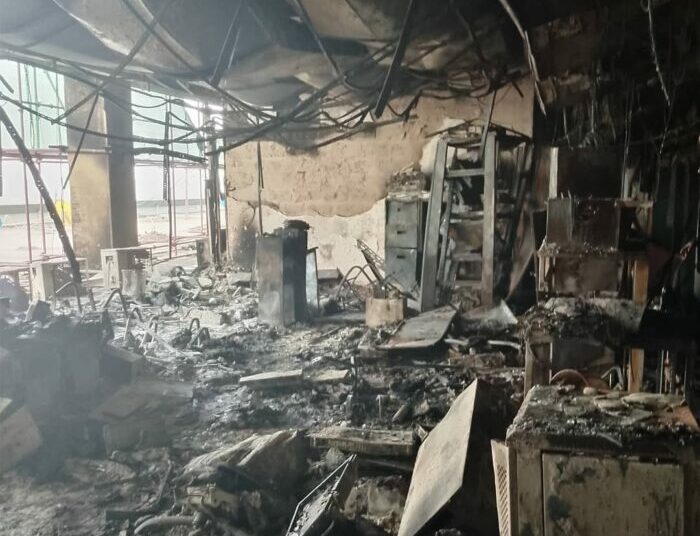
The Managing Director of the Nigerian Airspace Management Agency (NAMA), Umar Farouk, has revealed that the fire outbreak at the old terminal of the Murtala Muhammed International Airport (MMIA) completely destroyed the agency’s air-to-ground communication equipment, crippling a core pillar of air traffic management.
Speaking in Lagos on Wednesday after inspecting the damage, Umar described the incident as a major operational setback, noting that air traffic controllers had to swiftly activate contingency systems to prevent prolonged disruption.
“The fire has affected our air to ground communication completely. What we are using to sustain air traffic service now is the backup. We have a lot to do when we are out of the situation,” he said.
He disclosed that the scale of the loss forced authorities to take the difficult decision of halting inbound flights at the height of the emergency.
“What we have seen is a huge loss as far as communication is concerned. Other air traffic services were really disrupted. So we had no option at that time than to suspend inbound aircraft into Lagos,” Umar stated.
Other News
The suspension, he explained, was a precautionary move to guarantee safety while engineers and air traffic managers stabilised the system.
Despite the destruction, the NAMA chief praised staff members who remained at their duty posts during the crisis.
“I must commend the prompt response to the emergency situation that we found ourselves in. The workers on the ground actually put their lives in danger because they were supposed to run and leave the place but they decided to stay and salvage the situation,” he said.
Umar assured passengers and airlines that normal operations have resumed, with aerodrome control, approach services and area control functioning seamlessly on backup infrastructure.
“Hopefully by tomorrow or next, we will be able to move the mobile tower but I want to assure Nigerians that the air to ground communication will remain uninterrupted,” he added.
He reiterated that Nigeria’s airspace remains safe, stressing that redundancy measures built into the system ensured that the fire did not escalate into a wider aviation crisis.