Follow Us on Google
Civil society organisations (CSOs) in Ebonyi State, including Committee for the Defence of Human Rights (CDHR), Human Rights Action Group and Good Living Initiative (GLIN), have replied the response of the Ebonyi State government on reasons for missing out on $27M World Bank grant.
Recall that the CSOs, on Saturday, had alleged that Ebonyi State missed out on the $27 million World Bank-supported HOPE Governance Programme as a result of failure to meet the required performance targets and reform deadlines for education, primary healthcare, and public financial management.
The CSOs had lamented that “Ebonyi, which remains the poverty capital of the entire Southern Nigeria and also the third poorest State in Nigeria, according to data from the National Bureau of Statistics, failed the leadership tests and criteria that could have enhanced growth in its struggling education, health and other sectors.”
However, in a swift reaction the same Saturday, the Special Assistant to the Governor on Documentation, Dr. Boniface Nwankwo, dismissed the allegations of the CSOs as a “deliberate attempt by political opponents to misinform the public and undermine the achievements of Governor Francis Nwifuru’s administration”.
The Ebonyi State Government dismissed the allegations by the coalition that the state lost a $27 million World Bank grant due to poor governance, describing the claims as misleading and politically motivated.
Nwankwo maintained that Governor Nwifuru’s administration, guided by its People’s Charter of Needs agenda, has remained committed to delivering inclusive development, responsive governance, and improved welfare for the people of Ebonyi State.
He noted that rather than focusing on what he described as an unverified narrative, critics had ignored the numerous federal and international grants and strategic interventions attracted to the state within the last three years.
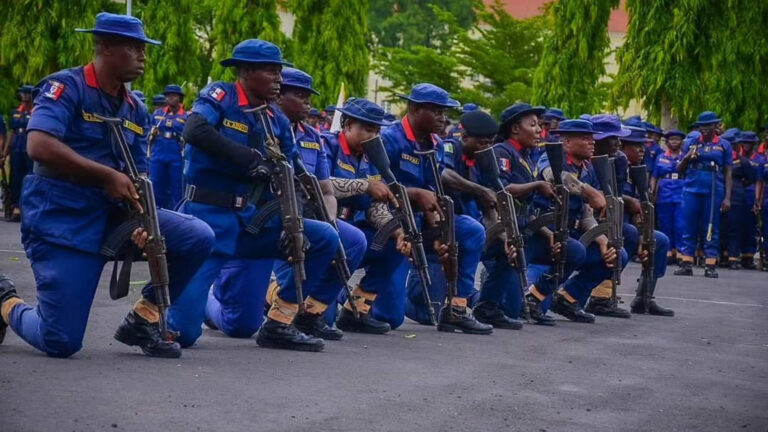
Among the projects listed were the Nigerian Army Training Depot for the South-East located at Amasiri in n Afikpo LGA and Edda LGA, the Nigerian Navy Secondary School at Amechara in Izzi Local Government Area, and the proposed University of Aeronautics, which is expected to become the first of its kind in the South-East.
Reply to Ebonyi government
Consequently, in statement obtained by Blueprint.ng on Wednesday, signed by Spokesperson of Ebonyi based CSOs, Charles Otu, the CSOs said its reasonings, arguments and thoroughly-researched position is not borne out of politics or political interests, but a genuine concern for a better and a more prosperous Ebonyi State.
The statement read: “We at the Civil Society Coalition wish to completely disagree with the government’s lines of thoughts, reasonings and arguments as we reiterate that our thoroughly-researched position is not borne out of politics or political interests but a genuine concern for a better and a more prosperous Ebonyi State where the government leaves no stone unturned to better the lives of citizens through strategic investments in core sectors like basic education, Primary Health Care, rural development and strategic human empowerments.
“In a nutshell, we wish to posit for the benefit of Ebonyians and millions of others who could be misled by the rather pedestrian position of the Ebonyi State government as that the State government committed a monumental category error by its attempt to list, cite or categorise projects attracted to the State by the Federal Government in defense of its gross failure to show commensurate fiscal responsibility and commitments to projects financing and execution- a development that made it fail the basic integrity tests of Independently Verified Systems as set out in the World Bank’s assessment standards.
“For us in the coalition and in setting the records straight, the response of the Ebonyi State government does not in any way address the gross governance lapses and failures revealed by the World Bank HOPE Governance Assessment Programme. The central issue remains whether governance performance in Ebonyi State met the world Bank’s independently verified benchmarks. The answer is NO! And it remains NO!
“First and foremost, it is good that we step up efforts to inform and educate Ebonyi people about governance lapses and the poor performance of the government of the day, and to call on all Ebonyians to step up and demand quality, competitive leadership from those presently running and ruining the affairs of Ebonyi state: for us, this is the citizens’ action and demand for better and improved governance which this coalition has just done.”
The missed opportunity
The CSOs added: “Ebonyi missed a legitimate opportunity to qualify for and access performance-based financing under the World Bank-supported HOPE Governance Program, which has a $500 million pool to be accessed as a GRANT (not a loan) for states that qualify, which Ebonyi failed to qualify for due to poor governance performance and failure to record a rating score that meets the independently verified World Bank benchmarks.
“The substantive public policy question, therefore, remains: why was Ebonyi unable to secure any of the announced performance incentives while neighboring states such as Abia, Enugu, and Imo qualified under one or more independently verified results? That question cannot be answered by listing unrelated and existing federal projects or sector interventions. It requires the release of Ebonyi’s HOPE GOV participation records, the Independent Verification Assessment, the specific results the State achieved or failed to achieve, and the reforms being implemented ahead of the next assessment cycle.
“For us in the Civil Society Coalition, the government’s response appears to conflate different categories of development financing. The HOPE Governance Programme is performance-based. It evaluates measurable institutional reforms in areas such as public financial management, governance systems supporting basic education and primary healthcare, transparency, accountability, and other agreed Disbursement Linked Results. Eligibility is determined through an independent verification process, not by the number of projects a state announces or lists in its capital budgets, which are eventually never executed, as is the case in Ebonyi State.”
Tackling of Ebonyi State government:s achievements
The CSOs continued: “Consequently, we wish to state that references to the Nigerian Army Training Depot, the Nigerian Navy Secondary School, the proposed University of Aeronautics (NCAT unbundled campuses from Zaria and shared across six geopolitical zones), the Productive Use of Energy initiative, the SPIN Program, or the African Development Bank WASH intervention do not directly answer the question raised by the HOPE Governance assessment. These are separate programs with different objectives, funding arrangements, and eligibility criteria. Their existence neither proves nor disproves compliance with the World Bank’s governance performance benchmarks.
“These programs listed by the state government in her lame response are not programmes-based on Ebonyi state government competency governance performance; rather, they were distributed based on the poor human capital and multidimensional poverty records in Ebonyi state, which this present government has ended up plunging the state into worse poverty zones.
“Ebonyians must be made to understand that a government may legitimately participate in several development programmes while still falling short of the independently verified governance standards required under another programme. That is why each initiative must be assessed on its own merit.
“More importantly, the discussion should not be reduced to politics. It should focus on governance performance. This is because over the past few years, independent assessments and Ebonyi State’s official fiscal records have consistently highlighted governance challenges that deserve public attention. These include; concerns regarding public financial management, transparency, budget implementation, procurement oversight, debt management, and institutional performance.
“The most constructive response at this stage is not to dismiss legitimate public concerns as politically motivated. Rather, it is to publish the evidence. The Ebonyi State Government should make public its World Bank HOPE GOVERNANCE participation records, the Independent Verification Assessment, the indicators achieved, the indicators missed, and the corrective measures being implemented before the next verification cycle. We believe that doing so would strengthen transparency, improve public confidence, and demonstrate a genuine commitment to continuous institutional improvement.
“”For example, the BudgIT’s State of States assessment has consistently highlighted Ebonyi’s heavy dependence on Federation Account allocations. In contrast, previous transparency assessments identified weaknesses in the publication of key fiscal documents and citizen-facing budget information.
“And contrary to recent claims by a federal lawmaker from the State, Hon. Chinedu Ogah who had threatened the CSOs and claimed that Governor Nwifuru has never borrowed a dime, Ebonyi’s own Debt Sustainability Analysis also acknowledges a significant increase in the state’s debt stock over recent years, while official budget implementation reports indicate relatively low/poor execution rates in several critical sectors, including basic education during the reporting period. These are governance indicators that development partners closely examine because they reflect institutional capacity rather than political messaging.
“For us, this conversation is ultimately not about scoring political points as the government claimed in its rejoinder. It is about ensuring that Ebonyi consistently positions itself to compete successfully for performance-based development financing that strengthens healthcare, education, public financial management, and institutional capacity without increasing the state’s debt burden.
“We believe that is the standard increasingly expected by the World Bank and other international development partners. It is also the standard that citizens should expect from every government committed to sustainable development. We believe that politicking begins shortly before and end immediately after the election of leaders; but without deliberate, conscious and intentional vigilance by citizens, transparency and accountability in governance would be grossly vitiated. The basis, the end, the purpose of politics is for good governance!
“Finally, the coalition of Civil Society Groups in Ebonyi challenges the Nwifuru-led administration to a public debate on this matter and admonishes the government to learn from its past mistakes and be strategically positioned to do better in the next cycle!”
As of the time of filing this report, the Ebonyi state government was yet to react to the recent reaction by the CSOs.