Follow Us on Google
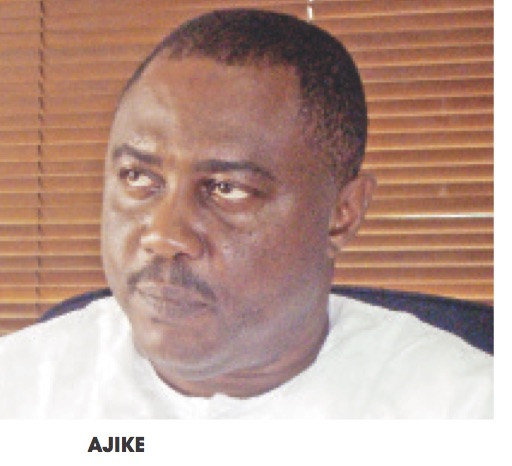
A foremost security expert, Dr. Ody Ajike, has warned that sanctions against Niger Republic following the military coup that ousted the country’s democratic government will benefit only terrorists groups and bandits.
In an interview with VINCENT KALU, the legal luminary and public affairs analyst, noted that coups in Africa have been triggered by foreign interests.
A coup has just happened in Niger Republic. What could be the reason for that when we thought that military government was no more fashionable?
Coup has been a mechanism for the creative disruption of political and socio-economic frameworks in Africa. The first coup in Africa was in Togo in 1963 and coups in Africa have actually been triggered by foreign interests for economic purposes but veiled as political in nature. We must understand that coups could be by military juntas or political actors. Political actors perpetrate coups like we had the political coup against Goodluck Jonathan in 2015. The recent coup in Niger is the fifth coup since their independence in 1960 and the ninth coup in a volley of coups and coup attempts across West and Central Africa within the past three years.
Niger, Mali, Guinea and Burkina Faso have military governments in place. Are the Francophone countries showing loyalty fatigue to their former colonial master?
The motivating factors for the coup in Niger are a bit complex and interlinked. It’s the same across the Sahel region. The motivating factors are weak economic growth and development, poor and inadequate governance, political and military leadership competitions, climate injustice, resource competition, anti-imperialism discontent, communal rivalries, mass displacement within Sahelian Africa and growing insecurity. With these abject factors, military governments can never be unfashionable. No democratic government in Sahelian Africa has ushered in collective prosperity for the people. Even French and Western interventions have left Africans and Africa poorer and distraught.
France has never been committed to the development of the Francophone Africa even when these states are their satellite protégés and security interest. Niger is the security interest of France being the second largest uranium producer in Africa after Namibia and powering France’s nuclear reactors. Mali, Guinea and Burkina Faso have lost French support and tilting towards Russia and that made Niger a more strategic partner of the West. These countries have never benefited tremendously from French economic support with a population so disenchanted with the French and their predatory extraction of natural resources from these countries. So if you say that there is a loyalty fatigue, I completely agree with that assertion. There is no commendable socioeconomic benefit of French neo-colonialism evident within the political, economic and social frameworks of these countries. Despite huge French military presence within Sahelian Africa, insecurity has continued to prosper with the Sahel accounting as the epicenter of global terrorism with 43 per cent deaths arising from terrorist violence. This 2022 recorded figure is higher than the recorded death figures arising from terrorist violence in South Asia, Middle East and North Africa combined. We need to further note that, despite various Western programmed interventions within the Sahel, there has been a continuous increase in terrorism and one wonders how to explain this. So what are the Western governments actually doing in the Sahel? This is a simple question that citizens and denizens in Niger, Guinea, Mali and Burkina Faso are asking their political leaderships.
If the coup succeeds, what signal has it sent to the African continent?
The coup has already succeeded. At least a military government is in power in Niger through the National Council for the Safeguard of the Homeland (CNSP). This has strong implications across Africa and the Sahel. The security landscape of the Sahel is in jeopardy and West and Central Africa are highly threatened and I wonder if we do not have the visual acuity to see this dimension of imminent danger.
Within the Sahel and Lake Chad regions, Niger is at the centre and if anything goes wrong, things may go wrong from Mali to North, East and West of Niger. We all know that Niger has a critical role to play and has been playing that role by cooperatively rolling back terrorists and insurgents flowing from the Sahel to Nigeria. Can we permit an expansion of these terrorists’ networks by allowing decay in the political, economic and military relationships and cooperation with Niger? Are we interested in expanding the arc of instability that could be exploited by insurgents and terrorists groups? We must find a structured balance in handling this precarious situation or we may forfeit the equilibrium state of our national security or have it critically threatened.
ECOWAS has threatened to use force on Niger. What are the implications of using military force to resolve the issue?
ECOWAS was hasty in issuing the threats to the Niger Junta without proper considerations of the international dimensions of the impasse in Niger and the internal contradictions. That was flawed diplomacy at best. ECOWAS decision was not framed in an understanding of the structural and systemic weaknesses of Niger and the nature of Niger having a deep reflexive culture of coups. Therefore, military force will never resolve these issues. The relationship between countries within Sahelian Africa and the West has deteriorated abysmally and Niger benefited from that deterioration through increased aids.
The West was concerned with supporting Niger’s budget and military training of its personnel and exerting influence to promote their economic and security interests at the disadvantage of the masses. About half of the population lives in abject transparent poverty with the lowest Human Development Index in the world and aid to Niger by the West is nothing compared to aids to other regions of the world. The West has deployed billions of Dollars to Ukraine to preserve their strategic interests and Sahelian Africa wobbles with peasant aids so that their economy and people can never be lifted while Western security and economic interests are pursued with reckless bravado.
Past experiences show that the use of force in Niger or any of the countries within the Sahel will create more insecurity and deepen Africa’s insecurity, and terrorists may seize this opportunity within the contiguous areas and inflict more damage to our collective security.
How can the impasse be resolved?
The impasse can be resolved through careful and deliberate balancing of measures. ECOWAS needs to deploy more political and innovative diplomatic engagements and not threat of force because once disengagement is permitted, the situation will worsen. ECOWAS should insist on a programmed transition to constitutional order through diplomacy. For Nigeria, this will show that Africa is the centre piece of our foreign policy and not the other way round. The sanctions against Niger are directed at already deprived people and this could result to more support for the Junta and/or opportunities for recruitment of fighters by terrorists and insurgents. ECOWAS should also devote more attention in resolving the root causes of instability in West Africa and we know these root causes are weak leadership and poor economic development.
Do you see the hands of western powers in this issue?
The Western countries are the propagators of these violent conflicts in Africa. To the West, Africa remains an extractive source for their economic growth. However, aid to Niger has increased within the past few years but we know that aid is not neutral. There is always a reason for these developmental aids to African countries. These aids are not designed to spike economic development but rather to maintain a semblance of stability. France and the US have military bases in Niger but these have not improved economic development in Niger or has it improved the security complexion of the Sahelian states. These bases have remained guardians of protection for their security and economic interests. I suggest Africa chooses new partners for development and security.
Why do you think the core North is kicking against military option in Niger?
There are so many reasons the North is against military option by ECOWAS. First many Northerners have investments in Niger and an armed conflict or armed intervention will surely affect their investments. There are also cultural ties between them through shared origins, marriages and others. Proximity to conflict zones could lead to mass displacements and influx of refugees, which will destabilise our local communities. Finally, we do not have the resources to engage in any form of armed conflict or international regional intervention at the moment. Fighting terrorist insurgents alone with a wobbling economy is disastrous talk less of funding a war.
Won’t going to war with another country aggravate the economic hardship in Nigeria?
Going to war with another country will seriously aggravate our economic challenges. We are borrowing to pay national debts and our current national economic vitality is weak. Who will fund the war? This is a time in Nigeria when we have to make the critical choice between bread, butter and guns.
If there’s a war, do you think soldiers from the North will show patriotism to Nigeria?
Our military is a patriotic force and you will find the most patriotic Nigerians in the military. Our military remains the only remaining national institution built on patriotism and that is why we complain when defence and security are politicised in Nigeria.
ECOWAS has imposed sanction against Niger. What are the implications?
The sanctions imposed on Niger are simply unnecessary and I wonder who will enforce it and the objects these sanctions will impact. The people are already deprived so why impose further sanctions on them? This will lead a critical mass of the people to support the junta or make themselves available for recruitment by terrorists. The sanctions will further create an adverse impact in counter terrorism and counter insurgency operation around the Lake Chad region and the Sahel region.
The sanctions will benefit terrorist groups, and bandits and further isolation of the military junta in Niger. This will make the junta more excessive in their actions against civilians and the interests of Nigeria and our Western partners. There could be a shift to Russia making Niger a consumer of security services from Russia. This will impair Western interests and increase instability within and across the region. Sanctions will widen the gaps opened through disengagements and this may benefit the terrorist insurgents. Human trafficking and illegal migration through Niger to the West may go unchecked because Niger is a route for illegal migrants and human traffickers. It is trite to note that in 2022, terrorism activities increased in Benin Republic and Benin requires a closer cooperation with Niger and Burkina Faso in managing the Park W Reserve, which stretches into the three countries. This reserve has become an ungoverned space and terrorism has become so bad a crime that unilateral actions by one country can never be enough. For Nigeria, the direct impact may be the collapse of security within the Lake Chad region which Mali, Benin, Chad and Niger have been very cooperative. ECOWAS may be creating more problems for the region than solutions.
What is your assessment of the proposed cabinet of President Tinubu?
President Tinubu has presented the worst set of ministers I have ever seen in Nigeria since 1999. I believe he may be looking forward to a re-run election and that is why he has this character of ministerial nominees. I saw the resume of a ministerial nominee with only SSCE in the 21st Century. It is appalling.
What is your position on the large cabinet when the Oronsaye Report recommended reduced bureaucracy and cost of governance?
Reducing the cost of governance is one thing Nigerians are not calling out this government for. How can you be increasing the cost of governance when hardship is levied on the people daily? Nigerians should call out this government to reduce the cost of governance.
How can the insecurity in the South East be tackled?
Insecurity in the South East can be tackled by increased law enforcement. Those behind the insecurity in the South East are merely criminals and we understand that the demobilisation of the Special Armed Robbery Squad is part of the reasons for the increased insecurity in the South East. We need to rearm the police to confront these criminals and only the police can do this job effectively because they know everyone in those communities and all the black spots. Let us recalibrate the police to handle this.