Follow Us on Google
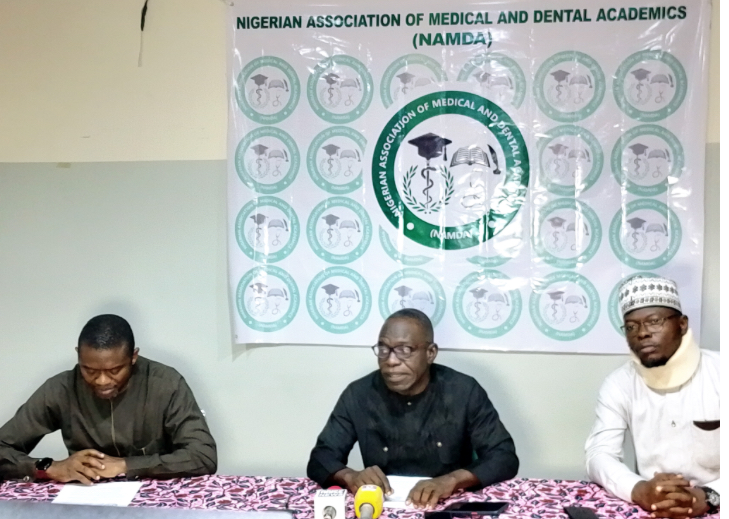
Medical lecturers across Nigerian universities, research and health institutions, under the aegis of the Nigerian Association of Medical and Dental Academics (NAMDA), have resolved to embark on a three-day warning strike to protest the poor condition of service of medical doctors in Nigerian universities and other health institutions.
A statement signed by the Acting National Secretary, Prof Aniekan Peters, and made available to journalists in Uyo stated that the three-day warning strike would commence on 3 September.
According to Prof Peters, 14 branches of the Association have already endorsed the action to draw the attention of the federal government to the poor conditions of service experienced by doctors in academia.
Peters threatened that the warning strike approved by the National Executive Council (NEC) of the Association would be total and comprehensive across medical schools in Nigeria.
He listed critical issues affecting medical lecturers to include the failure of the federal government to conclude negotiations on the conditions of service of medical lecturers, as earlier initiated through the Ahmed Yahale Committee.
Others include the failure to document the payment of medical lecturers under the CONMESS salary structure, non-payment of MCATA, non-payment of EAA, non-payment of Excess Workload Allowance and non-payment of Professorial Allowance, among others.
The lecturers regretted that, despite the lack of medical lecturers in Nigerian medical institutions, the federal government could not manage the plight of medical doctors in health institutions.
The statement reads in part:
“14 NAMDA Branches have voted to embark on industrial action as directed by NEC
Other News
“Despite the dearth of medical lecturers and the worsening “Japa” syndrome, the Federal Government appears to have continued to ignore the legitimate concerns of medical lecturers.
“Medical lecturers are therefore being pushed into an avoidable strike
“The warning strike is scheduled to commence Tuesday next week and will be total and comprehensive across medical schools in the country.
“At a time when the country is already experiencing a severe shortage of medical lecturers, it is unfortunate that the Government is allowing these avoidable issues to escalate”.
He observed that the greatest mistake of doctors in academia is that they choose to stay back and serve their country despite the harsh economic realities.
“We call on the Federal Government to listen, return to the negotiating table and resolve these issues before the warning strike becomes inevitable
“Because of the Japa syndrome, the Federal Government appears determined to mass-produce doctors to address the shortage created by migration—yet the welfare and remuneration of the medical lecturers who train these doctors cannot be ignored
“You cannot mass-produce doctors without investing in the doctors and medical lecturers who train them.”