Follow Us on Google
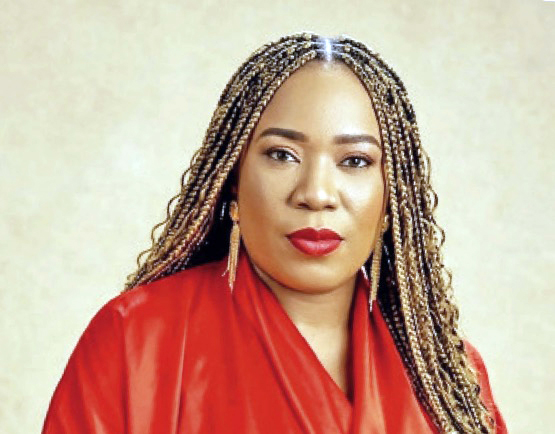
For Anita Edwards, storytelling is more than entertainment—it is a powerful vehicle for shaping culture, influencing conversations and connecting people across borders.
As the co-founder and Chief Executive Officer of Tribe Nation Theatrical Distribution, she is at the forefront of an emerging generation of African entrepreneurs working to build sustainable structures for the continent’s film and entertainment industry.

Born and raised in Lagos, with Itsekiri and Etsako roots, Edwards’ journey into the world of entertainment was anything but conventional.
In this interview, Edwards opens up about her unconventional career journey, her parents’ influence, the challenges of building in Africa’s evolving film industry, her vision for Tribe Nation, her thoughts on style, and the essentials she never leaves home without.
How has the journey to becoming who you are today as the founder of Tribe Nation?
I was born and bred in Lagos, but my dad is from Warri. My mum is from Edo, so I am half-Itsekiri, half-Etsako. My journey has been one of curiosity, courage and continuous learning. I started out as a writer, then ventured into film production, and thereafter, film distribution. I have always been interested in solving problems and understanding how things work, and over time, I discovered the power of storytelling—not just as entertainment, but as a tool for shaping culture, influencing conversations and connecting people. That passion eventually became a bigger vision: to build sustainable infrastructure and opportunities for African storytelling. The journey hasn’t been linear, but every challenge, setback and opportunity has helped shape the entrepreneur and leader I am today.
Growing up, you loved mathematics and the sciences. Why the switch to arts and entertainment?
I don’t really see it as abandoning one for the other. Maths and sciences taught me how to think analytically, solve problems and recognise patterns, and those skills have been incredibly useful in business. Entertainment is creative, but there is also a strong strategic and commercial side to it—distribution, audience analysis, financing, marketing and building sustainable business models. I simply discovered that I was equally passionate about creativity and storytelling. Entertainment gave me the opportunity to bring both sides of myself together.
What was your parents’ reaction to your change in career choice?
I think, initially, there was some concern, which is understandable. Moving away from a more traditional career path into entertainment can raise questions about stability and sustainability. But over time, as they saw my commitment and the seriousness with which I approached my career, there was greater understanding and support. I believe that sometimes the people closest to you may not immediately understand your vision because they cannot see what you see yet. Your responsibility is to do the work, remain consistent and give them something tangible to believe in.
What challenges have you faced in your career, and how did you overcome them?
One of my biggest challenges has been building in an industry with enormous potential but still developing infrastructure and sustainable systems. I’ve faced rejection, failed negotiations, projects that didn’t go as planned and moments when we had to completely rethink our strategy. What has helped me overcome these challenges is adaptability. I’ve learned not to become too emotionally attached to one particular route to success. If something doesn’t work, I ask: What did this teach us, and what can we do differently? I also believe strongly in building relationships, surrounding myself with capable people and continuing to learn. Entrepreneurship has taught me that resilience is not simply about enduring difficult moments; it is about having the ability to learn, adjust and keep moving forward.
Could you share some of your work with us, and where do you envisage yourself in five years?
Through Tribe Nation, we have had the opportunity to work across different areas of the film value chain, particularly theatrical and ancillary distribution. We distribute films in English and French across West Africa. In 2025, we had the incredible opportunity to distribute the first two episodes of the fifth season of the globally acclaimed series The Chosen, also known as The Chosen: Last Supper, in cinemas across West Africa. In five years, I hope Tribe Nation will have evolved from simply serving infrastructure to owning more of it. I want us to have greater control across the value chain and to build infrastructure that enables us—and others—to take African stories further.
Who influenced you more while growing up—your dad or your mum?
I would say both, but in very different ways. My dad taught me business. He influenced the way I think about opportunities, value and building something sustainable. My mum, on the other hand, taught me relationships—the importance of people, empathy and how you treat others. I think those two lessons have shaped a lot of who I am today. Business may help you build something, but relationships are often what sustain you and help you grow it.
What does style mean to you, and how would you describe your kind of style?
To me, style is about authenticity and confidence. It’s not necessarily about wearing the most expensive things or following every trend. It’s about knowing yourself and expressing who you are. My style is elegant, comfortable and intentional. I appreciate timeless pieces that are versatile and can make a statement without being unnecessarily loud. Ultimately, I think the best accessory anyone can have is confidence. You can wear the most beautiful outfit, but if you’re uncomfortable in it or it doesn’t feel like you, it shows.
What is a must for you in your handbag, and why?
My phone is definitely a must because, as an entrepreneur, it is practically my mobile office. It keeps me connected to my team, projects, partners and opportunities. I also like to have somewhere to quickly write down ideas because inspiration can come at the most unexpected times. And, of course, my lipgloss. I don’t do cracked lips!