Follow Us on Google

By Henry Uche
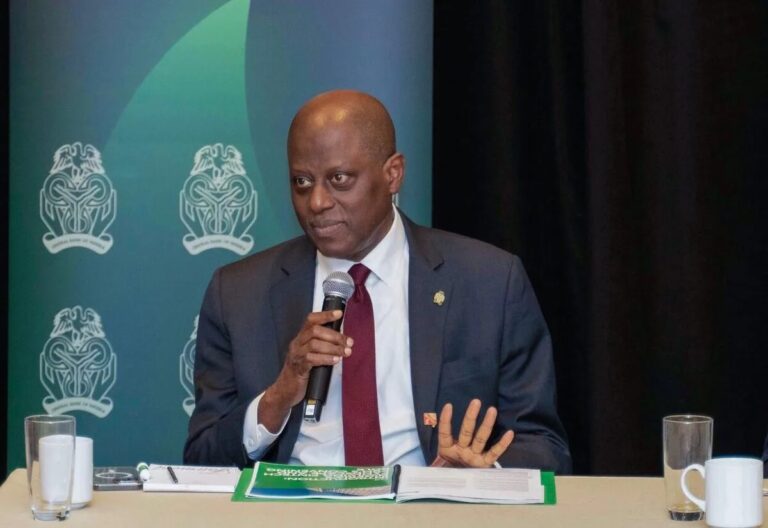
The Commissioner for Insurance and Chief Executive Officer of the National Insurance Commission (NAICOM), Mr Olusegun Omosehin, has called for a unified strategy to deepen insurance absorption in Nigeria.
He notes that many people, including players in the Small and Medium Enterprises (SMEs) landscape are yet to fully harness its benefits despite its place in business sustainability.
In a monitored television interview, Omosehin explained how the Commission is revolutionising the sector for the benefit of the Nigerian economy.
Reflect on Nigeria’s insurance landscape
The insurance landscape currently is one I would describe as a mixture of great potential, but we see some teething challenges. But let me emphasise the potential.
First, it’s an industry that is currently growing at double digits, and that is very significant. The growth rate in the sector is in double digits currently, and there are significant opportunities in microinsurance, for example. There is high demand for those low-end products that actually address the needs of individuals and even small businesses.
There is potential for growth in Takaful insurance, for example. Takaful is a more faith-based kind of product. Considering the huge Muslim population of Nigeria, people tend to look for non-interest insurance policies. So we have a huge amount of potential in that regard.
Also, with the advent of technology, COVID-19 has brought a lot of risks. Cyber insurance is a potential area of growth because of the risks associated with technology adoption across the entire value chain of payments, banking, and financial services.
So, in a nutshell, I will tell you that the insurance landscape is one with great potential, but there are some challenges. We shall not dwell on the challenges.
Is double-digit growth good in your view?
It is actually very great. You know, when we talk about growth, right? Okay, let me simplify this.
When you listen to economists speak, they will tell you that, for example, this year, the Gross Domestic Product (GDP) of Nigeria has grown at a rate of, say, about 3.5 per cent. That is single-digit growth. When it gets to 10 per cent, you can talk of double digits. But when you have a sector that is growing at about 20 per cent annually, that is significant.
So, we’re growing better than the economy itself, which is significant. And that’s what I meant when I said we are growing at a double-digit rate. That has been the trend, and we are hoping this will continue for a long time because the reason is not perfect. You know, insurance penetration in Nigeria is still very low.
If insurance penetration is very low, how are you progressing so fast?
Okay, so let me say this: insurance penetration in Nigeria is currently sitting at about 1 per cent of the population. Nigeria has a population of over 200 million people. The long-term goal of the insurance regulator is to see how we can move this to about 5 per cent in 10 years. A whole lot of reforms and activities have been put together to make this happen.
Because of the low adoption of insurance as a culture for managing risks in Nigeria, not many people have taken up insurance as a risk management mechanism. Instead, what you see happening is a situation where, perhaps because of our socio-cultural beliefs, there is a social system taking the place of insurance.
For example, I’m sure you belong to various groups and associations—maybe an Old Students’ Association. When anything happens, there is a call among the group for contributions. That is our culture. So, in a way, you may be asked to donate N50,000, with everyone pooling money together to support an individual.
But that is the role insurance should be playing
What individuals need to do, perhaps on a periodic basis—maybe at the beginning of the year—is to pool their resources into an insurance pool. Instead of each of you contributing N50,000 per incident, maybe it would have been just N5,000 per person into an insurance pool. Then, when anything happens to a member, the defined benefit is given to that individual, rather than everyone contributing every time.
If these incidents happen 10 times a year, you contribute 10 times. But with insurance, you make one payment per year. Typically, the agreement lasts for 12 months, and at the expiration of that period, you are allowed to renew your policy and make another contribution.
These products exist. Yes, they exist.
One of the key findings is that many Nigerians are unaware of the benefits of insurance as a financial protection mechanism. This is a major problem.
How are you addressing this?
We’re embarking on mass education, public awareness, enlightenment campaigns, and other initiatives. It’s a whole bulk of work that needs to be done. We have commenced a lot of these efforts, but they are never enough, at least for now.
I also expect that this program and interaction should serve as a way of educating Nigerians on the benefits of insurance and how they can take full advantage of insurance products. This is especially important in an environment with high inflation. You shouldn’t always have to dip into your pocket—money that is not even there—at every point in time.
1 per cent penetration is shocking, considering Nigeria’s economy and size, what’s the way out?
It’s important that I explain this well.
The global average insurance penetration rate is around 7 per cent, while Nigeria’s penetration rate is just 1 per cent. So, we have some gaps to cover. More interestingly, the sector that is actually benefiting from insurance is the corporate segment of society.
All the big businesses, multinationals, oil and gas firms, and manufacturing companies are taking up insurance. But what percentage of these businesses make up the total population?
When we talk about penetration, we are looking at the percentage relative to the total population. The reality is that the majority of individuals are not taking up insurance.
There are several reasons for this. Some are due to societal factors, while others are due to public trust issues with the insurance sector. That is why I’m here.
The National Insurance Commission (NAICOM) is the regulator and the government agency responsible for supervising and developing the sector. Another key part of our role is consumer protection. We are here to protect insurance consumers, so when they have issues, they should come to us.
The last part of our role is to advise the government on insurance matters and ensure that all critical national assets are adequately covered. We also have a responsibility to champion advocacy, enlightenment, and mass education for the Nigerian public.
So, as we move forward in this administration, we will continue to push these efforts.
Fight against imposters in the sector
It’s going pretty well. You know, the Commission licenses and registers insurance companies. These companies are grouped depending on their focus or line of business. These are registered companies that provide services to the sector and the Nigerian public. We receive periodic returns from them, and we also monitor the way they run their business to ensure the stability of the sector.
We have what we call prudential requirements—requirements regarding their financial status at different points in time. When we identify issues, we are sometimes forced to intervene and take specific regulatory actions. In a nutshell, our role is to ensure the stability of the insurance sector within the larger financial services sector.
Feedback from operators
That is a major part of our work. If you look at research conducted by specialized institutions or agencies on insurance awareness and penetration, one key issue that stands out is that people often complain that when they have claims or disputes with operators, they do not know where to go.
The place to come is the National Insurance Commission. To address this, we have created a unit that handles complaints from the public. We call it the Complaints Bureau—it is the Consumer Protection Unit of the Commission that receives complaints from Nigerians and addresses these concerns with the operators. We have an adjudication process in place to sit and decide on these cases.
Often, I tell you, if we receive a complaint, it is dealt with within 24 hours. Have there been gaps in the past? The answer is yes, but we are working hard to quickly address these issues. Some of these issues go beyond what is visible on the surface. Some are tied to the legal and regulatory framework upon which the regulator operates.
I am happy that a reform process is currently ongoing. You may be aware of the 2024 Insurance Reform Bill, which has passed through the Senate and is currently with the House of Representatives for concurrence. We are hopeful that once the bill is assented to by the President, we will have a more stable legal and regulatory framework. This will provide a solid legal foundation for the insurance business, empower the regulator to take decisive actions at appropriate times, and create a better operating environment for operators.
A key element of the new law is the minimum capital requirement, which will significantly increase the financial capacity of insurance institutions. This is designed to give Nigerians greater confidence in the sector’s ability to de-risk the economy.
At its core, insurance provides assurance, comfort, and confidence for businesses to take risks. We assume these risks from them, allowing them to operate with peace of mind. If anything happens, the insurance platform is there to take responsibility. I can tell you that when it comes to claims management and ensuring that operators fulfill their promises, that is exactly why we exist—to support and protect Nigerians.
Potential impact of the 2024 Insurance Bill across all sectors
That is the whole idea—there are many ongoing reforms, but their impact will become clearer once the bill is passed. The bill will give us the necessary legal backing to enforce these reforms effectively.
Even now, significant changes are happening, particularly around claims payment. Since the advent of the new leadership at the Commission, our mantra has been simple: “Find a reason to pay claims.” Every operator in the market knows this because we have zero tolerance for the non-settlement of genuine claims. This understanding exists between us and the operators, and in all honesty, they have risen to the challenge, we are very proud of them.
The complete package for every vehicle (licence, roadworthiness and insurance) but unfortunately, Nigerians are buying the wrong insurance. That is why this conversation is so important. We have heard all kinds of stories since this partnership started.
By the way, I would like to use this opportunity to commend the Inspector General of Police for taking decisive action to massively enforce compulsory motor insurance nationwide. Yes, this has always been the responsibility of the police, but there is now renewed commitment and vigor in carrying it out. Similarly, the Federal Road Safety Corps has also joined in, collaborating with us to ensure total compliance with compulsory third-party motor insurance.
Other News
Some individuals even went to court to challenge the Nigerian Police for enforcing this provision of the law. But let me be clear: third-party motor insurance is mandatory under the law. The Motor Vehicle Third-Party Insurance Act of 1941, as reenacted in 2003 under Section 68(1) of the Insurance Act 2003, explicitly states:
“No person shall use, cause to use, or authorise the use of a motor vehicle on Nigerian roads without a policy of insurance.”
The reason is simple: a motor vehicle poses a risk to other road users. This is why societies worldwide mandate that anyone who owns a vehicle must provide coverage for the risks their vehicle poses to others—whether pedestrians, other drivers, or property.
And let’s talk about cost. The mandatory cover in Nigeria is just N15,000. That is N15,000 compared to the cost of a standard vehicle, which is rarely below $10,000. In fact, at current exchange rates, N15,000 is less than $10! Yet, this small amount guarantees you peace of mind.
If an accident happens, you don’t need to argue, fight, or beg anyone. If someone runs into your vehicle, after the usual “I’m so sorry”, the next thing should be presenting your insurance papers. That’s it. No need for fights, insults, or removing car parts in frustration.
Beyond vehicle damage, let’s not forget the more serious cases. That N15,000 policy guarantees coverage of up to N3 million for third-party claims. If, God forbid, an accident leads to the death of a pedestrian, insurance ensures that their family is compensated adequately. Many of these victims are breadwinners, and insurance steps in to support their families.
This is why insurance is essential. It provides security, protects lives, and upholds financial stability in society.
Fake insurance policies Nigerians have been picking up
This is one major area I also love to educate Nigerians about because the bulk of the misunderstanding comes from not buying the right policies. Right? Yes, it is mandatory. Yes, Nigerians must buy, but where are they buying those policies from? NAICOM has a list of licensed insurance companies in Nigeria. That list is pasted on our website, and we make it available.
Recently, we published it across all print media, stating the list of all motor underwriters so that people can know. But yes, we know that sometimes we have some unscrupulous people who take advantage of the public’s ignorance. For instance, people have claimed they go to licensing offices where some individuals parade themselves around, printing papers and unknowingly selling them to members of the public. That is why we are engaging and collaborating with other government agencies in this respect.
We are collaborating with the Nigerian Police and the Federal Road Safety Corps. We have also commenced engagement with the Vehicle Inspection Office (VIO) to see how they can assist in reducing these incidents because Nigerians need to get the right policies.
Beyond this, we have created a platform where people can confirm whether what they have been sold is the right policy. It is a digital platform where you just input your plate number—once you have internet service, you can confirm on the spot whether what was sold to you is genuine or fake. Similarly, for those without internet access, we have also created a USSD code that allows users to verify the authenticity of their policy.
Nigerians really need to understand this process and work with us. Perhaps, as a sector, we have not done enough in terms of education and enlightenment. We must make this a consistent effort to educate Nigerians regularly.
What kind of policies are being sold? Who Are the sellers and who do they represent?
What is the regulator doing to ensure that those posing as insurance companies are removed from the market?
Good question, and that is why I have spoken about collaboration. The bulk of these fraudulent activities occur around licensing offices, mostly with vehicle inspection officers. Collaboration with VIOs will be crucial.
We have outlined engagements in the coming days. While I may not speak to specifics at this moment, we will be meeting with leadership, and hopefully, we will secure the necessary collaboration required—just as we have done with other agencies working closely with us on this project. The advantage is for Nigeria and Nigerians.
Preventing additional burdens on Nigerian drivers and insurance claim holders
This is a major issue. We recognize the need to consistently educate even our partner agencies in this process. That is why, for each partnership and collaboration, we set up a technical committee that works with the agency.
What do they do? They provide regular updates, education, and enlightenment to those agencies.
For third-party motor insurance, which we are discussing, the law is clear. The same Act that made it mandatory also outlines consequences for non-compliance. The penalty is N250,000 if you are caught.
When the review is done, that amount will certainly increase. So, if you have an opportunity to buy something for N15,000, but non-compliance will make you pay N250,000—or face imprisonment or both—that is the provision of the law. Nigerians need to understand that this is not the police enforcing it arbitrarily; they are merely implementing the provisions of the law.
I know there have been various opinions on social media, but I appeal to Nigerians, influencers, and opinion molders to use their platforms for education rather than focusing on negatives.
One key element that needs better explanation is this: third-party motor insurance only covers third parties—the other person’s vehicle or property that is affected. It does not cover you, the owner. The only advantage you have as the owner is non-financial: peace of mind from knowing you have financial protection in case of an accident and that you have met the legal requirement.
If you want coverage for yourself or your vehicle, you need to go a step higher with comprehensive insurance. However, that is optional—it depends on your preference.
Insurance beyond vehicles: Does it cover health and other sectors?
That is one area with huge potential in this market. Insurance covers almost every aspect of life.
There is agricultural insurance for farmers. In fact, in Nigeria, it is a specialist area with experts providing coverage for farmers.
There is also health insurance for Nigerians. This is a major need. You can buy a small health insurance cover so that when medical challenges arise, your policy takes care of hospital bills, tests, and related expenses.
There are even policies for cybersecurity risks. The people who benefit the most from insurance are those in the oil and gas sector because regulations mandate it. The same applies to aviation—no aircraft can fly in Nigerian airspace without insurance. The NCAA and NAICOM must both confirm that an aircraft has valid insurance coverage.
Many Nigerians benefit from insurance without even realizing it. For example, airline operators purchase passenger liability insurance. But what about road transport? Are passengers traveling from Lagos to Ibadan or Abuja to Kaduna in commercial vehicles covered? Do transport companies realize they should provide insurance for their passengers?
The essence of insurance is to minimise pain in cases of accidents. When road accidents occur, insurance should help victims recover and return to normal life.
The Gap Between Potential and Reality in the Insurance Industry
The federal government has made significant efforts in agricultural insurance. For instance, under the Anchor Borrowers’ Programme, the government pays for farmers’ insurance.
However, the challenge is getting farmers to recognize the need for insurance and take responsibility for their own coverage. Many of the risks they face—bad harvests, pest infestations, excessive rainfall—can be insured.
These areas are already fully developed, and underwriters can assess the risks, collect small premiums, and pay compensation when necessary. This is not new; it has been happening.
Are there enough unique insurance products to meet market needs?
There is still a lot of work to be done. Operators are in a better position to speak on this, but as a regulator, I can say that more innovative products are needed.
Nigerians must be able to relate to these products. For example, mobile insurance via telcos could better serve young people.
There is also a need for digital, technology-driven distribution channels. We have relied too much on traditional models. The regulatory framework is being adjusted to support innovation.
At NAICOM, we have created a Directorate of Innovation and Regulation to simplify the process and encourage operators to innovate. We have also set up an innovation hub where ideas can be tested.
Our role as a regulator is to approve products and rates. If we do not align with market trends, we create a bottleneck. That is why we are educating ourselves to understand these trends and facilitate faster approvals.
The insurance sector’s role in a $1trn economy
We are fully aligned with President Tinubu’s ambition to achieve a $1 trillion economy by 2030.
A key driver of our preparedness is increasing the capitalization of insurance operators. The framework for this is awaiting presidential approval.
Our contribution will be in de-risking the economy—identifying risks and ensuring they are mitigated. We are working on the necessary frameworks to support this goal.
Has the cost of doing business in Nigeria increased due to a lack of insurance?
Yes, many entrepreneurs, especially SMEs, have not taken full advantage of insurance.
When they experience losses, they use their limited funds to cover costs. This is unnecessary. These costs should be transferred to professional risk managers (insurers).
We are working with development agencies that provide loans to SMEs to embed insurance in their financing models.
While insurance adds a small upfront cost, the long-term benefits are enormous.