Follow Us on Google

By Merit Ibe [email protected]
The Manufacturers Association of Nigeria (MAN) has flaunted manufacturing as the backbone of the industrial sector, asserting that it could account for over 80% of the nation’s non-oil exports if given proper priority.
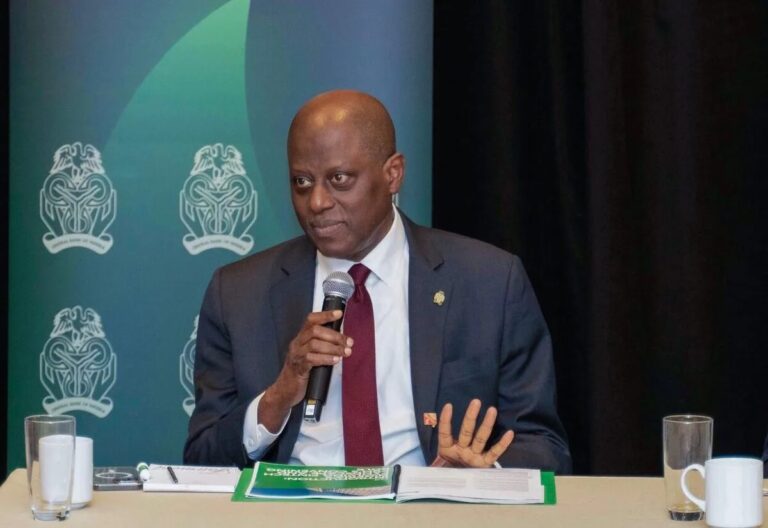
The Director General of the Manufacturers Association of Nigeria (MAN), Segun Ajayi-Kadir, made this statement during a recent Town Hall meeting with the Minister of State for Industry, Trade, and Investment, John Owan Enoh, alongside members and representatives of the Organised Private Sector (OPS).
At the meeting aimed at fostering more collaboration, promoting inclusivity and initiating flourishing conversations to drive Nigeria’s industrial growth, Ajayi-Kadir said at 46.5 per cent of industrial output, the manufacturing sector remains the leading contributor to Nigeria’s industrial sector.
In his overview of the state of the industrial sector, Ajayi-Kadir, said despite inherent challenges, Nigeria’s industrial value added $118.22 billion to the economy in 2023, ranking second in Africa, with the manufacturing sector which accounted for $55.74 billion.
“Clearly, manufacturing is the most vibrant sector of any industrialised economy, considering its cross-cutting linkages with all other sectors. Indeed, no economy has developed without the formidable role of manufacturing.”
The MAN DG, therefore, said the structural change engendered by higher value-added manufacturing operations is the essential route for the Nigerian economy to achieve higher income level and better quality of life for citizens.
Emphasising that the manufacturing sector plays critical roles in the nation’s industrialisation and economic development, he viewed that industries are labour-intensive and create numerous jobs, both directly and indirectly.
“No other job creator is bigger than the manufacturing sector,” he emphasised, adding that manufacturing requires a skilled workforce, which encourages education and training, leading to a more skilled labor force.
He also said manufactured goods are a significant part of a country’s exports, pointing out that manufacturing has the capacity to contribute over 80 per cent of Nigeria’s non-oil export, which earns the country huge foreign exchange.
Ajayi-Kadir further informed the Minister and other attendees that manufacturing is a major contributor to the nation’s Gross Domestic Product (GDP), contributing about 19 per cent to industrial output in the first nine months of 2024, for instance.
He also stated that a strong manufacturing base helps a country diversify its economy, making it less vulnerable to external shocks such as fluctuations in commodity prices.
Apart from attracting Foreign Direct Investments (FDIs), which brings in capital, technology and management expertise, virile manufacturing, he added benefits from economies of scale, which can lead to lower costs and higher productivity as production levels increase.
Other News
The MAN DG also pointed out that the manufacturing sector is at the forefront of technological advancements and innovation which can lead to more efficient production methods and new products development.
Ajayi-Kadir, however, lamented that despite these immense potential, Nigeria’s industrial sector is continually beset with difficulties, with the current state of the manufacturing sector and by extension, the economy raising concerns among industrialists.
This depressing situation, he said, stem from factors such as the prevailing unstable economic indicators, including high inflation, poor infrastructure, electricity challenges, high cost of credit, naira devaluation, foreign exchange shortages and multiple taxation among others.
The MAN boss lamented that these challenges have led to closure of companies, high unemployment rate and increase in crime rate.
“For instance, as at 2023, 335 manufacturing companies became ailing and 767 shut down operations nationwide”, he noted.
Giving more insight into how these came about, Ajayi-Kadir said, for instance, that at 30-35 per cent, the prevailing high interest rates and limited access to credit have made it difficult for manufacturers to secure the funding needed for expansion or modernization.
He also lamented that with a staggering N3.04 trillion worth of raw materials imported in 2023 alone, Nigeria’s heavy dependence on imported raw materials exposes many manufacturers to global market fluctuations and foreign exchange risks.
On his part, the Minister of State for Industry, Federal Ministry of Industry, Trade and Investment (FMITI), John Owan Enoh, called for collaboration between the government and the Organized Private Sector of Nigeria (OPSN), to build an industrialised nation.
Enoh noted that the manufacturing sector of every nation is critical to the progress in the country’s economic drive, adding that no country can move from developing to being a developed nation without a turnaround of its industrial sector.
The Minister stressed the need for synergy amongst all relevant stakeholders to ensure sustainable development in the nation’s manufacturing sector.
He listed partnership, accountability and transparency as key necessities to achieve what he described as ‘movement for a better nation’. He stressed the need for an Inter-Ministerial collaboration to achieve the national goal. According to him, “involving the Raw Materials Research and Development Council (RMRDC), an agency under the Federal Ministry of Innovation, Science and Technology (FMIST), on this quest is very important, as the Council plays a pivotal role in Nigeria’s industrialization process”.
Senator Enoh, therefore, prescribed the formation of a Multi-Stakeholder Working Group, with diverse participation amongst stakeholders to identify existing challenges in the manufacturing sector and proffer possible solutions to them.
He said the Multi-Stakeholder Group would comprise stakeholders in FMITI, the Federal Ministry of Solid Minerals, the Federal Ministry of Agriculture and Food Security, RMRDC and the OPSN, which is made up of the Manufacturers Association of Nigeria (MAN), the National Association of Small and Medium Enterprises (NASME), the National Employment Consultative Association (NECA) and the Nigerian Association of Small-Scale Industrialists (NASSI). He also noted that he, alongside the President of MAN, would serve as co-chairmen of the Group. He informed participants that the Group would meet quarterly with clear key performance indicators and time-lines set to evaluate progress made as they advance in pursuit of the agenda.