Follow Us on Google

With the federal government’s plan to introduce fuel tax at some point, manufacturers are urging it to first address Nigeria’s infrastructure deficits, high production costs (caused by inflation) and difficult business environment.
They argue that improving power supply, developing the steel and agricultural sectors, promoting compressed natural gas (CNG) and easing business operations would help industries withstand the additional costs when the tax is eventually introduced.
According to them, anything short of the above will worsen inflation, raise production costs and threaten business survival.
Minister of Finance and Coordinating Minister of the Economy, Taiwo Oyedele, stirred the hornest nest recently when he announced that the federal government would introduce fuel taxes when the economy stabilises and income levels can accommodate the additional costs.
But the manufacturers and SMEs are lamenting, noting that imposing additional taxes on petrol and diesel in an economy already grappling with high transportation costs, expensive credit, unreliable electricity and inadequate logistics infrastructure would further strain businesses and households.
The debate over the proposed fuel tax is coming amid persistent concerns about the cost of doing business, particularly multiple taxation, despite recent tax reforms aimed at simplifying revenue collection and eliminating illegal levies.
Nine months after the new tax laws consolidated more than 100 sub-national taxes into nine revenue heads, abolished revenue roadblocks and prohibited cash collection, businesses have faced a significant fiscal and operational pressures.
The September 2026 Business Expectations Survey of the Central Bank of Nigeria (CBN) also identified multiple taxation among the major constraints confronting businesses, ranking it ahead of insecurity and interest rates.
However, manufacturers and other business operators maintain that the timing and implementation of such a policy are critical, warning that introducing another tax without first addressing the underlying challenges confronting businesses could undermine production, investment and employment.
They further stressed the need to strengthen domestic industrial capacity, particularly in steel production and agricultural equipment manufacturing, to reduce dependence on imported inputs and machinery.
The stakeholders maintained that a fuel tax policy could only be sustainable if accompanied by broader economic reforms that lower operating costs, improve productivity and provide businesses with practical alternatives to petrol and diesel. Without these measures, they warned that additional tax burden could be transferred to consumers through higher prices, further aggravating inflation and weakening household purchasing power.
For small and medium-sized enterprises (SMEs), already struggling with rising input costs, limited access to credit and unreliable power supply, the introduction of a fuel tax could further constrain expansion and threaten their survival.
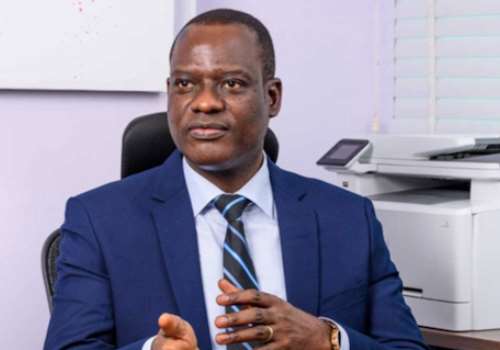
David Etim, Team Lead, Calabar and Gulf of Guinea Municipal and Trade Centre Limited by Guarantee, said the issue requires right timing, warning that implementing it under the current economic conditions could undermine production, investment and employment.
According to him, introducing the tax within the next four years would be difficult to justify without substantial improvements in infrastructure, energy supply and the overall business environment.
“Introducing additional fuel costs while businesses are already struggling with energy, transport, financing and other operating expenses could weaken production, investment and employment,” he said.
Etim argued that the government should prioritise the development of alternative energy infrastructure, particularly CNG, before using taxation to discourage the consumption of petrol and diesel.
He said CNG must be affordable, accessible and supported by adequate infrastructure to enable businesses and transport operators to transition from conventional fuels without incurring prohibitive costs.
He also highlighted the importance of domestic refining, stressing that the government must carefully consider the relationship between local fuel production, energy security and the proposed tax.
However, he noted that whether an excise tax should apply exclusively to domestically refined fuel was a separate legal and policy question, adding that the design of the tax would depend on the applicable legislation.
Etim advised the government to adopt a gradual approach by ensuring that cleaner energy alternatives were widely available, assessing the likely effects of the tax on inflation and production costs, and consulting manufacturers and SMEs before implementation.
He maintained that the policy should only be introduced when the economy and its supporting infrastructure could absorb the additional costs without undermining productive activities.
Beyond energy, Etim said Nigeria must address the structural weaknesses connecting manufacturing, agriculture, industrial development and food inflation before considering additional taxes on fuel.
He identified the steel industry as a critical component of agricultural mechanisation, noting that domestic production of agricultural machinery would reduce dependence on imported equipment and improve farming efficiency.
“We need to be able to manufacture the equipment that we need for our agriculture. We need to produce them here. That means we need steel. That takes us back to places like Ajaokuta,” he said.
According to him, a functional steel industry would support the production of agricultural machinery, including harrows, tillers and other equipment required to improve farming operations.
He stressed that steel production was also essential for expanding irrigation and strengthening the country’s capacity to produce food efficiently.
“Our steel industry is a fundamental contributor to agricultural mechanisation. We need steel to effectively improve mechanisation. We need steel to push irrigation. These are all the factors. So, you cannot move one without the other,” he said.
He argued that expanding agricultural production required corresponding investments in the industries that supplied machinery, equipment and other essential inputs.
Etim also called for urgent reforms in Nigeria’s livestock value chain, describing the transportation of live animals over long distances as an example of the inefficiencies that continue to raise costs across the economy.
Other News
“Today, when you talk about livestock, our livestock industry is most inefficient. You are moving live cows from Maiduguri to Lagos. It’s most inefficient, because the wastage that you are carrying in moving the live cow is enormous,” he said.
He stressed that the government needed to approach economic reform holistically rather than introduce policies that could increase costs in one sector while leaving fundamental problems in others unresolved.
“We have to look at our economy holistically. For the fuel tax to work, you cannot pick one side and leave one side,” he said.
Ease of doing business should come first
Etim maintained that improving the business environment should precede the introduction of additional taxes on fuel.
He said manufacturers and other businesses were already grappling with high operating costs and other structural constraints, making it necessary for the government to prioritise reforms that would improve competitiveness and encourage investment.
“The business environment must be friendly before introducing a fuel tax,” he said, adding that the government needed to address the fundamental obstacles to doing business in Nigeria before imposing further costs on productive enterprises.
Etim expressed doubts about the feasibility of introducing the fuel tax in the near term.
“I don’t see this fuel tax happening anytime soon, because the complexity of getting the economy to be okay, to now apply a fuel tax, is much. The government, I believe, needs to tackle the first principle first. We need to tackle the first things first,” he said.
He reiterated that the government would struggle to justify the policy within the next four years if the country’s structural economic challenges remained unresolved.
“I don’t see how the government can justify it. In the next four years, I don’t see how they can justify implementing a fuel tax because the complexities are many. So, but let’s wait,” he said.
He urged policymakers to focus first on infrastructure, energy security, industrial capacity, agricultural productivity and a business-friendly environment, arguing that these measures were essential to ensuring that any future fuel tax would not undermine economic growth.
Similarly, Imokhai Ehimigbai, a member of the Export Group of the Manufacturers Association of Nigeria (MANEG), said it was difficult to predict when the economy would stabilise, warning that the proposed fuel tax could increase production costs regardless of when it was implemented.
“No one can easily project or predict when this economy of Tinubu will stabilise,” he said.
Ehimigbai explained that additional fuel taxation would raise transportation and production costs, with businesses likely to transfer the resulting increases to consumers through higher prices.
“Additional tax like the proposed fuel tax will lead to high transport cost and also high cost of production, which will lead to high inflation cost as the increased cost will be transferred to consumers,” he said.
He urged the government to encourage and educate Nigerians on the use of cheaper alternative energy sources, particularly CNG, as part of efforts to reduce the cost of operating businesses and transporting goods.
“What the government should be doing now is encouraging alternative sources of energy like CNG. Encourage and educate the populace on the need to shift towards cleaner and cheaper energy like CNG,” he said.
He also called for government investment in CNG conversion kits to reduce the cost of converting petrol-powered vehicles to run on gas.
According to him, expanding access to CNG would make it easier for transport operators and businesses to reduce their dependence on conventional fuels.
Ehimigbai, however, questioned whether increased government revenue would translate into tangible relief for Nigerians, given the economic hardship already confronting households and businesses.
He challenged the government to demonstrate how improved revenue generation would be used to cushion the effects of higher costs on the population.
The National President of the Association of Small Business Owners of Nigeria (ASBON), Dr Femi Egbesola, stressed that SMEs were increasingly operating in international markets, making it imperative for Nigeria to reduce production costs and improve the competitiveness of domestic businesses.
He identified poor infrastructure, high energy costs, inadequate financing and logistics challenges as major factors sustaining high operating costs and inflationary pressures on businesses.
Egbesola said improving electricity supply and making energy more affordable would reduce production costs, while better logistics would enable manufacturers to move their products more efficiently without passing additional tax burdens to consumers.
“We have said it many times that the best way to tackle all of this is to improve ease of doing business,” he said.
He added that the government must fix infrastructure, particularly electricity, while improving access to finance and logistics for businesses.
According to him, reducing energy costs and developing alternative energy sources such as CNG would also help bring down production costs and improve the ability of SMEs to compete in domestic and international markets.
He, however, lamented the limited availability of CNG infrastructure, noting that only a small proportion of Nigerians and businesses currently had access to CNG vehicles and gas.
Egbesola maintained that expanding the infrastructure needed to support alternative energy adoption would be essential to helping businesses reduce their operating costs.