Follow Us on Google
…tours NutriK Kano plant, laud Investment in child nutrition
From Fred Ezeh, Abuja
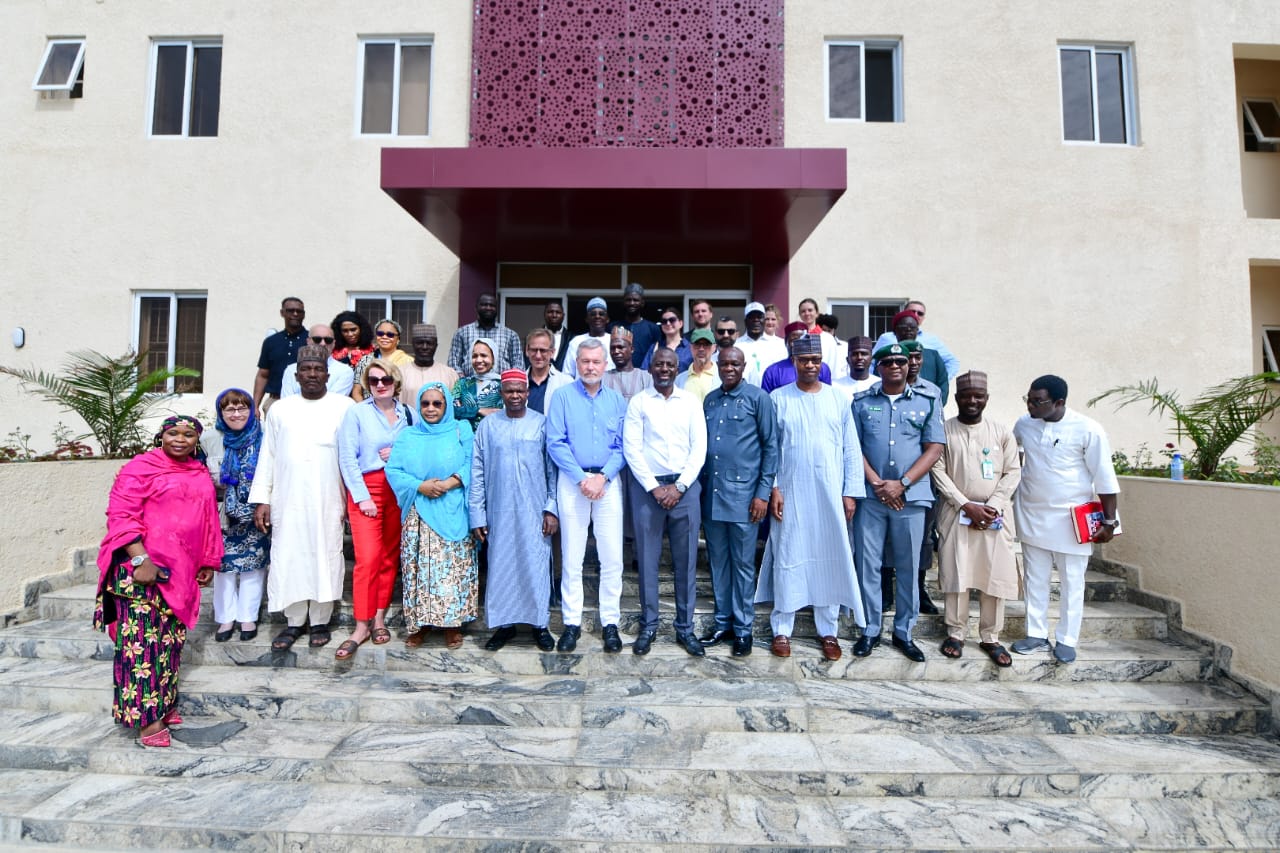
The European Union (EU) has thrown its weight behind efforts to localise the sourcing of ingredients used in the production of Ready-to-Use Therapeutic Food (RUTF), as a Team Europe delegation visited a manufacturing facility in Kano and commended the company’s investment in child nutrition and local industrial development.
The delegation, led by the EU Ambassador to Nigeria and ECOWAS, Gautier Mignot, and comprising ambassadors and representatives of EU Member States as well as UNICEF officials, toured the NutriK’s production facility in the Kano Free Trade Zone as part of a broader mission to assess initiatives advancing nutrition, healthcare, sustainable livelihoods and economic growth in northern Nigeria.
NutriK, a French-Nigerian company and subsidiary of the France-based Nutriset Group, produces RUTF, a specialised nutritional product used in the treatment of severe acute malnutrition among children.
Currently, the company relies on imported groundnuts for production because locally processed groundnuts do not yet consistently meet the required quality standards. However, NutriK said it’s working closely with local producers to improve processing capacity and quality assurance systems to enable greater use of Nigerian-grown inputs.
Speaking during the visit, NutriK Managing Director, Abdoulkader Yonli, disclosed that the company expects to begin sourcing groundnuts locally within the coming months as ongoing investments in local processing infrastructure begin to yield results.
He said the increased use of locally produced groundnuts and soya beans would significantly reduce production costs, expand manufacturing output and create new opportunities across the agricultural value chain.
“Using locally grown groundnuts as well as soya will significantly reduce costs, allow us to increase production and positively impact the entire value chain, from farming and processing to distribution and employment,” Yonli said.
Other News
He stressed that NutriK remains committed to combating malnutrition through both treatment and prevention, noting that despite growing demand for RUTF products, Nigeria currently has only two such manufacturing facilities, located in Kano and Lagos. “The demand for these products remains much higher than our current production capacity,” he added.
He confirmed that NutriK recently relocated to a larger facility within the Kano Free Trade Zone following an expansion project financed by Proparco, the private-sector financing arm of the French Development Agency Group aimed at strengthening local manufacturing capacity and building more resilient nutrition supply chains in Nigeria.
Speaking after the tour, Ambassador Mignot praised the company’s contribution to child health and economic development, describing the facility as a model for how private-sector investment can deliver both social and economic benefits.
“The products manufactured here are helping to support vulnerable children while demonstrating how investment, innovation and business-friendly conditions created by the Kano authorities contribute to human development and economic growth,” he said.
Mignot noted that the visit offered Team Europe an opportunity to better understand the progress being made on the ground and explore ways of strengthening collaboration among Kano State authorities, the European Union, UNICEF and private-sector partners.
According to UNICEF estimates, approximately two million children in Nigeria are currently suffering from severe acute malnutrition, highlighting the urgent need for expanded nutrition interventions and increased local production of therapeutic foods.