Follow Us on Google
ν Mbah: Why justice sector reform is cornerstone of my administration
From Jude Chinedu, Enugu
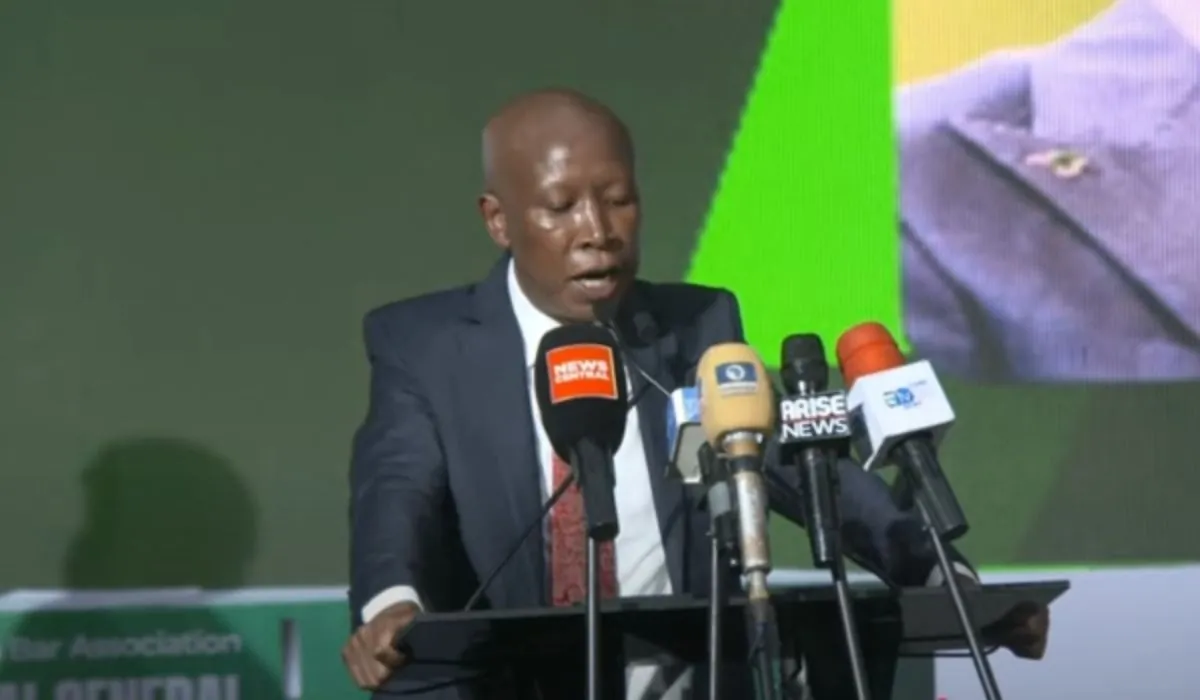
South Africa’s opposition leader, Julius Malema, has warned African governments against piling up unchecked foreign loans, describing them as a debt trap that risks mortgaging the continent’s future.
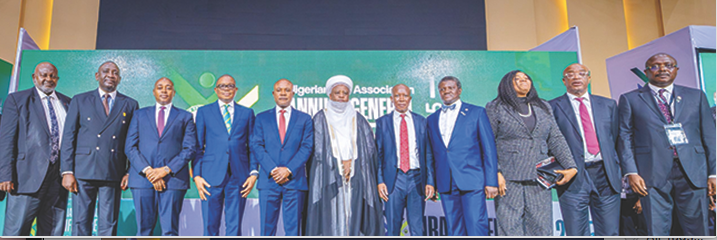
Delivering a keynote address at the 2025 Nigerian Bar Association (NBA) Annual General Conference in Enugu, themed, ‘Stand out, stand tall,’ Malema challenged African nations to break free from colonial economic dependency and build a self-sufficient future.
“The debt trap of Africa to our foreign colonisers must be stopped and that begins by regulating these loans that our leaders commit future generations to, because they will not be there when the colonists come to collect,” he told the gathering.
Malema, who is President of the Economic Freedom Fighters (EFF), said his party had introduced the Public Finance Management Amendment Bill in South Africa to checkmate reckless borrowing.
“This bill, which we have introduced as the EFF, will require that the National Treasury in South Africa first seek approval from Parliament to source foreign loans and establish transparency regarding such loans and their conditionalities,” he explained.
He called for deeper economic collaboration between Nigeria and South Africa, insisting that the continent’s prosperity depends on the unity and industrialisation of the two biggest economies in the continent.
“The path forward is clear: Nigeria and South Africa must industrialise together, build factories together and process their resources on African soil.
“Imagine a joint programme where South African mining expertise is combined with the Nigerian oil wealth to create African-owned energy and resource conglomerates. Imagine Nigeria feeding the continent while South African technology drives logistics and machinery. That is the Africa we must build,” he said.
He also paid glowing tributes to Nigeria’s historic role in South Africa’s liberation struggle.
“Nigeria is not just another African country to us. It is a comrade nation that stood firmly by our side during our darkest hour when South Africa was shackled by apartheid. “Nigerians sacrificed their salaries, students paid the Mandela tax, and successive governments took bold stands, including boycotting the 1976 Olympics and 1979 Commonwealth Games. We cannot forget those who stood with us when it mattered most.”
He recalled that Nelson Mandela, shortly after his release in 1990, made one of his first international visits to Lagos and Abuja to thank the Nigerian people. He stressed that this bond of solidarity must now be transformed into concrete economic collaboration.
While acknowledging the existing ties, from Nigerian cultural influence in South Africa to South African companies thriving in Nigeria, he warned that these gains were often undermined by xenophobia.
“Let me be unequivocal: xenophobia is anti-African unity. We must educate our people that unity, not division, is the solution to the African crisis.
“A Nigerian in Johannesburg or a Ghanaian in Cape Town is not a foreigner but an African contributing to Africa’s progress. In the same way, South African entrepreneurs must be welcomed in Lagos as partners in a shared future,” he declared.
He called for freer movement across the continent, including visa-free travel between Nigeria and South Africa, harmonised trade policies and continental infrastructure that integrates African economies into one market.
He restated his party’s radical vision of a borderless Africa with one currency, one parliament and one military command.
“We are not a dark continent. How can we be dark when we have diamonds that shine among us? Our salvation will not come from Washington or Brussels. It lies here, in Lagos and Johannesburg, in Abuja and Pretoria, in the hands of Africans who refuse to be divided.”
He also placed Nigeria and South Africa’s partnership in a global solidarity context, expressing support for oppressed peoples in Western Sahara, Palestine, Cuba, Haiti and the Democratic Republic of Congo.
“The struggle of South Africans against apartheid taught us that the suffering of one oppressed people is the suffering of all oppressed people everywhere. Our liberation as Africans will remain incomplete if we turn a blind eye to those who continue to suffer under occupation, colonialism, imperialism and economic exploitation,” he said.
He criticised the hypocrisy of international justice, which he claimed acts swiftly against leaders in the Global South while shielding Western powers. He cited South Africa’s genocide case against Israel at the International Court of Justice as an example, urging Africa to establish its own legal institutions.
“If the so-called international community is unwilling to deliver justice in real time, then Africa must advance its own courts, its own tribunals and its own instruments of solidarity,” he insisted.
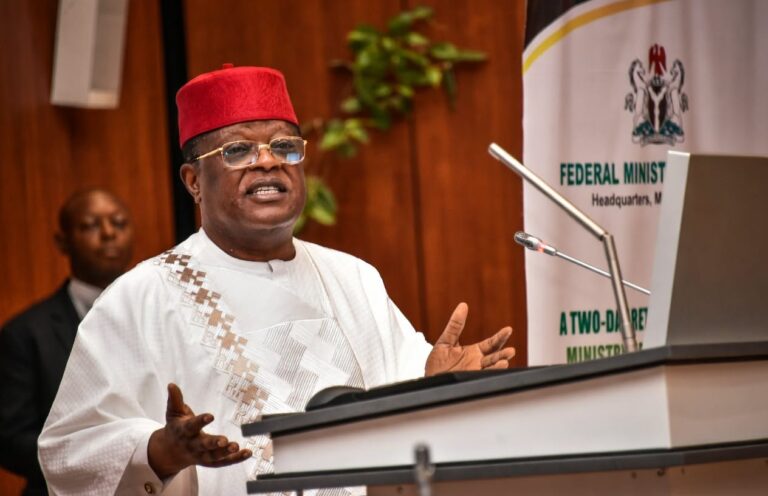
On his part, the Enugu State Governor, Peter Mbah, reminded lawyers that the law is more than a profession, as it serves as the conscience of the nation.
“Let me say this: the theme of this year’s conference, ‘Stand Out, Stand Tall,’ is a timely reminder of the responsibility we bear as lawyers and leaders. The law is not just a profession – it is the conscience of the nation. We are not only courtroom advocates; we are also defenders of truth, architects of peace, and champions of equity.”
Listing some concrete steps by his administration towards justice sector reform, the governor said, “since assuming office, we have made justice sector reform a cornerstone of our governance. Just a few examples will suffice.
“We were among the first states to fully implement financial autonomy for the judiciary in line with Section 121(3) of the 1999 Constitution (as amended). This has enhanced the efficiency, independence, and dignity of our courts.
“We have carried out a comprehensive rehabilitation and digitization of our courtrooms across the three senatorial zones. The High Court Complex in Enugu is equipped with e-filing, virtual hearing facilities, and an integrated case management system.
“To decongest our courts and promote alternative dispute resolution, we have strengthened and expanded the Enugu Multi-Door Courthouse, making it a model in the region for commercial and family dispute settlement.
“Through partnership with civil society and the NBA, we have expanded access to pro bono legal services for indigent citizens and detainees, especially in our rural areas. No one should be too poor to afford justice.
“We have also carried out an extensive codification and review of obsolete state laws to reflect modern realities, ensure gender justice, and promote the ease of doing business in Enugu.
“Perhaps one of the reforms I am proudest of – we introduced real-time transcription for our courts. Attaining Verbatim Reporting for the courts has eliminated the strain of longhand recording on judges, cut down on delays and improved productivity.”
He, however, asserted that none of the reforms was an end in itself, noting that they remained part of a broader vision of his government towards making Enugu State the preferred destination for investment, innovation, and inclusive development.
“From smart schools, safe communities to accessible healthcare – our vision cannot be achieved without a justice system that is fair, functional, and trusted,” he added.