Follow Us on Google
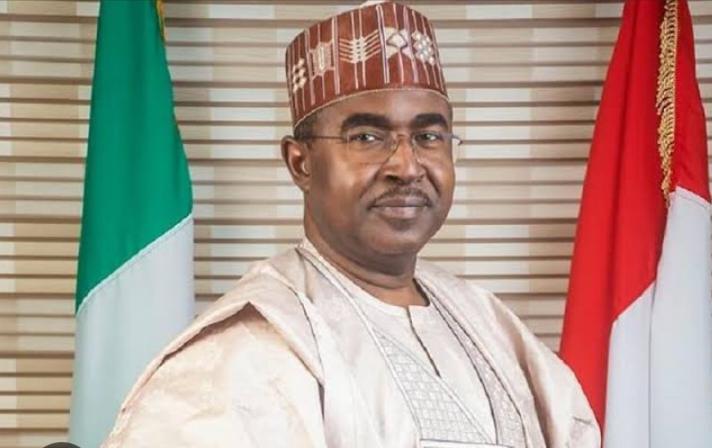
The chairman and chief executive of the National Drug Law Enforcement Agency (NDLEA), Brig-Gen. Mohammed Buba Marwa (retd), recently warned that the war against drug trafficking cannot be won by arrests alone, but by also confiscating the proceeds of crime. The NDLEA boss gave the warning during his presentation titled “Criminal Property and the Criminal Process: How Can We Make it More Effective?” at the 43rd Cambridge International Symposium on Economic Crime, organised by the Centre for Geopolitics, University of Cambridge, United Kingdom.
He also called for stronger international cooperation to seize the proceeds of crime as well as stronger cross-border recognition of non-conviction based forfeiture orders.
Marwa had declared to an international audience made up of judges, law enforcement chiefs, financial intelligence experts and academics that criminal justice systems must focus not only on securing convictions but also on making crime unprofitable.
According to him, “the effectiveness of the criminal process should not be measured only by the number of convictions secured. It should also be measured by whether crime is made unprofitable. A trafficker who loses his liberty but retains his fortune has not truly been defeated. His wealth can finance another operation, support his associates and sustain the criminal enterprise.”
He expressed the agency’s readiness to strengthen partnerships with foreign jurisdictions and institutions in efforts to dismantle financial structures that aid drug trafficking. We equally agree with Marwa that the ultimate objective must therefore be to deny criminals the proceeds of their crime, promptly, and lawfully while preserving the value of the property. The NDLEA boss also assured the international audience that Nigeria through the anti-narcotic agency will continue to strengthen this approach.
Marwa had in a session chaired by the Honourable Judge Wendy Tien, reiterated that arresting a trafficker without dismantling his fortune was like “pruning a weed at the stem while leaving its roots undisturbed,” warning that such wealth simply resurfaces “under different name, through a different front company, in a different jurisdiction.”
Other News
To Marwa’s credit, the NDLEA has deployed six practical strategies to strengthen asset recovery, anchored on the National Drug Law Enforcement Agency Act 2004, the Proceeds of Crime (Recovery and Management) Act 2022, and the Money Laundering (Prevention and Prohibition) Act 2022. This strategy has enabled the NDLEA to recover $4.2million from the sale of a property linked to a fugitive drug suspect, with proceeds paid into the Federal Government’s forfeited assets account domiciled with the Central Bank of Nigeria. This has amply demonstrated that a fugitive “cannot simply outrun the process and retain the benefit of crime.”
We laud the agency for freezing the bank accounts worth over $7million and secured interim forfeiture orders covering multibillion naira assets, including filling stations, multi-storey buildings and exotic vehicles linked to a fugitive methamphetamine syndicate. It is good that the agency also uses unexplained wealth and lifestyles beyond legitimate means as investigative triggers and can seek interlocutory sales of perishable or depreciating assets. We laud the agency for incorporating these measures into Nigeria’s National Drug Control Master Plan 2026-2030, thus making financial disruption of drug trafficking organisations a sustained national priority.
We commend Marwa for his forthrightness on how to win the war against the barons and the proceeds of crime. There is no doubt that Marwa’s insightful recommendations will curb drug trafficking. Not quite long ago, the NDLEA officials smashed Nigerian-Mexican meth cartel and recovered N480billion meth, precursors from massive clandestine lab in Ogun State forest. It arrested the baron, three Mexicans and six others.
Since then, the NDLEA had equally arrested some drug traffickers in Lagos and other parts of the country. The NDLEA also dismantled a meth lab in a forest in Tappa village of Oyo State and arrested a Mexican and four Nigerian collaborators. This indicates that more and more Nigerians are getting involved in drug trafficking.
We recall that during the celebration of the 2026 World Drug Day, the United Nations Office on Drugs and Crime (UNODC) warned that Nigeria had reached a critical juncture in its fight against illicit drugs and enjoined it to confront the menace with innovative and futuristic responses.
Other noticeable challenges include delays in mutual legal assistance, limited forensic accounting capacity as well as the need to balance the rights of accused persons with the responsibility of the state to preserve assets until the cases are tried. We also urge the federal government to address these shortcomings and triggers of drug trafficking generally. They include poverty, unemployment, hunger and an atmosphere of insecurity and despondency.