Follow Us on Google
By Seye Ojo, Ibadan
“Nigerian political history is littered with alliances that were announced grandly and collapsed quietly, victims of ego, financial disagreement, and the fundamental incompatibility of interests that had been temporarily suppressed in the pursuit of power.”
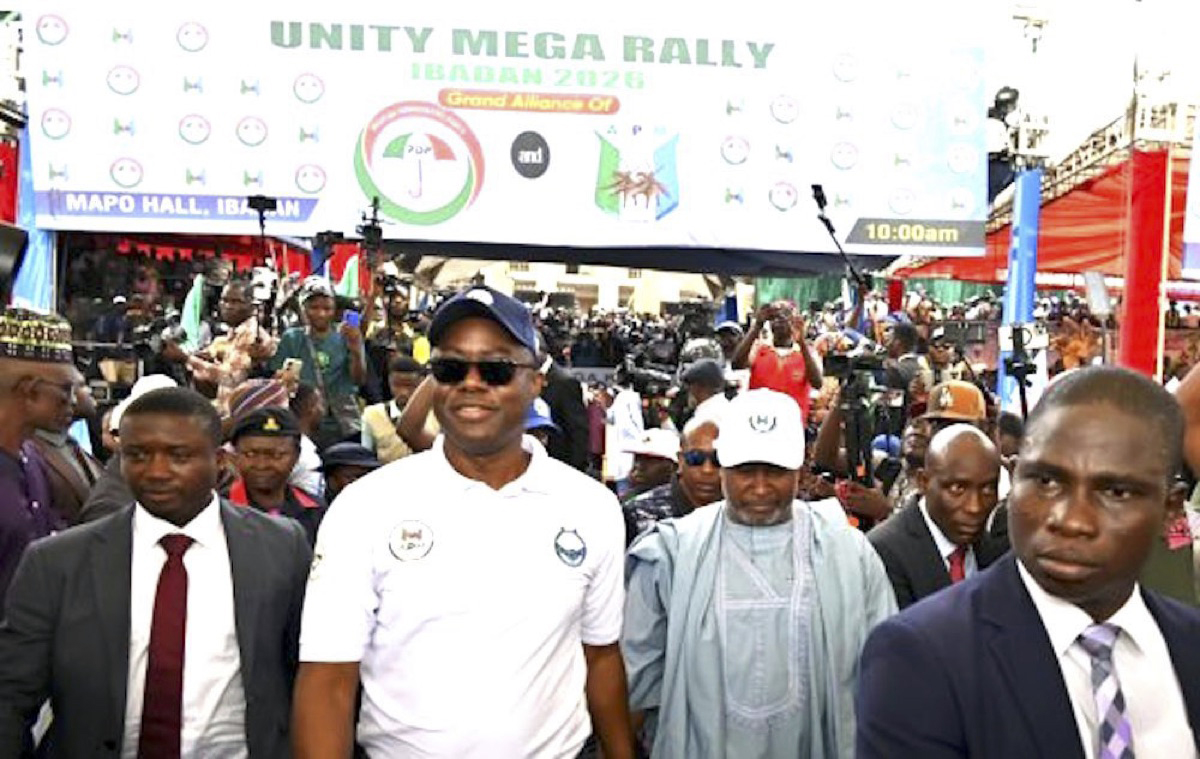
There are moments in politics when the atmosphere of a single gathering captures something larger than itself, when a rally transcends its immediate geography and announces, to anyone paying careful attention, that the national conversation has shifted. The scene at Mapo Hall Arcade in Ibadan last Thursday was precisely such a moment.
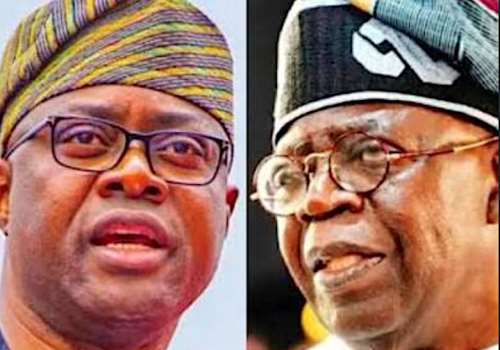
When Governor Seyi Makinde of Oyo State stepped before thousands of supporters and declared his candidacy for the presidency of the Federal Republic of Nigeria, he did more than add his name to an already crowded opposition field. He changed the character of that field entirely.
To appreciate the full weight of what Makinde has done, one must first appreciate the landscape into which he has stepped. Nigeria in 2025 is a country living through the accumulated consequences of decades of governance that consistently promised transformation and consistently delivered disappointment. The Tinubu administration’s economic reforms, whatever their long-term merit, have imposed short-term costs of extraordinary severity on ordinary citizens.
Inflation has consumed purchasing power across every income bracket. Food insecurity has reached crisis levels in multiple states. The promise of a prosperous tomorrow has worn increasingly thin against the reality of a painful today. Into this environment, the opposition has until now offered noise without coherence, grievance without a compelling alternative, and aspiration without a face capable of carrying it convincingly to the Nigerian electorate.
What separates Makinde from the crowded gallery of Nigerian politicians who have presented themselves as agents of change is devastatingly simple; he has actually changed something. In seven years as Governor of Oyo State, he has presided over a transformation that his critics have found genuinely difficult to dispute. Roads have been built. Schools have been rehabilitated. The Oyo State health sector has received investment that is visible and measurable.
Security, that most politically sensitive of all governance indices, has shown tangible improvement under his watch. The internally generated revenue of the state has grown consistently, reducing the dependence on federal allocations that has historically made Nigerian states administrative wards of Abuja rather than engines of their own development.
This matters enormously in the context of 2027. Nigerian voters, particularly the younger, more urban, more digitally connected electorate that delivered Peter Obi’s stunning 2023 performance, are no longer impressed by biography alone. They have heard enough inspiring personal narratives. What they are hungry for is evidence, proof that a candidate has translated the rhetoric of good governance into something a citizen can touch, see, or walk on. Makinde brings that evidence in abundance, and it is the kind that survives scrutiny.
When he told the Ibadan crowd that “the time to reset Nigeria is now,” it was not an empty slogan. It was a statement backed by the record of a man who has already reset one of Nigeria’s largest and most complex states. That distinction is not trivial. It is the foundation upon which a credible national campaign can be built.
The merger between the Peoples Democratic Party bloc and the Allied Peoples Movement under the Reset Nigeria Movement banner deserves careful analysis rather than casual dismissal. Nigerian political history is littered with alliances that were announced grandly and collapsed quietly, victims of ego, financial disagreement, and the fundamental incompatibility of interests that had been temporarily suppressed in the pursuit of power.
Makinde is aware of this history. The fact that the two parties had already executed a formal Memorandum of Understanding before the Ibadan rally, rather than leaving institutional bedrock to future negotiation, suggests a seriousness of purpose that distinguishes this coalition from its predecessors.
Other News
The geographical and political symbolism of Ibadan as the venue for this declaration is also significant. This is the city that has historically served as a crucible of Yoruba political consciousness and a barometer of south-western sentiment. That Makinde chose to launch a national presidential campaign from Mapo Hall Arcade rather than Abuja, the conventional theatre of federal political ambition, communicates something deliberate about the character of his movement. He is rooting a national campaign in the authenticity of his own political base, drawing legitimacy from the ground up rather than from the corridors of power downwards. In a political era defined by popular scepticism of elite consensus, that is a strategically intelligent choice.
The presidential field that Makinde now enters is genuinely complex. Peter Obi, who has migrated from the Labour Party to the Nigeria Democratic Congress, retains formidable urban support and the passionate loyalty of a younger electorate that regards him as the authentic voice of their disillusionment with the two dominant parties. The eligibility question surrounding former President Goodluck Jonathan continues to generate legal and political uncertainty, with the outcome of a pending Federal High Court ruling potentially reshaping the calculus of every other aspirant.
The PDP itself remains internally divided, its coherence fractured by the bruising aftermath of 2023 and the persistent personal rivalries that have prevented it from functioning as the disciplined opposition that the nation’s democratic health requires.
Into this complexity, Makinde brings a set of assets that no other declared or prospective candidate currently possesses in combination. He has executive credibility at the gubernatorial level, the most relevant preparation for the presidency that Nigerian politics recognises. He has a regional base in the South-west that, if consolidated, provides a formidable electoral foundation. He has demonstrated the ability to build and sustain political coalitions, having navigated the treacherous factional terrain of Oyo State politics with a skill that more nationally prominent figures have consistently failed to replicate. A
He has, in the Reset Nigeria Movement, a platform capacious enough to accommodate the range of opposition interests that must be unified if the APC is to be genuinely challenged in 2027.
Intellectual honesty requires acknowledging that the road from Ibadan to Aso Rock is long, uncertain, and lined with obstacles that no amount of enthusiasm can dissolve by itself. The North, which holds the arithmetic majority of Nigeria’s electoral geography, remains a theatre in which Makinde has yet to demonstrate the penetrative political reach that a winning presidential campaign demands.
The PDP’s structural fragmentation means that a party endorsement, even if secured, will not automatically deliver the unified machinery that the APC, for all its internal contradictions, can still mobilise when its existential interests are threatened. And the amended Electoral Act, which has tightened the rules around party movement and candidate eligibility, creates a more constrained political environment for coalition-building than previous election cycles permitted.
These are real challenges. But they are not unique to Makinde. Every serious presidential aspirant in this cycle faces versions of the same constraints. What Makinde has that most of the others currently lack is a credible answer to the question that Nigerian voters are increasingly asking above all others: not who are you, but what have you done?
The true test of what happened in Ibadan on Thursday will not be determined by the size of the crowd or the volume of the cheers, gratifying as both were. It will be determined by whether the Reset Nigeria Movement can sustain its energy, broaden its coalition, and translate the symbolic power of the Ibadan Declaration into the grinding, unglamorous work of ward-level organisation across thirty-six states and the Federal Capital Territory.
If it can, Nigeria may be looking at the most credible opposition presidential candidacy since the coalition that brought the APC to power in 2015. If it cannot, it will become another eloquent chapter in the long, melancholy story of Nigerian opposition politics: full of sound and promise, ultimately unable to convert inspiration into victory.
The evidence of Seyi Makinde’s career, however, suggests that when he commits to building something, he tends to finish it. Nigeria’s opposition, and perhaps Nigeria itself, may be about to find out what that characteristic looks like on the national stage.