Follow Us on Google

From Godwin Tsa, Abuja
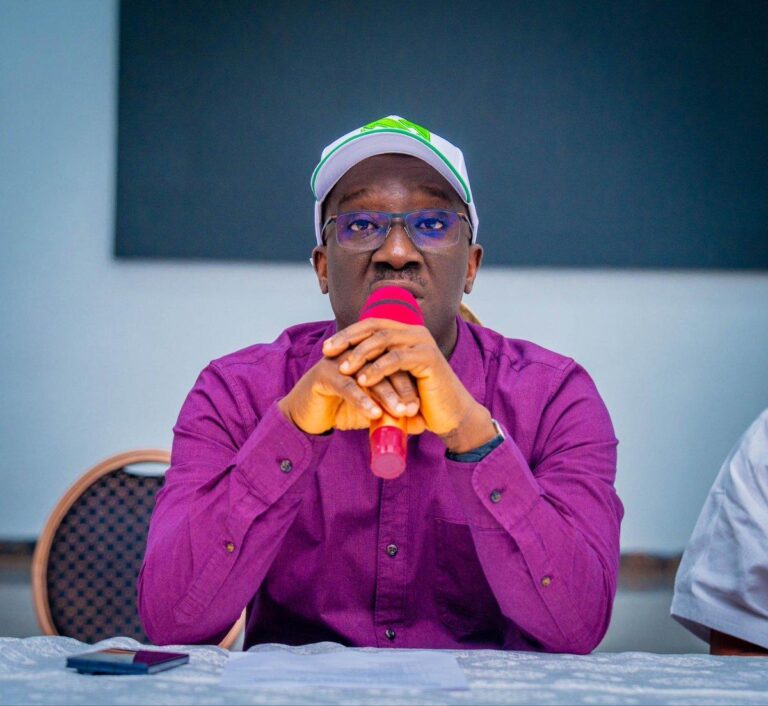
Governor Seyi Makinde of Oyo State, the presidential candidate of the Allied Peoples Movement (APM), has gone to court to challenge a N200 million fee the Abia State Government reportedly imposes on presidential candidates who want to display campaign materials in the state.
Makinde and the APM argue that the fee, which is twenty times what the Electoral Act 2026 allows a candidate to spend on billboards in any single state, is a backdoor bid to shut out non-incumbent candidates from public view and make compliance with campaign spending limits impossible.
In suit HC/214/2026 filed at the Abia State High Court, they are challenging Governor Alex Otti, the state Attorney General, the Abia State Signage and Advertisement Agency (ASAA) and the state House of Assembly. Their lawyer is Musibau Adetunbi (SAN).
The plaintiffs say Section 92 of the Electoral Act 2026 caps total spending for a presidential campaign at N10 billion nationwide. They argue that if every state and the FCT charged a similar fee, billboard charges alone would exceed 80 per cent of that limit.
They said they learnt of the fee while preparing to begin their nationwide campaign.
The plaintiffs raised six questions for determination and are asking for eight reliefs. Key among them:
An order setting aside ASAA’s regulations on political campaigns, including the N200m fee or any other amount.
An injunction restraining the defendants and their agents from enforcing the fee and from “removing, defacing, destroying and obstructing” their campaign billboards and outdoor advertisements in Abia.
A declaration that the N200m schedule is inconsistent with federal law, unconstitutional, null and void ab initio, under Item F, Section 15(a) and (f) of the Third Schedule and Sections 1(3) and 4(5) of the Constitution, and Sections 92 and 99 of the Electoral Act 2026.
A declaration that the fee breaches Section 99(2) of the Electoral Act 2026, which bars the use of state apparatus or regulatory bodies to advantage or disadvantage any party or candidate, and undermines the principle of a level playing field.
INEC’s exclusive powers: The plaintiffs contend that under the Constitution and Section 9(1) of the Electoral Act, INEC alone has the power to make rules and regulations on campaigns for the purpose of elections.
State apparatus: They say that by fixing an exorbitant fee, the defendants are using ASAA to “constructively exclude” non-incumbent candidates from public visibility, contrary to Section 99(2).
Right to campaign: Section 99 guarantees candidates an unhindered right to campaign publicly once the statutory period opens, they argue, and the fee violates it.
Limits of state power: They acknowledged that outdoor signage falls under the Residual List and is a state matter, but insisted that states cannot exercise that power in a prohibitive or discriminatory manner that frustrates or overrides an Act of the National Assembly on campaigns.
Supremacy of federal law: Under Sections 1(3) and 4(5) of the Constitution, any state law, directive or regulation inconsistent with the Electoral Act is void to the extent of that inconsistency, they said.
The plaintiffs warned that unless the court intervenes swiftly, Makinde will suffer irreparable harm to his constitutional right to seek public office, and the principle of a level playing field will be badly compromised.