Follow Us on Google
By Maduka Nweke
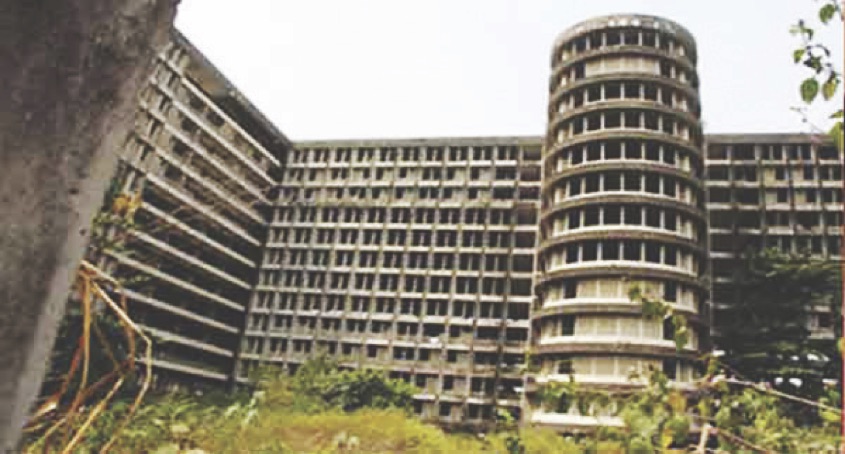
From federal pride to urban blight, the sad story of the abandoned federal secretariat, Ikoyi, epitomises the culture of waste and profligacy in Nigeria.
It is not this edifice alone, there are hundreds of super structures of the federal and state governments lying fallow in various parts of the country.
Some of them are forfeitures made to the government while some were built and yet to be occupied.
For a country peppered by frightening infrastructural deficit, leaving such a gigantic edifice like the federal secretariat to crumble into a haven for criminals and its glory buried under decay, is unfathomable.
Built in 1976, the 12-storey complex once stood as the heart of Nigeria’s Federal Civil Service. It was abandoned in December 1991 following Nigeria’s capital relocation from Lagos to Abuja.
Today, the majestic architectural masterpiece is now a shadow of its former glory.
According to analysts in the property sub-sector, despite notable strides in Nigeria’s real estate sector, the persistent neglect of monumental structures has undermined progress, leaving a paradox of growth and waste.
Across the country, grand edifices lie fallow and unoccupied, their potential squandered in stark contrast to the pressing demand for housing.
Every year, developers unveil new housing units, designed to address the nation’s housing needs. Yet, despite this continuous output, the housing deficit continues to soar, highlighting deep inefficiencies in the system.
The mismatch between supply and demand is further compounded by the failure to repurpose or rehabilitate existing structures. These dormant buildings, once symbols of ambition and progress, now stand as silent testaments to systemic waste and missed opportunities.
“Transforming these unused spaces into functional housing or commercial assets could not only alleviate the housing crisis but also breathe new life into neglected urban landscapes. Without such interventions, the real estate sector’s efforts risk being overshadowed by the glaring inefficiencies of abandonment and underutilisation”, Mrs Irene Real” an city planner/estate developer told Daily Sun.
There is growing outrage that such a sight should not exist in Nigeria, a nation struggling with rapid urbanisation and a burgeoning population.
The development, many note, highlights a critical gap in strategic urban planning and policy implementation.
The Building Collapse Prevention Guild (BCPG) Ikoyi-Obalende Cell recently expressed deep concern over the deteriorating condition of several national monuments and federal properties in Ikoyi, home to President Bola Tinubu’s personal residence. In a statement addressed to the President, the Guild urgently called for swift action to restore these deteriorating landmarks, highlighting the stark contrast between modern developments and the neglect of historical structures.
Signed by Bola Arilesere, the Guild’s Coordinator, and Adebola Adeyera, the Secretary of the Obalende-Ikoyi Cell, the statement emphasized that while Ikoyi has become a beacon of modernity—boasting contemporary high-rise buildings, luxurious waterfront properties, upscale shopping centers, and recreational facilities—the neglect of key national landmarks is a glaring oversight. These monuments, which once lent Ikoyi its distinctive character and prestige, are now falling into ruin due to poor maintenance and systemic neglect.
The Guild underscored the irony of this situation, where new, opulent structures rise in the area, yet the very foundations of Ikoyi’s historical and cultural identity are left to decay. This neglect, they argue, diminishes the legacy of the area and undermines its potential as a model of balanced development that honors both progress and heritage.
“Some neglected Federal Government buildings in our neighbourhood have become havens for criminals, illicit drug peddlers, squatters, and illegal occupants, tarnishing the reputation of Ikoyi. We are concerned that lack of occupancy and regular maintenance are contributing to their faster dilapidation. We also know that steel scrap thieves and vandals are becoming widespread. Steel structural components in abandoned buildings and under bridges have become their target. Hence, blighted Federal Government buildings could be at risk over time. Notable among these abandoned Federal Government buildings is the multi-storey Federal Secretariat Complex, Ikoyi, an expired symbol of national pride in its prime. Also, we have the Ikoyi Towers (an equally Federal Government property, comprising three blocks of 12 floors labelled A, B, and C behind the abandoned Federal Secretariat. These multi-billion public investments should not be allowed to go to waste, especially at a time when the affordable housing sector is in crisis.
“In view of the negative social, economic, safety, and security implications of such blighted buildings in any high-brow neighbourhood, we urge you, Mr. President, to leverage your influence to foster the rejuvenation of these decaying infrastructures in Ikoyi. In line with the Renewed Hope Agenda and the interests of Nigerians, we implore you to intervene and facilitate the revitalisation of the dilapidated Federal Secretariat, surmounting bureaucratic hurdles and legal complexities to salvage the economic waste of such monumental buildings. These national monuments should unfold benefits to tax-paying Nigerians and not become a burden on the neighbourhood.
“In conclusion, as we savour your administration, we appeal to Your Excellency to call for peace and possibly out-of-court negotiations to mitigate the wanton economic waste of the Federal Secretariat Complex. For the Ikoyi Towers, public-private partnerships can transform these buildings into low-cost residential apartments, technology hubs for developers, co-working spaces for small and medium-scale businesses, or other creative mixed-use purposes. We urge you, Mr. President, to kindly use your elevated office to conscientize the parties involved about the need to rid Ikoyi of these potential hideouts for nefarious activities that could lower the quality of life in this neighbourhood. We thank you and wish you a more successful administration,” they maintained.
On the dilapidation of the Federal Secretariat in Ikoyi, Lagos, Mrs Olufunmilade Akingbagbohun, immediate past National Chairman, Nigerian Institution of Mechanical Engineers, said, “l would start by saying that the lack of maintenance culture is one of the challenges of Nigeria as a whole not only in housing but in every area of development. I passed by the neglected Federal Secretariat in Ikoyi just few days ago on my way to Lekki and l was very sad to see the decay, waste and neglect.
“The federal government’s inaction of the old Ikoyi Secretariat is a classic example of Nigeria’s lack of maintenance culture. We prioritise new projects over maintaining existing infrastructure, leading to unnecessary waste and inefficiency. Allowing the Federal Secretariat to dilapidate means weare missing out on opportunities to provide accommodation for Ministries, MDAs, and even the general public. This could have been a hub for economic activity, but instead, it’s a symbol of neglect.
“As an engineer, I am worried about the safety implications of leaving this building in disrepair. It is a ticking time bomb, waiting for a disaster to happen. We should be prioritizing the safety of Nigerians, not putting them at risk around that area; hoodlums have taken residence there creating an unsafe environment for the Dolphin estate residence and other residential buildings around there.
“The housing deficit in Nigeria is a significant challenge, and allowing the Federal Secretariat to decay exacerbates the problem. We are talking about a potential source of revenue, employment opportunities, and economic growth all, being squandered due to inaction. Recently, PEWAN organised a conference on housing deficit, where l spoke about some of these challenges on housing deficit and the way forward, the percentage of Nigerian without a roof over their heads is becoming alarming. There is need to prioritize affordable housing.
“It is time for the federal government to take action. We need a comprehensive plan to renovate and repurpose the Federal Secretariat abandoned in Ikoyi and put it to good use whilst addressing the housing deficit and providing accommodation for Ministries, MDAs or turn it to residential affordable housing solution. This can be carried out as a PPP project. I must commend Lagos State Government for creating an affordable housing scheme with the PPP arrangement which has worked well in arresting the housing deficit in Lagos and is still ongoing. We owe it to ourselves, our children, and future generations to do better for this great nation.
According to Mr. Akin Opatola, President Nigeria Chapter for Fédération Internationale des Administrateurs de Bien-Conselis Immobiliers (FIABCI), “the Federal Secretariat’s dilapidated building is adjacent to my office in Dolphin Estate, and I get to view it almost on a daily basis. “As a country, we need to take extreme responsibility and good care of our assets, especially as resources are limited. Funding to housing, infrastructure, and development in Nigeria’s proposed 2025 budget of N47.9 trillion is a drop in the ocean.
“The least we can do is to properly manage our existing assets. The Federal Secretariat’s dilapidation should serve as a wake-up call for the government to prioritize strategic asset management, embrace innovative redevelopment models, and take decisive action to meet the nation’s pressing housing and accommodation needs. I was at a panel session in Barcelona 2 weeks ago, and the topic was on the future of assets. Major fallout of the session was on adaptive reuse & retrofitting. All around the world, we are seeing more of the reusing of existing buildings for a purpose other than which it was originally built or designed for,” he stated.
“I understand the Minister of Housing and Urban Development Mr. Ahmed Musa Dangiwa visited the Federal Secretariat complex in Ikoyi last week and plans on having consultations with the Lagos State Government and other stakeholders.
It has been a long time coming, and I am optimistic that an amicable resolution would be reached soon. My advice to the FG is that they should be inviting professionals to repurpose the old Federal Secretariat as that could significantly alleviate the housing shortage in Lagos, which is currently above 4 million units, especially if designed to accommodate affordable housing options. They could embrace the PPP model for finance and technical resources,” he appealed.
In his contribution, Mr. Moses Ogunleye, Managing Director of MOA Planners Limited and former President of the Association of Town Planning Consultants of Nigeria (ATOPCON), revealed that over a decade ago, the Federal Government had plans to convert the Federal Secretariat property into a residential development. However, Lagos State, under former Governor Babatunde Fashola, objected to the proposal, despite the fact that the contract had already been awarded. The State’s argument was clear: if the Federal Government no longer wished to use the land as a Secretariat, it should return it to the State, which had originally permitted its use for that purpose, allowing the State to decide its future.
Ogunleye, who also served as the former President of the Lagos State Association of Town Planners, emphasized that this matter should be revisited with a fresh perspective and greater collaboration between the parties involved. He argued that converting the Secretariat into residential development would be highly beneficial for the State, especially as the once-vibrant structure now lies abandoned, overrun by criminals and steadily deteriorating. The opportunity to repurpose the land, he concluded, could serve the broader public interest and breathe new life into an area long plagued by neglect.