Follow Us on Google
From Fred Ezeh, Abuja
A Saudi Arabia based University, King Abdullah University of Science and Technology (KAUST), said it’s developing a new, energy-efficient, high-speed internet systems that would expectedly bridge the gap in internet access in Nigeria.
According to the institution, the current fibre network infrastructures being used in Nigeria are not only expensive, but are also energy intensive and often impractical, adding that in poorer or lower-population density regions, the cost of deploying an optical fibre network and related infrastructure, in particular a reliable electrical power grid, becomes prohibitive, and can greatly increase carbon emissions as recent studies have demonstrated.
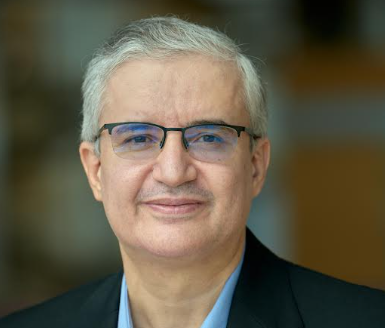
Mohamed-Slim Alouini, a Professor of Electrical and Computer Engineering, at KAUST, who is leading the project, explained that the technologies utilizes a combination of space-based and aerial networks with the aim to deliver quality internet access similar to what expensive fibre optics deliver, but at an affordable cost.
He mentioned that Nigeria has the largest offline population in Africa, even though access to internet has increased rapidly in recent years, but an estimated 47 per cent of the population cannot easily access the worldwide web, and lack of robust internet infrastructure compound existing social and economic problems in areas such as health and education.
He further explained: “Satellite and cellular networks have evolved over the last few decades with a silo mentality, and this is one of the reasons behind the connectivity divide. The solutions being developed at KAUST support global coverage without relying on a costly, on-the-ground infrastructure.
“The project involves the deployment of three-dimensional integrated networks that encompass terrestrial, airborne and satellite communications operating simultaneously over different parts of the electromagnetic spectrum.
“It utilizes terrestrial base stations, TV towers, drones, balloons, stratospheric high-altitude platforms and satellites. The system’s structure and resource allocations such as spectrum, will be adapted based on population density and the required quality of service, and it can be made sustainable by using environmentally friendly transceivers and routers that harvest energy from renewable sources.”
Prof. Alouini, who is also a Fellow of African Academy of Science, said that beyond connecting the unconnected, the developed solutions would also be used to enable the internet of things in remote and hard to reach areas, thus providing smart exploration and monitoring of Nigeria’s many natural resources, as well as better food production and supply-chain management solutions.
He added that the research which focused on remote, low-income areas would help contribute to developing a digitally inclusive and greener future for Nigeria and other nations with large numbers of disconnected people.
He was, however, optimistic that the research activities will not only reduce the inequalities between the ‘haves and have-nots’ in several social, educational, health and economical domains, but also contribute to the creation of new business and economic opportunities.