Follow Us on Google

• Govs fingered as implementation of financial autonomy stalls
• Nigerians slam LGs for poor performance
By Olakunle Olafioye, Okey Sampson, Ighomuaye Lucky, Scholastica Hir, Aniekan Aniekan and Jude Owuamanam
Local Government chairmen in Ogun State rolled out the drums last Tuesday to mark their first year in office. But the event turned out to be a muted party as the people distanced themselves from the celebration, reducing it to a perfunctory observance. The people’s aloofness during the celebration was an anticlimax to the renewed optimism and excitement which greeted the news of financial autonomy for local governments in the country as declared by the Supreme Court on July 11 2024.
A year after the election of the current local council chairmen in the state, residents said nothing significant has happened across local government areas in Ogun State in the last one year to elicit celebration. To many of them, it is still business as usual. A resident of Ota in Ado-Ota Local Government Area of the state, Bolaji Lemboye, an engineer, bemoaned the poor state of access roads in most local government areas in the state.
“The nature of my jobs gives me the privilege to see the decaying infrastructure in most local government areas of the state. The local roads continue to deteriorate and remain inaccessible which makes one to doubt if there are people who superintendent over these areas. From Ado-Odo Ota to Owode Obafemi down to Ijebu, one is left to wonder if our local governments are still functioning because of the level of decay in infrastructure that falls within the jurisdiction of local government authorities,” he stated.
Lemboye pinned down the problem on state governors whom he said are averse to the idea of local government autonomy as moved by the government of President Bola Tinubu, mainly for their selfish reasons.
On July 11, 2024, the Supreme Court ordered that local government allocations must be paid directly to them, as requested by the federal government. FG had instituted the lawsuit seeking to grant full autonomy and direct funding to all 774 local government councils in the country. In its judgment, the apex court ruled that states’ retention of local government funds is unconstitutional. The apex court ruled that since payment through states has not worked, the justice of this matter demands that LG allocations from the federation account should henceforth be paid directly to the LGs. The apex court’s verdict has only been observed in breach.
A top local government official who craves anonymity said local governments in Ogun State still get their federal allocations from the joint accounts, a development he identified as the major reason the performance of the third tier of the government in the state has remained what it is.
In Abia State, the state government still calls the shots as far as councils’ funds are concerned. Local government officials in the state said allocations from the Federal Government do not get to council areas directly from the Central Bank of Nigeria (CBN), but pass through the State and Local Government Joint Account system.
An official of Bende Local Government who does not want his name in print, said under normal circumstances, and if the law should be followed, when the federation allocation for LGs hits the state’s treasury, the state has an obligation of taking out 10 per cent of its internally generated revenue and add it to the local government allocation from the centre before sharing the funds to council areas.
The official expressed regret that nothing has, however, changed since the apex court ruling.
“The idea of establishing the State and Local Govt Joint Account system was for states to bring out 10 per cent of her IGR, lump it together with the Councils’ funds and share among the LGAs.
“Presently, this is not so. The state hardly contributes to the fund as required by law, but superintendents over its sharing and in most cases, shortchanges the LGAs.”
Another senior official in Umuahia North Local Government Area, lamented the grip the state is holding on councils’ funds. He alleged that as a result of this, LG workers’ entitlements such as leave allowance, gratuity and others were no longer being paid.
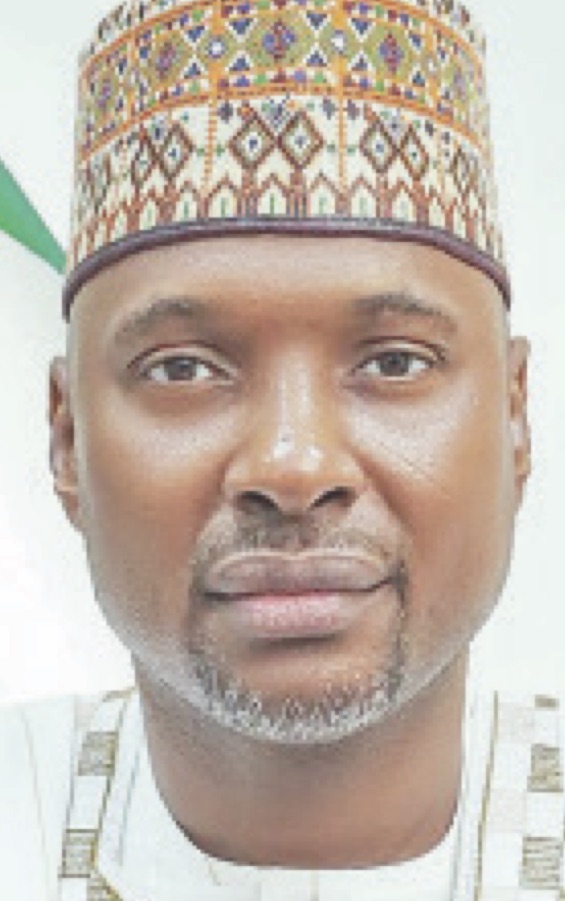
A House of Representatives member from Abia State, Hon Amobi Ogah is equally unhappy with the way states control Local Government funds. “There is no LGA in Nigeria today that does not get at least N250 million every month as allocation from the federal government. That’s why the governors are holding tight to LGA allocations.”
Describing the scenario as unacceptable, Ogah said the National Assembly and the President are working tirelessly to ensure the problem is addressed..
“Both the National Assembly and Mr. President are working hard to free the LGAs from the claws of state governors by granting them financial autonomy so we can witness development in our communities. If N250 million gets to every LGA monthly, you can imagine the level of development that will be seen at the grassroots.
A businessman in Umuahia, Chief John Okoro said the major challenge facing local governments in Abia is the state government’s interference in the financial affairs and the general running of the councils. Okoro said this has hindered the performance of that third tier of government, thereby making them appear irrelevant and stunting development at the grassroots.
In Edo State, residents’ anger over council allocations are two pronged. While they bemoaned the setback caused by the non-implementation of financial autonomy more than a year after the Supreme Court ruling on the matter, many are aggrieved that the impact of improved allocations to the third tier of the government has not been felt at the grassroots.
A resident of the state, Hon. Shedrach Idugbai, said despite the fact that the local government allocation over this last one year has doubled, development in Edo across the 18 local government areas has failed to reflect the improved revenue. He said it is sad and disappointing that chairmen of local governments do not respond to the constituents, but rather to some erstwhile leaders who allegedly control them from the shadows.
According to him “in summary, there’s an abysmal failure in the performance of local government here in Edo and the problem is the absence of political and financial autonomy, which is visible on paper but non-existent in reality.”
In Benue State, despite Governor Hyacinth Alia’s repeated announcement of his commitment to local government autonomy, council chairmen remain evasive on the question of whether they get direct allocations from the Central Bank of Nigeria (CBN). Although a few of them are quick to state that the governor does not determine what goes on in their LGs, it’s also on record that the State and Local Government Joint Account (JAC) system is still operating in the state.
Other News
A government source who didn’t want to be named because he is not authorised to speak on the issue, said JAC meeting holds monthly to determine, among other issues, what projects local government want to embark on as identified by the chairmen, and what percentage of the funds the state and local government would contribute for the execution of such project.
He maintained that LGAs in the state practise financial autonomy, saying the Bureau for Local Government and Chieftaincy Affairs which hosts the JAC only coordinates while the local governments handle everything at their level
He said though the figures accruing to the local government from the Federation Account may seem huge, payment of staff salaries and arrears of pensions gulp a huge chunk of it, making it a bit difficult for the much needed development to happen at the local governments.
Meanwhile, residents have decried the state of local governments in the state, saying they have not performed optimally over the years. A priest with the Catholic Diocese of Makurdi, Rev Fr Philip Apu, said the local governments have been stagnant for more than 15 years, “They are not moving forward because the Nigerian government is averse to the autonomy of local governments. Their finances no longer move straight to the local government coffers.
“They also brought about the issue of transition, whereby within a period that is supposed to be a normal period of tenure for a local government chairman, they would have two to three different persons coming in as transition chairmen, who would stay for a while, bow down to the governors, do their biddings, allow them sign the monies together with them.”
He expressed confidence that if the monies were to go to the local government coffers directly, the chairmen and councillors would work together to identify the kind of projects to execute, and by this there would be grassroots development too.
He insisted that “In the absence of the genuine autonomy for local government, there would not be grassroots development. No matter how huge the allocations from the federal government might be, the government won’t be able to satisfy the needs of those at the grassroots,” he stated.
In Rivers State, controversy continues to trail the claim that local councils in the state get their allocation directly as residents allegedly claimed that projects embarked upon and executed by current local council administrations in the state are not commensurable with the huge allocations received in the last one year.
The chairman of Odukpani Local Government area of Cross River State, Hon Etim Asido had confirmed to Sunday Sun in an interview that local councils in the state have been receiving their allocations, although he declined giving specific details of the receipts.
Also the state House of Assembly early this year enacted a law which was subsequently assented to by the state governor which mandates councils to make some contributions to some state projects. These include a monthly deduction of one per cent from gross allocation of LGAs for House of Assembly oversight functions, 0.5 per cent from gross allocation of LGAs to the State Community and Social Development Agency. Others are a monthly deduction of one per cent from gross allocation of LGAs w to the funding of the University of Cross River State UNICROSS while 0.5 percent from gross allocation of LGAs is for the office of the State Auditor General.
The councils are to make a monthly contribution of N1 million each for the Cross River State Reserve Fund as well as 4 per cent from the gross allocation to the Cross River State Road Maintenance Agency.
Worried by alleged poor performance of the third tier of government in the state, some concerned individuals have expressed their dissatisfaction about the activities of local government councils in the state despite the increase in the funds available to them.
An activist and executive director of Rainforest Resource and Development Centre, Prince Odey Oyama recently called out the chairman of Ikom Local Government Area, Pastor Mercy Nsor to account for over N3 billion that has accrued to the council.
Oyama made the demand in a letter addressed to the Chairman of the council area and titled: Request for the publication of blueprint, budget and FAAC receipts for transparency and accountability in Ikom Local Government area.
The activist drew the attention of the council chairman to the recently published list of achievements marking one year in office, stating that the verifiable evidence on the ground suggested that the total value of all the project enumerated in the report did not exceed ₦50 million despite allegedly receiving over N3 billion from the federation account .
Also in his review of the one-year performance of local councils in the state, Chief Obono-Obla a public affairs commentator and former Special Adviser to the president on public prosecutions slammed the performance of local government councils in the state, describing councils in the state “as being characterised by planlessness, hopelessness, purposelessness, rudderlessness, and governance of the worst and most unimaginable magnitude.”
Sunday Sun investigations showed that the 17 local government areas of Plateau State are not getting direct allocations from the federal government; the state still operates joint accounts with local councils in the state. A high ranking official in one of the local governments, who spoke to our correspondent on the condition of anonymity, bemoaned what he described as a paltry allocation being given to local governments in the state.
He said: “It’s even worse now that the governor is looking for a second term. So, all resources at his disposal are being channelled to his re-election bid.”
Our correspondent further gathered that the health management board is excluded from the allocation owing to allegations of fraud against the management of the board.
Efforts to get the Chairman of the Association of Local Governments of Nigeria (ALGON), and Chairman of Wase Local Government area, Hamisu Anani, to comment on this development were not successful as his phone was switched off.