Follow Us on Google
By Sarah Mower
Olúwà lo n Ṣe – Threads of Providence, In a fashion landscape often obsessed with maximalism and loud declarations of relevance, Lekan Aare has chosen another path, one of restraint, reflection, and deeply rooted cultural subtlety.
His latest collection, Olúwà lo n Ṣe – Threads of Providence, released in August 2023, is not just a selection of garments. It is a philosophical offering. It invites the wearer to slow down, to think, to breathe, and most of all, to listen. There is a quiet authority in every look, one that speaks without raising its voice.
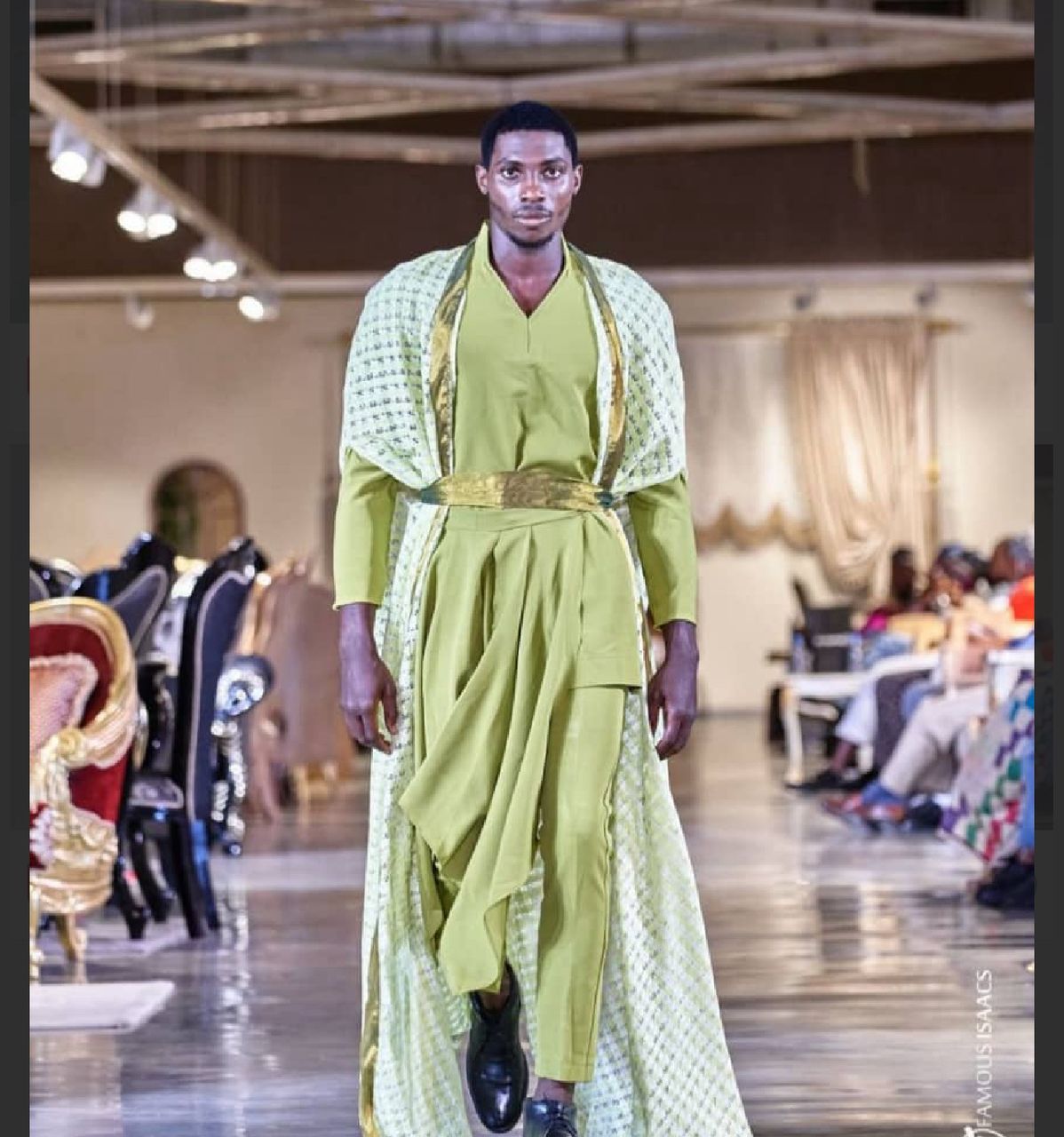
The silhouettes carry an unmistakable air of dignity. Long, flowing tunics in shades of white and soft greys stretch beyond the knees, echoing traditional Yoruba attire, yet with a refined, almost monastic minimalism that positions them firmly in the present and future. The tailoring is loose but never lazy. There is discipline in every line and every hem. Where another designer might embellish, Aare subtracts, allowing fabric, structure, and motion to do the storytelling.
Particularly striking is his use of texture. A light mesh tunic, layered over fluid pants, plays with transparency in a way that suggests vulnerability without ever feeling exposed. Another ensemble introduces a heavier fabric with a subtle sheen, falling straight from the shoulders like a garment worn by a prophet. These choices reflect Aare’s belief in clothing as a second skin, not merely something worn, but something inhabited. There is no excess, no flash. Just form, presence, and spirit.
What truly elevates Olúwà lo n Ṣe is its ability to hold multiple meanings at once. On one level, the collection is a deeply personal meditation on identity and faith. On another, it is a political act, a rejection of the Western gaze and its prescriptive notions of African fashion. Aare does not play to exoticism. He does not design for applause. He creates from within, and it shows.
This is not a collection you rush through. Like a sacred text, it asks to be read slowly. It demands contemplation. It reveals itself over time. In Olúwà lo n Ṣe, Lekan Aare gives us something rare, fashion that whispers and still moves mountains. This is the silence of style, and its echo is powerful.