Follow Us on Google
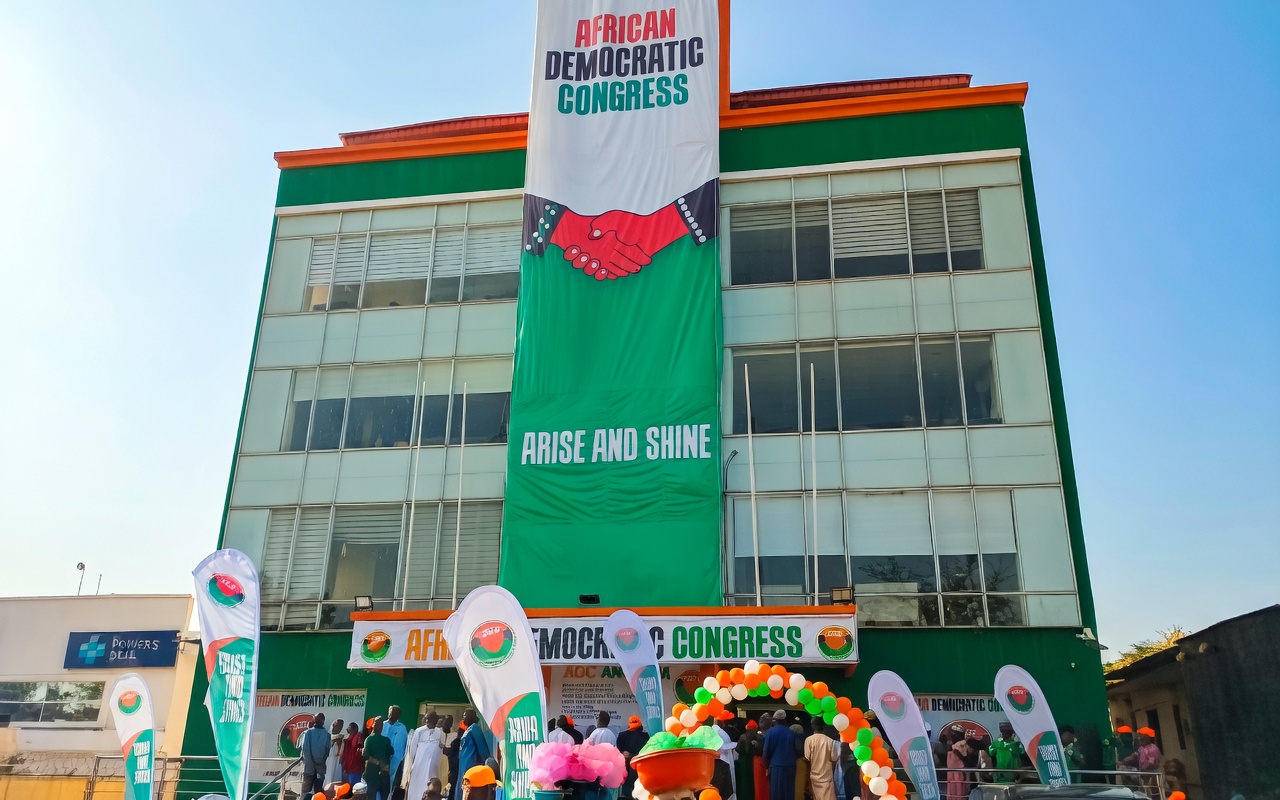
•Legal experts weigh in on opposition party’s impasse, offer advice
By Godwin Tsa and Lukman Olabiyi
Some prominent lawyers have offered their legal opinions on the ongoing leadership crisis within the African Democratic Congress (ADC).
Their interventions came amid growing public debate over the role of the Independent National Electoral Commission (INEC) and alleged possible political interference by the ruling party, the All Progressives’ Congress (APC).

In his contributions, the National Legal Adviser of the New Nigeria Peoples Party (NNPP), Magaji Mato (SAN) explained that the legal implication of a court order directing parties to maintain the “status quo” amid the leadership dispute in the ADC implies that the leadership structure should remain unchanged until the court delivers a final ruling.
He clarified that the essence of the order is to ensure continuity and prevent disruption while the case is being heard.
Mato further stated that courts are obligated to preserve the subject matter of litigation at the interlocutory stage, rather than take steps that could pre-empt or undermine the final decision.
According to him, any action contrary to maintaining the status quo could amount to prematurely deciding the core issues in contention, which is not the intention of the law at that stage.
His words: “In law, when you say parties are to maintain status quo, there cannot be two different interpretations. What it simply means is that there is hostility that led you to come before us the judges. We are now saying, pending when we listen to the substantive matter which you brought before us to determine the rights of the parties, before us, go and maintain status quo, which means go and stay where you are and continue operating where you are.
“So if the leadership of the ADC has been led by Senator David Mark before going to court by Nafiu Gombe, then if the Court of Appeal has made that pronouncement to say, go and maintain status quo, what that simply means is that ‘go and continue with David Mark-led leadership, pending the determination to know who actually is the leader.’ This is because the system must go on.
“The court cannot destroy the subject matter of litigation at interim or interlocutory stage.
What the ADC needs to do is to go back to the Court of Appeal for further interpretation of its order, in view of the decision taken by INEC.”
Also speaking with Saturday Sun, Mr Mr Inibehe Effiong, a public interest and human rights lawyer, called on ADC to return to the Federal High Court to sort out the pending matter and to cite INEC chairman Prof for contempt.
According to him, ‘The law maybe an ass but it does not work to produce absurdities. The current situation in which the party has found itself leaderless is an absurdity. This goes to show that the interpretation given by the INEC chairman to the combined state of the two rulings of the FHC and the Court of Appeal is troublesome as there is no specific order to that effect.
No legal interpretation envisages a situation where a body corporate will be without a management to conduct its affairs. To do so is to constructively kill the organisation.”
He said what is to be done is for the ADC to return to the Federal High Court to sort out the pending matter or apply to the Court of Appeal for an interpretation or its ruling.
The lawyer further called on ADC to cite the INEC Chairman for contempt for taking the law into his hand by his own interpretation and implementation of it.
He added: “There is no express court order to derecognise the leadership of the party. The current state foisted on the ADC is a personal interpretation by the INEC chairman of the ruling of the Court of Appeal. He has no such vire or authority to foist an absurdity on the court.”
In his intervention, a former chairman of the Nigerian Bar Association (NBA), Ikeja Branch, Dave Ajetomobi, called for urgent legal steps to address the lingering crisis within the ADC.
Other News
Reacting to the impasse in the party caused by the withdrawal of the recognition of the David Mark-led leadership, Ajetomobi urged the party’s legal team to immediately apply for an accelerated hearing of the pending appeal, stressing that time is of the essence given the electoral timetable.
He further advised that the lawyers should explore the option of seeking to set aside the existing status quo order if the appeal process does not yield timely results.
According to him, such a move could provide the party with the legal clarity needed to move forward.
The senior lawyer also recommended that, as a last resort, the party should urgently approach the apex court to overturn the order, noting that swift judicial intervention remains critical to resolving the impasse.
A rights activist and legal practitioner, Kabir Akingboolu, also weighed in on the ongoing crisis rocking the ADC, warning that failure to adopt a unifying strategy could spell doom for the party’s future as a viable opposition force.
Speaking on the situation, Akingboolu advocated the formation of a “hybrid alliance” within the party—an arrangement that would bring together factions from opposing sides to create a new, inclusive leadership structure capable of moving the party forward.
According to him, such a move would not only stabilise the party but also neutralise the negative consequences arising from existing court orders and internal disputes. He stressed that a fresh leadership framework would enable the ADC to reposition itself and effectively “sail the ship of the party to glory.”
He, however, cautioned that continued infighting, which he described as “shenanigans, pontificating, harsh criticism and ideological irrelevance” would only deepen the crisis and weaken the party’s chances of emerging as a credible opposition.
Akingboolu further noted that the party must accept the legal realities surrounding the dispute, particularly court rulings already complied with by the electoral body. He warned that resisting such decisions or engaging in prolonged legal battles could prove counterproductive, especially as timelines for primaries and candidate nominations draw closer.
“The law is what it is,” he said, emphasising that failure to act swiftly and decisively could leave the party without candidates in forthcoming elections.
He urged party stakeholders to prioritise unity and pragmatic solutions over internal conflicts, stressing that addressing the crisis head-on remains the only path to survival.
A rights activist and legal practitioner, Ige Asemudara, described the March 12, 2026 decision of the Court of Appeal as “clear, correct and sound.”
Asemudara, in his review of the situation, urged stakeholders to properly understand the context of the appellate court’s ruling, noting that a critical motion remains pending before the Federal High Court presided over by Justice Emeka Nwite.
According to him, at the time Bala Gombe approached the court, the National Working Committee (NWC) led by David Mark was already in place and duly recognised by the Independent National Electoral Commission (INEC).
He explained that the Court of Appeal’s directive for parties to maintain the status quo ante bellum was limited in scope and related specifically to the issue of placing the Mark-led executive on notice.
“The dispute before the Court of Appeal was narrow. It was about whether the Mark-led exco should be put on notice. Therefore, parties are expected to return to the Federal High Court to argue the pending motion,” he said.
Asemudara faulted INEC’s decision to halt recognition of the Mark-led leadership, describing the move as erroneous and beyond the commission’s powers.
“INEC was not ordered to stop recognising the David Mark exco. If that was the intention of the court, it would have been explicitly stated. By taking that step, INEC has effectively usurped the jurisdiction of the Federal High Court, which is still seized of the matter,” he argued.
He further noted that the action taken by INEC mirrors the relief being sought in the unresolved motion before the lower court, stressing that such a development is both premature and unfair. The lawyer advised all parties involved in the dispute to return to the Federal High Court to ventilate their positions, maintaining that INEC should continue to recognise the Mark-led executive pending a definitive court pronouncement.
He also suggested that the warring factions could consider an amicable resolution to end the lingering leadership crisis within the party.