Follow Us on Google

By Emmanuel Esomnofu
Worship According to Smooth Jazz runs 26 minutes and 36 seconds as a single piece. It’s a medley of gospel songs many Nigerian Pentecostal congregations know by heart without singing a word. Laitan Desmond plays the whole time.
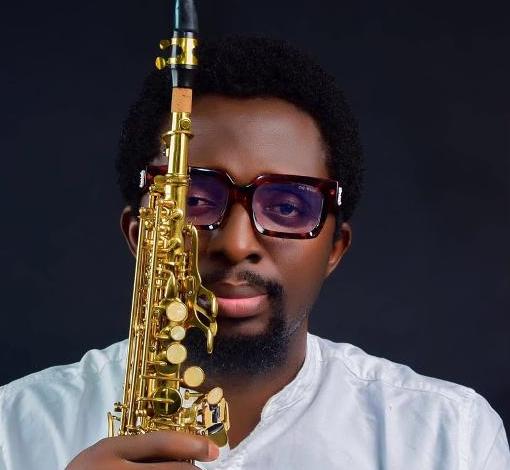
On the cover art, Desmond shoulders a gold soprano. The relaxed music matches the picture. The soprano saxophone leads, but the piano keeps the chords steady underneath. The calm drums are difficult to notice, only when they fade.

Desmond played in a busy lane of an extended instrumental medley of contemporary Christian worship songs that moved between elements of jazz and indigenous worship. Desmond’s focus is duration and calm. Unlike a regular church medley, which usually rushes from one chorus to the next, Desmond plays one long, unbroken piece that keeps the songs together.
Kenny G comes to mind with the soprano saxophone for making it the face of smooth jazz. His tone is clear and singing, and his tunes are easy to hum after one hearing. Desmond shares Kenny G’s patience and feelings for the long line. The difference, however, is in how they play. Kenny G uses vibrato, long held notes and big climaxes, and he plays for the radio and the shopping centre. Desmond’s phrasing is plainer, his climaxes are careful, and he plays for a church of believers. That suits the purpose, but it also means he rarely delivers the showman’s thrill that keeps a Kenny G record memorable even for listeners who resist it.
Desmond opens with Nathaniel Bassey’s “Imela”, a song of thanks. The title is Igbo for “thank you”, and the soprano saxophone carries the tune the way a congregation would, so gratitude is the first thing the medley says. Judykay’s “Ndi Mo Zi” follows. Its title is properly written in Igbo as Ndi Muozi or Ndi mmụọzi, and loosely translated, the song invites the angels, God’s messengers, into the worship. The thanks have been spoken, and now heaven is asked to listen.
The praise grows louder with Tope Alabi’s “Halleluyah”, from her 2018 album Yes and Amen. In the song, Alabi promises God she will never stop singing hallelujah, and she folds indigenous gospel proverbs into her storytelling. It moves between Yoruba and English, and its call for one unbroken hallelujah joins the heavenly hosts and angels who bow before the Almighty. Frank Edwards’s “Oba Awon Oba (King of Kings)” carries the devotion on, from his album Angels on the Runway. Its subjects are awe, creation and the supremacy of God. Desmond plays all of it as arranger, so the writing belongs to Bassey, Judykay, Alabi and Edwards, and the saxophone’s job is to carry their words without saying them.
Other News
Two songs move the medley from praise to promise. Bassey’s “The Champion”, with Joe Mettle, appears on his album This God Is Too Good, and listeners describe it as a song about a sovereign God who answers prayer and is the one refuge in times of trouble. It is the gospel’s victory song, but the victory belongs to God, and the believer only borrows it. Dunsin Oyekan’s “God of All Possibilities”, with TY Bello, expands the worship.
Oyekan calls the song a call to expand the mind. He says the God who parted the Red Sea and raised Jesus lives in the believer. The two songs fit together. “The Champion” is about what God has already done in a crisis. “God of All Possibilities” is about what the believer can still hope for. This hope could turn into a promise of results, but Oyekan puts worship first and expectation second. A saxophone with no words suits both songs. The melody carries the champion’s triumph and the open door. Each listener brings their own impossible hope to the music.
The phrases are long and breathy. They follow the rhythm of someone praising God aloud. The lyrics are gone, so the listener fills them in. The memory supplies the words for those who know the tune.
The best pairing is made by the piano and saxophone. The keyboard plays full, steady chords, and the horn floats above them. The space between the two gives the recording depth and detail. The clean, open production suits a morning devotion or a late-night hour of worship.
The trouble is that the medley asks for more than Desmond gives it. “Smooth Operator” by Sade shows what smoothness can do when it has something important to push against. Its saxophone glides, but the song’s deceitful narrator and its menacing bass line make the glide feel risky. Desmond’s saxophone has nothing to resist, so he never takes any risk with his instrumental arrangement. Chords come on schedule, and passages barely move. The drums are so polite that they never challenge the rhythm. Over 26 minutes, calm hardens into sameness.
That sameness flatters the repertoire less than it should. Nigerian worship songs often move between thanksgiving and supplication. The mood is shared on Worship According to Smooth Jazz, but every song sounds alike. Through a shift of tempo, or a tune that breaks the form, a medley often merits its length at the transition between songs. This record offers few of those. The soprano’s thin upper register also tires the ear without a deeper counter-voice, a tenor or a bass line with some bite, to answer it.
Nonetheless, this is a sincere and well-made piece of devotional music. Desmond trusts the songs, trusts the silence between his phrases, and trusts the listener to do the praying. Next time he could trust them with a little more surprise, perhaps.
———————-