Follow Us on Google
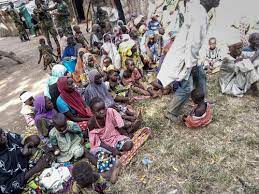
• Residents decry influx of street beggars, demand more action from government
By Kehinde Aderemi
In the morning, day or night, in rain or sunshine, they can be seen sleeping in the open on the median or by the roadside, sitting comfortably as if the sidewalks are their beds.
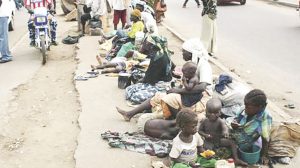
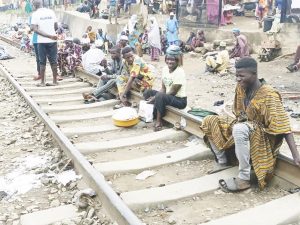
They are beggars – young and old – dotting the streets of Lagos as they struggle daily for survival.
Everywhere you go in Lagos, these colonies of mendicants stare at you. The streets are their abode. Each day, they virtually invade Lagos in their thousands, many tucked in lorries and trailer trucks. They are then offloaded in different parts of the state.

Their first meeting point, findings revealed, is usually the popular Berger Bus Stop on the Lagos-Ibadan Expressway. From there, they are dispatched to different areas of the state. From Ikorodu to Ketu, Mushin to Idi-Araba, Agege to Egbeda to Igando, Ikotun to Alaba-Rago, Igbo-Elerin and Okokomaiko, they rove like men without hope.
Even in Ikeja, the capital of state, they throng the streets with unusual confidence. They are everywhere, causing both security and environmental threats and becoming a nuisance to the people.
Begging in the streets of Lagos isn’t a new phenomenon. It has long been part of the dark side of the state. But in reality, the danger is now staring Lagos residents in the face.
Recently, top media personality and former Commissioner for Information in Osun State, Mrs. Funke Egbemode, raised the alarm. She shared her personal experience in a piece titled: “Lagos street beggars and the danger ahead.” According to her, the menace is becoming a threat to the progress of the state.
Egbemode suggested “operation- -clean-the-streets” and urged the Lagos State government to introduce a Community Service that is backed by law. She proposed that the government create a massive farm where beggars could work, be fed, and have their stories taken to determine their needs.
“Dear Lagos State Government, this is a problem you must confront. It is a battle you must win. You have tried thus far, but if you leave this menace, it will not stop at just defacing the state; it will swallow Lagos. Let us not wait for the worm to become a snake,” she warned.
Like the former commissioner, not all Lagosians are happy with the culture of street begging in the state.
Director, Development Partners’ Initiative (DPi), Deacon Bayo Obatungashe, expressed concern about the categories of people engaging in street begging in Lagos State.
Many of them, he said, are from the North and are either old people or children who should be in school.
Obatungashe argued that street begging has become a dark horse for the Lagos State government and that the ugly trend has continued to be of great concern for both residents and the state government.
“I see street begging in Lagos State as an aberration. It is growing by the day, and if not curbed, Lagos State should be ready for an imminent implosion that could lead to insurgency, as we see in Borno and other parts of the North.”
According to him, many factors have contributed to the rise in numbers of street beggars in Lagos State. He highlighted economic factors, including biting poverty in the country, social factors, and the escalation of insecurity in many parts of the country.
The burden on social services, he noted, is getting more devastating by the day.
“The effects of street begging on tourism and business in the state cannot be ignored. It is always a big problem for a city like Lagos.
“It affects tourism and no serious-minded investor will come to a city that is populated by so many beggars,” he noted.
Besides the normal beggars, touts and street toughies are also adding to the begging menace in Lagos.
Said Obatungashe : “At times, you feel concerned if you see the numbers of touts in public places like Lagos Island, Mushin, Oshodi, Ikeja, Agege, and Ikorodu.”
“During the day or at night, you see them looking closely at you as if they are on a mission to show you that you are in Lagos, and what that means is that if you are just a new and naive fellow, or the careless type, you can end up losing your valuables like your phone or even cash, especially at night.
“Many of those guys are beggars in the day but robbers at night. And once you are in their midst, you will know that Lagos can be such a terrible place at night.
“During Babatunde Fashola’s administration as governor of Lagos State, the cleaning up of the state was a priority. He didn’t allow them to breathe. He was always at the parks, going through the Lagos streets to keep them at bay.
“Fashola even did a lot to relocate street beggars to a place in Ebute Metta, and even to their respective states across the country. He was at the centre of making sure that Lagos State was rid of the endangered species – those that are in the state to cause trouble.
“But today, I think the Lagos State government has slowed down on the need to rid the state of street beggars. Perhaps, it is because of politics, or that the government has lost the courage to tackle the menace.
“However, the state government can get over this social deficit and nip street begging in the bud if the governor is ready to discuss the ugly trend with his colleagues in the north and see how they could address the situation by providing social welfare services and also put in place measures that could address the menace.”
These measures, according to him, should be backed by law, and the enforcement of the law should be done in a way that would make street begging illegal and punishable by law in the state.
Mr Olushola Omoroke, a real estate manager, said the problem of street begging begins with how the beggars come to Lagos. He urged the Lagos State government to provide temporary abodes for them, enrol their minors in school, and train them in vocational skills.
Other News
“Every citizen has a right to live in any part of the country, but it must be done with a bit of serenity.
“If you see how these people came to Lagos, you will wonder what their missions are. That is why you see people saying Lagos is “a no- man’s land. Many of them were strapped at the back of lorries that carried cows and foodstuff to Lagos. They came to the state without any relatives, or having an idea of what they are coming to do in Lagos State. So, how do you expect such a person to live without creating nuisance on the streets?
I am so particular about the minors because, they grow up to become the monsters we all dread in our society. The criminal activities they engage in usually reflect on our society.
“I think the Lagos State government should take up the issue of street begging by getting them out of the street and providing temporary places of abode for them.
“While they are there, the minors should be enrolled in school and vocational centres for them to be trained and also learn skills of their choices, so that they can be useful for themselves and for the society at large.
“That is how it is done in the developed world. There is always a social welfare programme for those that are not doing well in the society globally and such programme is geared towards re-integrating them for them to be independent and useful to the society.
“Nigeria and Lagos State should not be an exception. If all these measures are put in place, we are sure of a clean Lagos. But failure to do this can lead to the birth of another insurgency,” Omoroke stated.
Towards the end of last year, it was reported that the Lagos State government made significant efforts at eradicating street begging. It was gathered that the Lagos State Ministry of Youths and Social Development established a Special Task Force, which comprised representatives from various government bodies, including the Ministry of Justice, Ministry of Environment, Ministry of Transportation, Ministry of Youth, Lagos Neighbourhood Safety Agency, Lagos State Traffic Management Agency, Lagos State Task Force, and the Nigeria Police Force. And their mandate was to ensure that street begging became a thing of the past in the state. Commissioner for Youths and Social Development, Abolaji Ogunlende was named chairman of the Special Task Force.
According to Ogunlende, the Special Task Force was necessary due to the insufficient results from previous efforts, such as stakeholder meetings with Arewa community chiefs and sensitisation programmes.
He said the Lagos State government would not relent in its efforts to proffer lasting solution to the menace of begging on the streets of Lagos.
“We have held several meetings with stakeholders, including the Arewa Community, and we have all agreed that street begging must not be allowed anywhere in the state. There is an existing environmental law and Child Rights Law that bans and makes street begging illegal in Lagos State.
“As a responsible government, we have decided to hold this meeting as part of our collaborative approach towards eradicating street begging in the state. It has become a nuisance which we cannot afford to close our eyes to.
“Lagosians are seriously disturbed by this ugly trend, just as Mr. Governor, Babajide Olusola Sanwo-Olu is worried about the negative image that street begging is giving to the greater Lagos that is being built,” the Commissioner had said in one of the meetings held recently with the stakeholders.
Despite the challenges and societal ills posed by street begging, some people still see alms-giving as a religious act.
Fadilat Sheikh Abdul Afeez Sazili (Oniwiridi) said as Muslims, giving to beggars is a religious act that must be done with moderation.
Quoting from the Holy Quran, chapter nine verse 60, he said: “Allah has enjoined all Muslims to give to the poor and needy, especially the beggars, and those that are ready to become a Muslim.”
“As Muslims, alms-giving to the poor and beggars is an act of Ibadah, as it was indicated in the Holy Quran. It should be done with the fear of Allah and with a little degree of moderation.
“I am not against any plan by the state government to give them a new lease of life that could better their living conditions, but I don’t think beggars can pose such a threat to society as many have argued. We have beggars in every part of the world, but they are well taken care of by the government.
“Therefore, I urge the Lagos State government not to be blind to the reality of their situations. Even as beggars, they are still part of us and they deserve to be treated with sympathy and kindness,” the cleric explained.
Project Manager, Goldcrest Family Centre, Mrs Christy Victor, noted that the Lagos State government has been implementing initiatives to address street begging, such as providing shelters and rehabilitation programmes. However, more needs to be done to effectively tackle the problem, she noted.
She highlighted the role of non-governmental organisations like the Goldcrest Family Centre (GCFC) in alleviating the suffering of vulnerable children and how the state government could assist in driving the project.
“Many beggars face significant challenges, including poor health, lack of education, and limited job opportunities, making it difficult for them to escape the pain of poverty.
“As far as I am concerned, the story of beggars in Lagos State is very complex and multifaceted because it reflects the city’s broader social and economic challenges.
“The Lagos State government has implemented initiatives to address poverty and begging, including vocational training programmes and social welfare services. Some non-governmental organisations, like the Goldcrest Family Centre, offer shelter and support to the poor, the needy, widows and vulnerable children by helping them to rebuild their lives.
“But if we can work together by being our brothers’ keeper, we can build a more compassionate and equitable society where everyone has the chance to live and thrive,” she said.
Until their displacement last month, Alaba Rago, in Ojo, was a major abode for the largest concentration of beggars in Lagos.
Alaba Rago is popular as a major market for rams, cows, and goats. This market, which has existed for more than 40 years, is dominated by traders from the North, who also converted some sections of the area for residential purposes.
The place became a major home for the beggars who were trucked down from different parts of the core North to eke out a living in Lagos.
As they gave birth and multiplied, some others joined them daily, making their population balloon.
Following their recent eviction by the state government, they have now taken over the median of the Mile Two- Badagry Expressway at Okokomaiko, Ojo, where they have erected makeshifts. This is posing an environmental hazard, as open defecation has been elevated to an embarrassing level.
In the past, they moved out in the morning to different locations to ply their trades and only returned to Alaba Rago at the close of business. But now, they go out in the morning and return to the median at Okokomaiko.