Follow Us on Google
By Doris Obinna
Maternal, Newborn, Child and Adolescent Health (MNCAH) is a public health approach that focuses on improving the health and well-being of women during pregnancy and childbirth, and ensuring the survival and healthy development of newborns, children, and adolescents. It is a critical area of global health that spans the life course and aims to reduce mortality, improve quality of care, and address social and health inequalities.
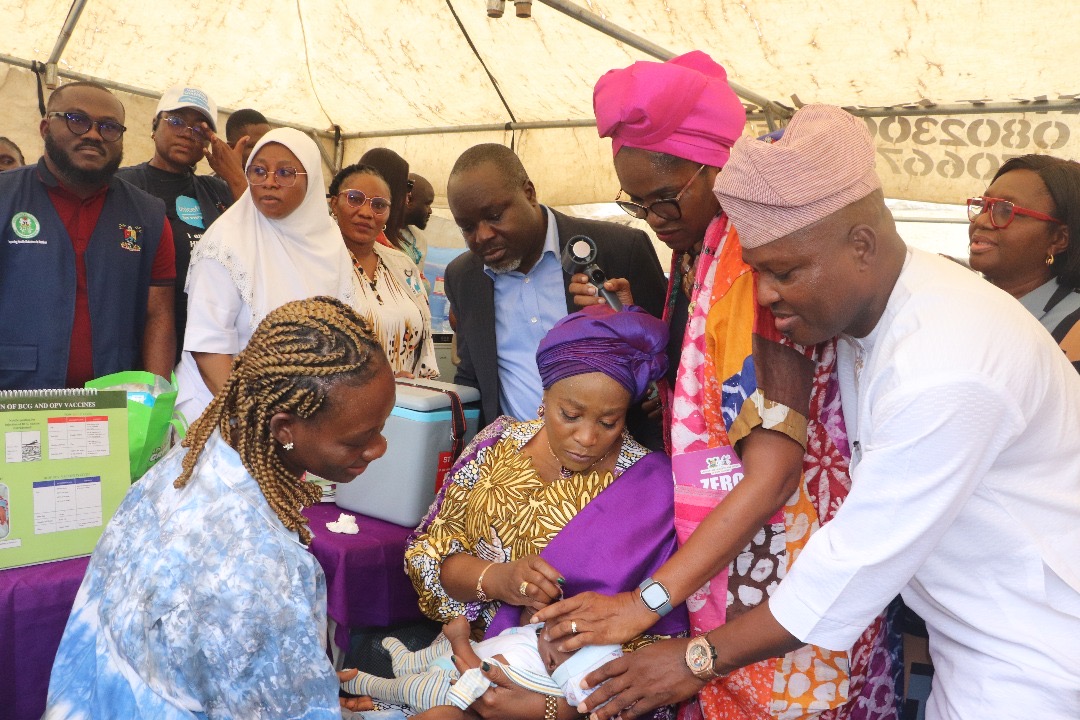
The Lagos State Government, in a renewed commitment to MNCAH, on Monday, June 23, 2025, flagged off the first round of the bi-annual Maternal, Newborn, Child and Adolescent Health Plus Nutrition Week (MNCH+N) at the Alimosho Local Government Area of the state.
The outreach, it noted, underscored the state government’s unwavering commitment to ending preventable maternal and child deaths through free, lifesaving health services. It marked the beginning of a week-long statewide outreach. This year’s first round, themed “Reaching for Zero Preventable Maternal and Child Deaths,” will run until Friday, June 27, across all 57 Local Government and Local Council Development Areas.
The First Lady, Dr Claudiana Sanwo-Olu, addressing stakeholders, highlighted the significance of the MNCH+N Week as a critical intervention that empowers citizens with access to cost-effective, high-impact healthcare services that can transform health indices and save lives.
Dr Claudiana Sanwo-Olu, represented by the wife of the Deputy Governor, Mrs Oluremi Hamzat, described the MNCH+N Week as a “critical intervention” that brings high-impact, cost-effective health services closer to those who need them most, especially women, children, and adolescents.
According to her, despite all efforts, the current under-five and infant mortality rates of 36 and 46 per 1,000 live births respectively remain a call to action. “No child deserves to die from preventable causes.”
She said: “Since its inception in Lagos in 2010, the MNCH+N Week has evolved into a national campaign. The week-long campaign will deliver a wide range of services, including vitamin A supplementation, growth monitoring, free antenatal and postnatal care, family planning, counselling on home care, screening for malnutrition, as well as information and referral support for sexual and domestic violence cases.
“Services are offered free of charge daily from 8:00 a.m. to 3:00 p.m. at all public primary healthcare centres and designated outreach posts.”
Stand against quackery
Sanwo-Olu condemned the rising cases of quackery in maternal health services, urging citizens to avoid unregistered birth attendants and instead utilise services from licensed healthcare professionals or those registered under the Lagos State Traditional Medicine Board.
She issued a stern warning against the use of unregistered birth attendants, which she said continues to endanger lives across communities. She urged families to seek care from licensed professionals or certified traditional medicine practitioners recognised by the Lagos State Traditional Medicine Board.
“Our communities must rise up to report illegal practices that put the lives of our women and children in danger,” she stated, reiterating the need for collective vigilance.
Alimosho in focus
She continued: “The choice of Alimosho, Lagos’s most populous local government, as the launch site was far from coincidental. Alimosho’s performance would significantly influence the outcome of the statewide outreach.”
Other News
She commended the local government’s history of community engagement and described the week as both “symbolic and strategic” in reaching grassroots populations with essential health services. She further advocated for wider registration under Ilera Eko, the state’s health insurance scheme, emphasising that sustainability of care must extend beyond campaign periods.
On his part, Permanent Secretary, Ministry of Health, Dr Olusegun Ogboye, echoed the urgency of the campaign, calling on caregivers and families to take full advantage of the free services. He highlighted the inclusion of adolescents as beneficiaries, reflecting a broad-based strategy to reach every vulnerable group.
“Parents whose children have missed any vaccinations or vitamin A doses should seize this opportunity. We also encourage communities to mobilise others to attend,” he urged.
Also, representing development partners, Chief of Nutrition, United Nations Children’s Fund (UNICEF) Nigeria, Nemat Hajeebhoy, hailed the Lagos State Government for its consistency and innovation in maternal and child health. She revealed that, in 2024 alone, MNCH+N Week in Lagos led to nearly six million children receiving vitamin A and three million undergoing deworming.
Introducing the Child Nutrition Fund (CNF), a new financing mechanism that doubles state investments in critical nutrition commodities, Hajeebhoy called on Lagos to join other states already leveraging the initiative. “We are confident that Lagos, with its leadership and infrastructure, can be a model for nutrition financing in Nigeria,” she added.
Local commitment, infrastructure boost
Chairman, Alimosho Local Government, Hon. Jelili Sulaimon, represented by Vice Chairman Hon. Akinpelu Johnson, took the occasion to inaugurate a new administrative building at the council secretariat. He described the MNCH+N Week as “timely and essential,” pledging that Alimosho would continue to prioritise healthcare, particularly for women and children.
“Good health is not just a right, it is the foundation of economic stability and personal development.
“The journey to zero preventable maternal and child deaths requires more than medical supplies; it demands collaboration, vigilance, and sustained political will. The MNCH+N Week may last only five days, but its impact, if fully embraced, could resonate for generations.”
Why MNCAH matters
According to the World Health Organisation (WHO), all stages of MNCAH matter in the following ways:
– High mortality rates: Women, newborns, and children still die from preventable causes, especially in low- and middle-income countries.
– Equity and rights: Ensuring access to care for vulnerable populations is a human rights issue.
– Long-term impact: Healthy mothers and children contribute to strong communities and economic development.
Global initiatives
WHO, UNICEF, and other organisations support MNCAH through strategies like the Every Woman Every Child movement, the Global Strategy for Women’s, Children’s and Adolescents’ Health, and Sustainable Development Goals (SDGs), especially Goal 3: “Ensure healthy lives and promote well-being for all at all ages.”